
Local government elections could stem semigration tide in South Africa - IOL
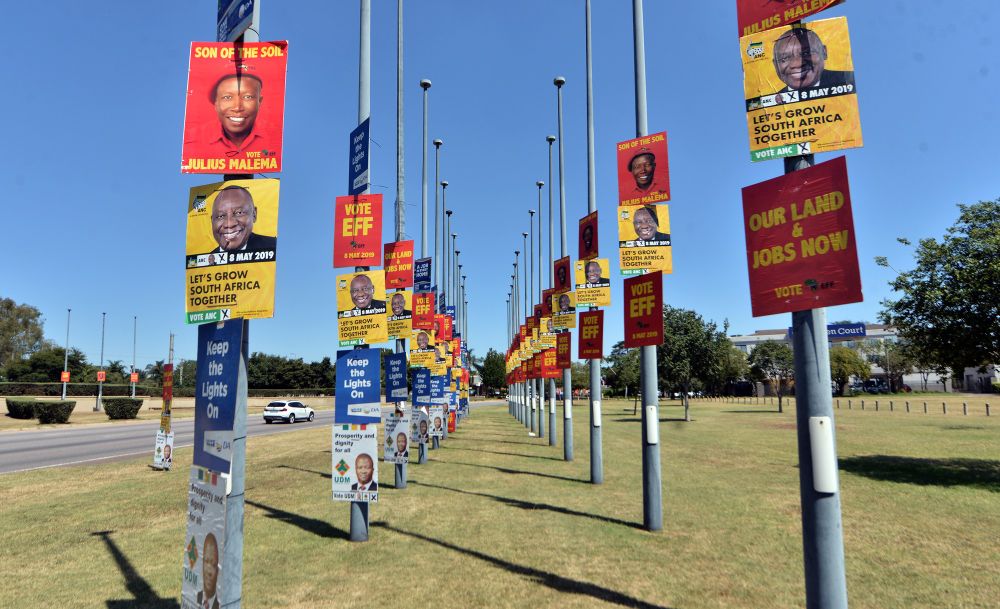
Political shifts in Gauteng could reverse the region's alarming semigration trend as South Africans prepare for the 4 November local government elections.
If Gauteng's political changes result in credible municipal turnarounds, the impending local government elections on November 4 have the potential to drastically disrupt South Africa's long-standing semigration trends and possibly stop the mass migration to Cape Town.
The South African Local Government Association (Salga) and the majority of reliable analysts anticipate more coalition governments following elections, and political parties must overcome the unique challenges of gaining support, forming a governing majority, and managing a municipality.
While geopolitical tensions, interest rates, and inflation affect the housing market, local government responsiveness is critical to property availability, affordability, and desirability.
“For property owners and investors, the question goes beyond who wins which metro to how quickly and how well elected leaders transform service delivery and unlock housing development,” according to alternative home financier Sentinel Homes.
The home financiar said Johannesburg and Cape Town currently illustrate different market problems: unreliable services can weaken a city’s appeal, while inadequate and slow housing supply expansion can make a desirable city increasingly unaffordable.
Although Gauteng remains the largest recipient of internal migration from other provinces, the mismanagement of the majority of the province’s municipalities, such as the City of Johannesburg, and poor service delivery have weighed heavily on its appeal to property buyers and investors.
“Where basic services like water, electricity, or refuse removal can’t be guaranteed, this weighs on housing market sentiment and property prices,” according to Renier Kriek, managing director of Sentinel Homes.
He said Cape Town, conversely, has seen a significant influx of new residents thanks to superior service delivery and the resulting semigration trend. However, the City’s reluctance to quickly release land for development and fast-track approval of new constructions has created a scarcity of property due to almost no supply elasticity, causing prices to skyrocket.
This affordability crisis could encourage more households to consider Gauteng, or persuade prospective semigrants not to leave in the first place.
Though “reverse semigration” is a term bandied about recently that fails to describe any real-world phenomenon, this may change if Gauteng’s relative attractiveness increases. “Credible improvements in Gauteng could change the calculation for households considering a move. Cape Town cannot bank on Johannesburg staying broken, or expect good services to compensate indefinitely for unaffordable housing,” Kriek cautioned.
Sentinel Homes said ultimately, local election winners will not effect changes to their municipalities overnight. As a result, public sentiment on the lack of progress always precedes any improvements that take time to manifest, driving property prices and investment up or down.
When a person invests in property, they effectively buy a stake in the municipality that manages everything outside their front gate. “I always say that capital has choices; poor municipal conditions increase costs and uncertainty. Investors and homebuyers respond by forming sale transactions at lower prices, requiring a higher return or taking their money elsewhere. Strong tenant demand may still make a deal worthwhile, but municipal risk is always be priced in,” Kriek said.
A poorly run municipality creates a false economy for residents. “A badly run municipality can make a house cheaper to buy initially and more expensive to live in over time,” Kriek further said, adding that a lower purchase price offered little comfort if a household must fund its own water storage, backup power, and security, alongside the cost pressures of all the other government services that households already provide for themselves in South Africa.
Furthermore, where housing demand persists but development stalls, tenants can face rising rents even while investors become less willing to buy, proving that falling property values do not automatically mean more affordable housing.
“Housing supply shortages are the main driver of irrational and unsustainable price increases that make housing unaffordable for people in major metros, especially Cape Town. The policy failure is allowing that manufactured scarcity to persist,” points out Renier Kriek.
The country also suffers from a serious undersupply of public infrastructure, especially public transport. As urban nodes densify, it becomes irrational to rely so heavily on automobiles and privately operated minibus taxis. Voters need to demand more public transport in all major metros despite parties with entrenched interests litigating against it.
Following the election, South Africa will firmly be in a phase of its democracy where coalition politics have become the norm. Many are waking up to the realisation that more of the same policies and programmes is not enough to bring meaningful change.
This new era should be welcomed because it can offer better balance in governing municipalities, and involves a more diverse leadership pool to bring new ideas to the table.
The greatest evidence to watch will be practical: funded infrastructure work, more reliable services, quicker development approvals and homes actually being completed.
Looking to the future, the industry requires swift and decisive action. “We need innovative policies and processes for rapid land release and development approvals, service delivery enhancements, and accelerated affordable housing initiatives, and we must hold our new leaders accountable for their performance, good or bad,” Kriek said.
The diverging paths of the country's economic hubs are clear. “Gauteng’s opportunity is to give people reasons to stay. Cape Town’s challenge is to make room for people who want to come,” he said.


