Locked up, then fired up: Bo Kyi’s fight for political detainees - Rappler
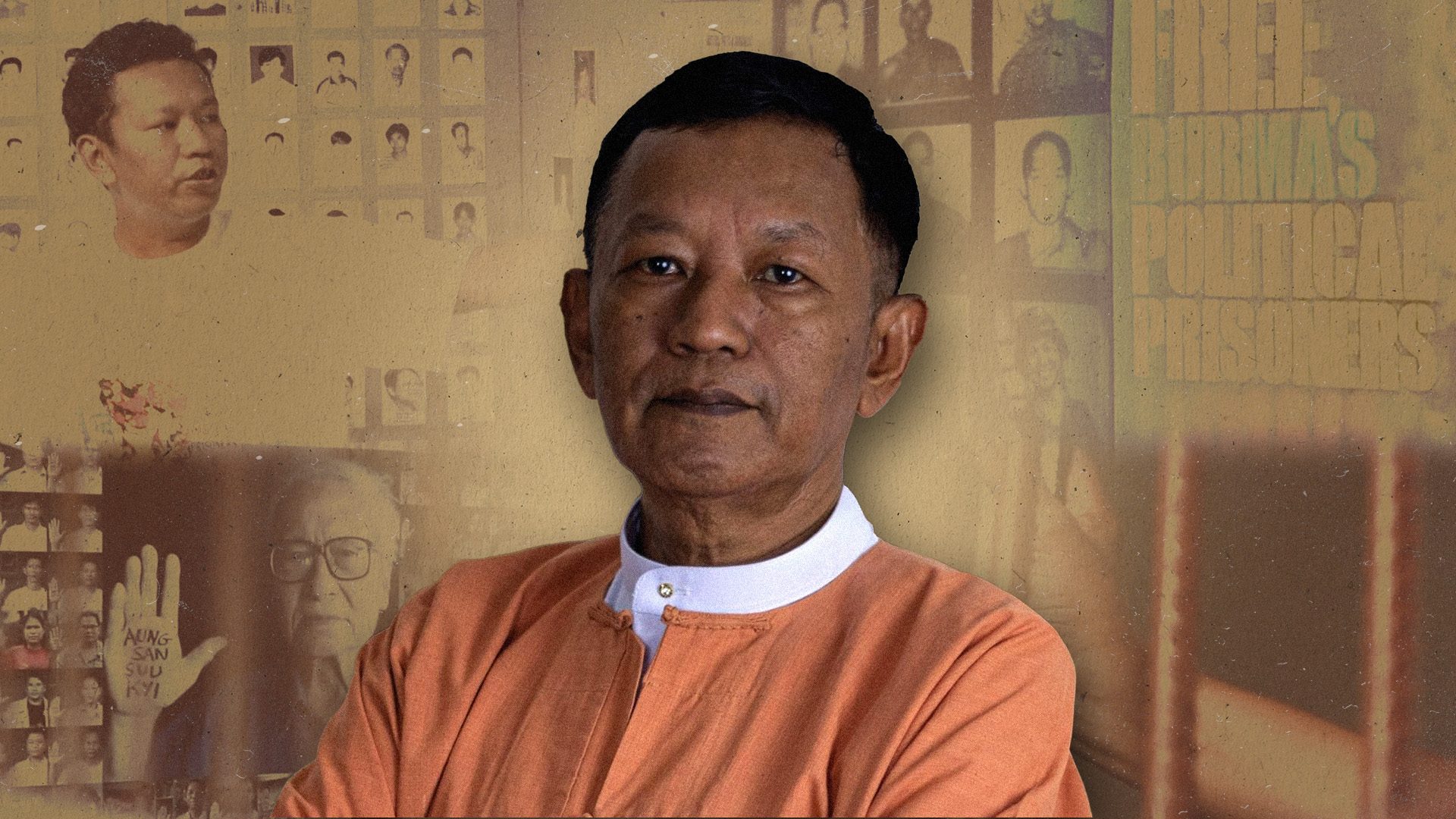
Before Bo Kyi could fight for the freedom of political prisoners, he first had to endure imprisonment himself.
In August 1988, the Burmese activist was among the student protesters who were swept up in Myanmar's pro-democracy movement.
Massive demonstrations erupted across Myanmar, then known as Burma, amid growing resistance against the military junta. The protests culminated in a violent military crackdown on August 8, 1988, in what would become known as the "8888 Uprising."
Bo Kyi, now 61, was a graduating student majoring in Burmese literature at Rangoon University when the demonstrations erupted. At 20, he recalled joining the protests after witnessing the deaths of fellow students.
In 1990, Bo Kyi was arrested for his participation in the student-led movement — an experience that would change his life. During his three years in detention, he endured harsh prison conditions and learned about the history of repression and the abuses suffered by ethnic communities in Myanmar.
"Such kind of information from real history really reminded me that we need to change the political system. We need to build up [the] rule of law. We want the military to stay away from politics. Such kind of thing really motivated me for this," he said.
Decades later, Bo Kyi is among the three laureates of the 2026 Ramon Magsaysay Award, widely regarded as Asia's equivalent of the Nobel Prize.
In conferring the award, the Ramon Magsaysay Award Foundation recognized his work with the Assistance Association for Political Prisoners (AAPP), an organization he co-founded to document political detentions and provide assistance to people imprisoned under Myanmar's military regime.
"His enduring commitment reflects extraordinary moral courage, personal sacrifice, and an unwavering belief that democracy and human dignity are always worth defending — and that even in the face of oppression, the truth must be told, justice must be pursued, and the freedom to believe must be upheld and defended at all costs," the foundation said.
During his three-year detention, Bo Kyi endured repeated interrogations, beatings, and torture.
Yet even in prison, he found ways to keep learning. To cope with the loneliness, he began studying English with a professor detained in a neighboring cell.
When guards were away, Bo Kyi would ask the professor to dictate English words and phrases. He memorized them and wrote them on the concrete floor using a shard of brick.
At one point, he even ate pages from a dictionary to keep them from being discovered by prison guards.
"I still continued studying English for two-and-a-half years in prison even though we were not allowed to possess any writing materials and reading materials," said Bo Kyi.
Prior to his release in 1993, his fellow political prisoners asked him to tell the outside world about the realities of the conditions inside Myanmar's prisons.