
Lula must restore fiscal discipline, economist says - Valor International
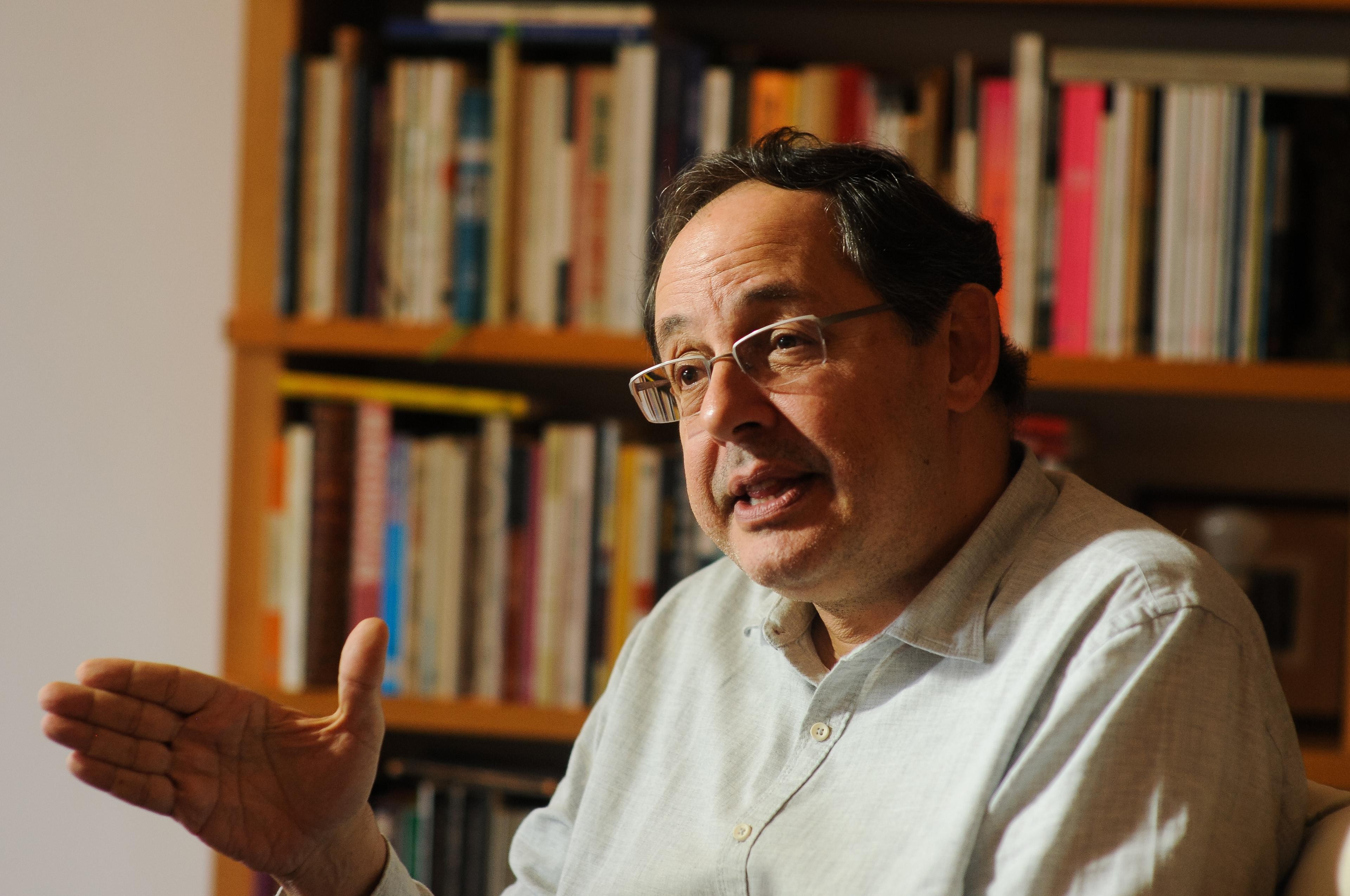
Drawing on decades of experience with economic crises and election campaigns, economist Eduardo Giannetti believes both financial market participants and President Luiz Inácio Lula da Silva of the Workers’ Party (PT), reelected Sunday (Oct. 25) with more than 64 million votes, will need to adjust their behavior to avoid triggering further turmoil.
Giannetti, a 69-year-old author and member of the Brazilian Academy of Letters (ABL), says expectations in São Paulo's Faria Lima financial district that Flávio Bolsonaro of the Liberal Party (PL), the preferred candidate among Brazilian investors, would implement sweeping spending cuts rested on what the market regarded as a "functional lie."
Having served as an economic adviser to former Environment Minister Marina Silva during three presidential campaigns, Giannetti learned that detailed fiscal plans are best left out of election debates. "You have to stick to what Nelson Rodrigues called 'the smooth surface of generalities,'" he says, referring to the Brazilian playwright and writer.
Now, however, Giannetti believes it is time for concrete decisions. He argues that Lula should return to the approach taken during his first administration, when Brazil achieved a primary budget surplus of 4% of GDP.
Giannetti said the fundamental lesson of Lula’s first term was that sustainable social policies require some sacrifice at the outset. He argued that early fiscal adjustments, rather than undermining social spending, could create room for generous, high-quality social policies throughout the administration.
The following are the main excerpts from an interview Giannetti gave Valor via Zoom on Monday (Oct. 26).
Valor: How do you assess the financial market's reaction to President Lula's victory? Why wasn't the market prepared for the possibility of his reelection, even though the polls showed a statistical tie?
Eduardo Giannetti: I think we are seeing an excessive reaction to a shift in expectations. This kind of overreaction is not unusual; it happens fairly often. In Brazilian electoral history, we saw it when Lula first won the presidency in 2002. When he came close to winning in the first round, markets reacted dramatically. The stock market fell 25%, the real collapsed, and that worsened inflationary pressures that were already running in double digits. It was a dramatic move. By the time Lula won the runoff, the outcome was largely priced in. Even so, there was further downward pressure.
Valor: But in 2002, between the two rounds, Lula held a series of meetings with business leaders and bankers and published his "Letter to the Brazilian People." Even so, there was still uncertainty about what a Lula presidency would look like, wasn't there?
Giannetti: There was what people called "Lula risk." He took office, appointed a highly technical team at the Finance Ministry and increased the primary surplus beyond the level maintained under Fernando Henrique Cardoso's administration. Absolutely no one had expected that. We achieved primary surpluses of around 4% of GDP for several months, even years, early in his first term. The real appreciated. That double-digit inflation was considered a lost cause. People thought Lula's government would never manage to bring inflation back within the targets, yet it did, helped by the stronger currency. And Brazil achieved investment-grade status from international credit rating agencies. I think that's the formula: repeat Lula's first term.
Valor: Return to the model adopted when Antonio Palocci was finance minister?
Giannetti: What we need now is a transition constitutional amendment in reverse. The mistake in Lula's current term, his third, was that he went too far with fiscal expansion at the beginning. The government then tried to establish a fiscal framework, but it became seriously weakened by a series of measures adopted to maintain at least the appearance of genuine restraint in public finances.
Now we need to go in the opposite direction, back to Lula's first term. And the fundamental lesson from that period is that sustainable social policies require accepting some sacrifice at the outset. The two are not mutually exclusive. If you make an adjustment and put things in order early on, you create room for generous, high-quality social policies throughout the administration. What you cannot do is come into office determined to step on the accelerator immediately.
Valor: Lula was reelected largely thanks to a grassroots movement with substantial social demands, including investment in education, full-time schools and the public healthcare system, SUS. How can those demands be reconciled with fiscal discipline?
Giannetti: Lula needs to send the following message: "I'm not going to betray my campaign promises, but I need to put the economy in order so I can genuinely deliver on them." There is a sequence to this. He needs to make very good use of the beginning of his term. The first three months set the tone for the entire administration. That's when the executive branch has political capital and can lead negotiations with Congress, which is still finding its footing.
Valor: Did Lula step on the accelerator with measures such as a real increase in Bolsa Família benefits?
Giannetti: The increase in [cash-transfer program] Bolsa Família was a correction for inflation accumulated over recent years. It wasn't anything extravagant. It's important to understand the scale of what we're discussing.
We have a primary deficit of between 0.5% and 1% of GDP when everything is included, without accounting gimmicks. To put public debt on a stable trajectory over time, the general view is that we need a primary surplus of around 1.5% of GDP. That would create room for a substantial reduction in the benchmark interest rate while moving toward a stable public debt-to-GDP ratio.
So we're talking about a fiscal adjustment of 2 to 2.5 percentage points of GDP. That's not some unattainable, heroic undertaking. It's feasible.
Valor: Returning to the market's excessive reaction on Monday, was it the result of a misplaced bet, a miscalculation? Or is the reaction also a way of pressuring Lula to appoint a finance minister more committed to fiscal adjustment, someone the market would consider more trustworthy?
Giannetti: The change in financial market sentiment stems from a collapse in expectations. Major investors held long positions, anticipating a Flávio Bolsonaro victory and more forceful fiscal measures. Those expectations were shattered.
It's somewhat conspiratorial to imagine that financial markets would act in a coordinated way to pressure the government into doing something. Now, this scare can, and perhaps should, encourage the government to pay attention and avoid jeopardizing its term by losing control of the economic situation. But that's an effect, not a deliberate strategy.
What the government actually does is only half the equation. The other half is managing financial market expectations. Markets operate largely on what they believe the future will look like. What is actually done must be credible, and that means the finance minister must be chosen very carefully.
But just as important as this objective dimension is the subjective one: knowing how to handle and properly manage market expectations rather than fighting financial markets.
The economy is a kind of meteorology in which the weather forecast affects the weather itself. If people believe a storm is coming, the storm happens. If they believe the weather will be wonderful, that conditions will improve and the sun will come out, then the weather improves. Expectations have tremendous influence on behavior, especially in markets such as equities and foreign exchange, which are inherently very volatile.
Valor: Still on the market's expectations of a Flávio Bolsonaro victory: during the campaign, the PL candidate talked about sweeping spending cuts but offered few concrete indications of what his fiscal adjustment policies would entail. In the debates, he ruled out cuts to SUS [Unified Health System], real increases in the minimum wage and even pensions, areas where cuts are widely supported in financial markets. Did investors genuinely expect Bolsonaro to make those cuts, or was it wishful thinking?
Giannetti: My reading is that financial markets understood that, during the election campaign, this lie served a purpose, but that it was still a lie. They believed he was saying those things purely as a means of winning a close election.
Valor: Isn't that what is known as electoral fraud?
Valor: In Argentina, far-right politician Javier Milei won the 2023 presidential election wielding a chainsaw. He announced the cuts he later implemented. Why is Brazil different?
Giannetti: Argentina's situation was far more critical than ours. Argentina was in intensive care. Brazil isn't. I was deeply involved in three election campaigns as Marina Silva's economic adviser, and I learned one thing: you don't spell out fiscal policy in detail during an election campaign. You have to stick to what Nelson Rodrigues called "the smooth surface of generalities." I never expected either candidate in this election to be specific and concrete about what they actually intended to do.
Valor: How can a liberal, fiscally conservative or right-wing political agenda survive, or even advance, in Brazil without the charisma and even the demagoguery of the Bolsonaro family, who have carried that agenda in recent years?
Giannetti: The fiscal adjustment Brazil needs has nothing to do with fiscal conservatism or the right. It's a necessary step toward restoring the government's ability to implement effective public policies. And if Lula doesn't take that step, he'll get himself into serious trouble. He'll watch the economy deteriorate and find himself in a much worse position to pursue any kind of social policy, potentially with inflation returning, which is the worst social policy imaginable.
Giannetti: That brings us back to something Brazil finds difficult: accepting some sacrifice today in exchange for benefits tomorrow. Ours is one of the cultures most resistant to this kind of intertemporal trade-off. Lula did it in his first term. He accepted an initial sacrifice to deliver a wonderful administration, which I believe was the best period since Brazil's return to democracy. The results were spectacular. Of course, the global environment helped Brazil.
Valor: That was during the commodities boom. What does the international outlook look like now?
Giannetti: The world will help Brazil today. The end of hyperglobalization is excellent news for the Brazilian economy. It gives us an opportunity to rethink and reposition our place in the global economy.
Brazil stands to gain enormously from the global push to diversify suppliers and make production chains more secure. We enjoy a particularly favorable geopolitical security position and possess natural resources that are unmatched anywhere in the world.
The world will need Brazil and its food production. We have critical minerals, rare earths, renewable and sustainable energy resources, freshwater — perhaps the most decisive factor in geoeconomics today — and biodiversity.
We are also well positioned to engage with the United States, the European Union and China. We can turn the rivalry among these powers to our advantage.
The world will need us just as much as we need the world. Foreign investors are far more enthusiastic about Brazil than the financial market on Faria Lima.
This article was translated from Valor Econômico using an artificial intelligence tool under the supervision of the Valor International editorial team to ensure accuracy, clarity, and adherence to our editorial standards. Read our Editorial Principles.


