
Lula’s fiscal bill stalls in Senate as talks break down - Valor International
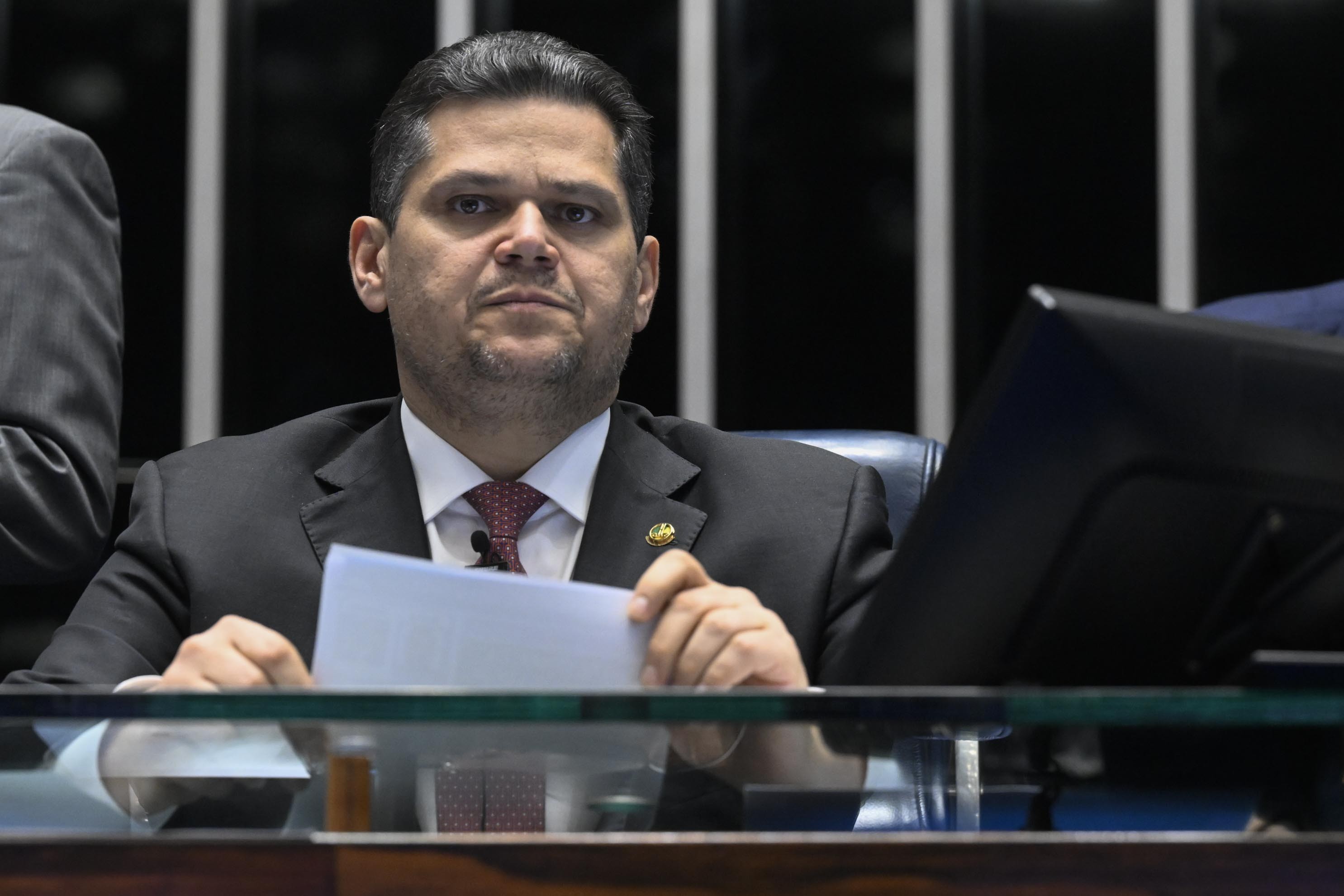
Brazil’s Senate postponed a final vote on President Lula’s fiscal adjustment bill after government negotiators failed to reach a deal with opposition lawmakers over provisions in a package expected to impact public finances by up to R$60 billion in 2027.
The setback came as government allies struggled to secure the 41 votes needed to preserve key provisions of the bill. Senate President Davi Alcolumbre agreed to delay the vote until Wednesday (18), giving negotiators another chance to resolve the dispute.
The postponement came at the request of the bill’s rapporteur, Senator Eduardo Braga, who sought to negotiate a compromise to prevent the package’s projected fiscal gains from eroding. The Liberal Party submitted three of the proposed changes, and the Republicans submitted one. Planning and Budget Minister Bruno Moretti, regarded as the architect of the supplementary bill, also spent the day in Congress negotiating with lawmakers.
According to senators involved in the talks, Braga proposed removing provisions that would delay R$12 billion in federal transfers to states and municipalities under the Kandir Law, which compensates for the tax treatment of exports, and impose limits on financial settlements between Brazil’s various public pension systems, known as Comprev.
In return, opposition senators would withdraw their proposal to eliminate the restriction on using tax credits accumulated under one tax to settle liabilities arising from another.
Removing that restriction, which has met strong resistance from the business community, would reduce the package’s projected fiscal impact by R$12.5 billion to R$18.3 billion, according to Planning Ministry estimates in Braga’s report.
The opposition, however, rejected the proposed compromise.
Uncertain whether they could muster the 41 votes needed to defeat the proposed changes, Alcolumbre agreed to Braga’s request to postpone the vote rather than risk defeat.
“We had at least two or three colleagues from the government coalition who had not registered their attendance. Given the uncertainty over whether we could reach 41 or 42 votes, we thought it best to postpone the vote. But before that, we explored every possible avenue for an agreement. Apparently, the opposition is unwilling to make any concessions,” Senator Randolfe Rodrigues, the government’s leader in Congress, told Valor.
Leaving Congress on Tuesday evening, Alcolumbre reiterated that the vote on the proposed changes would take place by Wednesday. He also said he believed the administration had enough votes to defeat them.
Before offering to remove the Kandir Law provision entirely, the government proposed to the Liberal Party, which introduced the amendment, cutting federal transfers to states and municipalities by half and postponing them. The party also rejected that proposal.
“I cannot negotiate something that would, in return, hurt my state,” said Senator Carlos Portinho, the Liberal Party’s Senate leader. Rio de Janeiro, along with São Paulo and Minas Gerais, is among the states expected to be most affected by the postponement of federal transfers if the provision remains in the bill.
Another obstacle to Tuesday’s vote was the submission of additional amendments on the Senate floor by lawmakers opposed to the legislation. Braga must also examine those proposals.
The government considers two other proposed changes less problematic.
One concerns a provision stating that the law would not create future obligations for the federal government or adversely affect benefits already granted under existing legislation.
The other involves an amendment introduced by Senate opposition leader Rogério Marinho, of the Liberal Party. It would lower the ceiling on inflation-adjusted spending growth to 0.6% from 2% for expenditure restrictions during budget execution.
The amendment would also eliminate a provision allowing up to R$10.5 billion in diesel subsidies to be excluded from the calculation of the government’s 2026 primary fiscal target.
In addition, Marinho proposes removing changes to transfers under the Kandir Law and eliminating the provision concerning Comprev, the mechanism through which different public pension systems settle financial obligations when workers’ contribution histories span more than one system.
For Marinho’s amendment to pass, however, the opposition would need 41 votes—a threshold its own leaders acknowledge they cannot reach. Marinho offered to withdraw all the opposition’s proposed changes in exchange for approval of his amendment. He said the government had rejected the proposal, which he argued would create additional fiscal room without raising taxes or undermining economic activity.
The government’s economic team, however, sees legal and operational risks in the amendment, arguing that reducing budget allocations does not eliminate the government’s underlying payment obligations and could create liabilities.
Following the postponement in the Senate, Lower House Speaker Hugo Motta declined to confirm when the House would vote on the legislation. He announced that Congressman Mauro Benevides, of the Brazil Union, would serve as the bill’s rapporteur. He emphasized that the measure would be treated as a priority.
Government leader in the House Paulo Pimenta said the vote was expected only on Tuesday (24), after Motta returns from a trip to Argentina.
Despite internal disagreements, the Workers’ Party caucus will support the fiscal adjustment bill, according to its Chamber leader, Pedro Uczai. The decision followed a meeting of party lawmakers.
“On the fiscal adjustment, our caucus has reached a position in favor of the government’s bill. We still don’t know the Senate’s final decision on how many amendments will be approved—four, three, two, one, or none. Once that is settled, we will continue our discussions with the government,” Uczai said.
The fiscal adjustment bill combines spending restraints and revenue-raising measures, with an estimated impact of R$50 billion to R$60 billion in 2027, according to the government.
Its main provisions include reducing the ceiling on inflation-adjusted spending growth to 2% from 2.5% in fiscal years when an additional expenditure-restraint mechanism is triggered to help bring the primary balance toward the center of the government’s fiscal target.
The bill would also expand the range of expenditures subject to spending freezes, allow restrictions on using tax credits to offset liabilities arising from different taxes, and increase the required reduction in tax breaks from 10% to 20%.
Other measures include postponing part of the federal transfers to states and municipalities under the Kandir Law, setting a ceiling on financial settlements between public pension systems, and introducing rules to address public-sector salaries that exceed the constitutional pay ceiling.
The legislation would also exclude certain extraordinary oil revenues from the calculation of net current revenue, a benchmark used to set mandatory spending levels, including minimum healthcare expenditure. The aim is to prevent temporary revenue windfalls from creating permanent spending commitments.
Finally, the bill would allow up to R$10.5 billion in diesel subsidies to be excluded from the calculation of the government’s 2026 primary fiscal target.
(Giordanna Neves and Érica Ribeiro contributed to this report.)
This article was translated from Valor Econômico using an artificial intelligence tool under the supervision of the Valor International editorial team to ensure accuracy, clarity, and adherence to our editorial standards. Read our Editorial Principles.

