Lust Stories 3 review: Four bedrooms, four desires but only one story really seduces
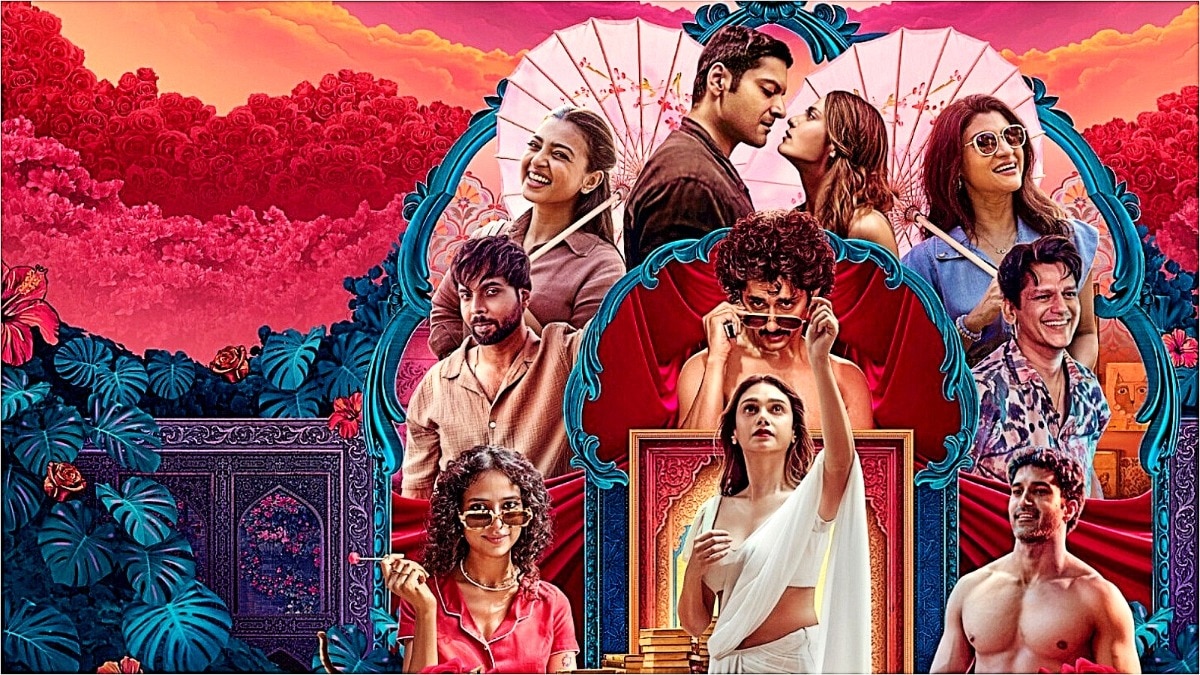
Lust Stories has never really been just about lust. Beneath the sex, the seduction and the forbidden glances, the anthology has always been interested in something messier - the private battles people fight with themselves when desire refuses to stay neatly within the boundaries of right and wrong. Its best stories have lived in that grey space, where morality blurs, choices become complicated, and the journey matters more than the destination.
That is what makes Lust Stories 3 slightly disappointing. When the arcs become predictable and the characters remain largely unlayered, the anthology loses the very uncertainty that once made it exciting. The idea was always to take this lustful journey with these people and arrive at a precipice where you are not entirely sure who is right or wrong. The final choices may not make perfect sense, but the journey should leave you feeling that it was worth taking.
Lust Stories 3 brings together four featurettes by Vikramaditya Motwane, Kiran Rao, Shakun Batra and Vishal Bhardwaj. Their signature cinematic languages are unmistakable, but while all four films have something to say about desire, intimacy and the lives people construct around them, it is Bhardwaj's segment that feels the most mature, layered and complete.
In Motwane's segment, Konkona Sen Sharma and Radhika Apte play women in their 40s trying to inject some excitement into marriages that have slowly become lust-less. Their solution is as unconventional as it is provocative: swapping partners.
Motwane's camera remains firmly aligned with the female gaze, refusing to dismiss the women's desires as frivolous simply because they are married, middle-aged mothers. Their friendship, ambitions and renewed attention to themselves make their decision feel less like a whim and more like an attempt to reclaim a part of themselves that domesticity has quietly consumed.
But just when you begin surrendering to their world, the story turns uncomfortable, and not necessarily in an interesting way.
Konkona and Radhika are both terrific as women trying to negotiate motherhood, marriage and desire without losing themselves in the process. But it is Vijay Varma who repeatedly steals the frame. There is a lovely subtlety to his performance, a confidence in occupying a scene without needing to say much at all. His chemistry with both women feels effortless, never performed.
Unfortunately, none of that quite rescues the film's lopsided ending. The women's friendship, arguably its most refreshing and emotionally interesting element, recedes just when the story needs it most. What remains is a rather conventional idea of what winning looks like.Kiran Rao's story
Kiran Rao's segment moves into the Mumbai of people who arrive carrying dreams much larger than their circumstances. Gurfateh Pirzada and Sana Thampi play Karan and Lisa, two young people trying to survive the city while hoping that survival will eventually turn into something more.
Karan is a pizza delivery rider who also supplies drugs - because even a pizza box can carry another secret. Lisa is a nail artist, one among countless young people who arrive from different parts of the country hoping to build a brighter future in Mumbai.
Here, money becomes the only language everyone understands. The sweet chemistry between Karan and Lisa develops naturally, and for a while, Rao makes you believe in their little pocket of possibility. But once you start rooting for them, the twists begin arriving almost exactly when you expect them to.
The larger idea is an interesting one: lust can sometimes be a facade, a mirage of instant gratification that briefly makes an uncertain life feel better, even as it distracts you from the larger goal. Rao's control over her frames and her understanding of the city are evident. But the writing feels too slight for the world this anthology has created. The story has the surface of a Lust Stories tale without quite possessing its emotional complication.advertisementShakun Batra's storyShakun Batra's segment follows a young married couple, Varun and Sailee, played by Ali Fazal and Radhika Madan, who seem to have forgotten how to communicate with each other except through sex. Their arguments are constant, their resentment keeps deepening and the only time the noise stops is when they are intimate.
Eventually, the arguments become so exhausting that the only apparent way out is out of the marriage itself. The film, however, does stumble over how easily its characters seem to reach that point, especially in a country where walking away from a marriage is rarely as simple as deciding to do so.
But Batra understands something fundamental about ordinary relationships: the most devastating stories are not the extraordinary ones, but the ones that feel uncomfortably familiar.
You may have met a Varun. You may know a Sailee. You may have watched two people slowly turn a relationship into a battlefield and then wonder when exactly they stopped being on the same side. That familiarity becomes the segment's strength.
Fazal and Madan deliver controlled performances. Their intimate scenes are beautifully shot, but more importantly, the filmmaking makes you understand why these moments matter. Before the film tells you that sex is their language of communication, you can see it for yourself. This is when the two of them stop fighting. This is when the noise disappears. This is when they feel alive.
Batra also captures the suffocation of inherited ideas about marriage: parents who treat it as a responsibility, a duty, something that must simply be endured and completed. An elevator sequence, in particular, quietly crystallises the couple's emotional exhaustion.
It is a familiar story, but Batra knows how to make familiarity sting.Vishal Bhardwaj's story
And then comes Vishal Bhardwaj, who finally gives Lust Stories 3 the texture and complexity the anthology promises.
Set in Hyderabad, seemingly in the 1980s, Bhardwaj's segment stars Aditi Rao Hydari and Siddharth as Saira and Badru, a married couple who have settled into the comfortable rhythm of Friday-to-Friday intimacy.
Their marriage works, until Saira begins wanting more: more thought, more curiosity, more pleasure and more from herself.
Saira is an English teacher raised on the writings of Ismat Chughtai and Saadat Hasan Manto. When her students gift her an erotic book, something shifts inside her. For the first time, she finds a language for desires she had perhaps felt but never quite understood.
And then she does something even more radical: she begins writing erotica herself.
That is where Bhardwaj's decision to place the story in the 1980s becomes particularly effective. Saira is not simply fighting the patriarchy around her; she is also confronting the parts of it that she has internalised. How can a woman read about sex? How can she write about it? And, perhaps most frighteningly, how can she admit that she enjoys it?
What will her husband think? What will society think? And what happens when a woman stops being embarrassed by her own desire?
Bhardwaj makes these questions feel less like declarations and more like whispers passing through a household. The film is deliciously atmospheric, aided by the chemistry between Aditi Rao Hydari and Siddharth. The camera moves through red curtains, velvet bedsheets and the imposing havelis of Hyderabad, turning desire into something tactile and almost tangible.
There is beauty everywhere, but never just for beauty's sake. The visual richness becomes part of Saira's awakening.
A fabulous Gajraj Rao, despite having little conventional dialogue to work with, leaves a lasting impression as Saira's progressive father-in-law. His character also allows Bhardwaj to make one of the film's most quietly meaningful observations: a woman's worth within a marriage need not begin and end with motherhood. She can study. She can work. She can make a name for herself. She can complete her PhD. She can have a life before she is expected to build another one for someone else.
And so, when the film arrives at its 'climax', you realise that the real subject was never sex, it was permission - permission to want, to imagine and to discover a part of yourself that everyone else told you to keep hidden.
Lust Stories 3 is not as powerful as one might expect from the anthology's premise or its formidable line-up of filmmakers. There are moments of genuine beauty, sharp observations and performances that linger, but the stories do not always possess the moral ambiguity and emotional aftertaste that made the earlier films so compelling.
Yet there is something valuable in the way all four filmmakers return, in different ways, to the female gaze. They look at women not merely as objects of desire, but as people who desire - complicated, contradictory, occasionally selfish and often unsure of what they want until they finally allow themselves to want it.
The problem is that not every story knows what to do with that freedom. Some arrive at desire only to retreat into predictability. Some mistake a twist for a revelation. And one, Bhardwaj's, understands that the most interesting thing about lust is not the act itself, but the person you become when you stop pretending you don't have it.
Lust Stories 3 is currently streaming on Netflix.- EndsPublished By: Vineeta KumarPublished On: Sep 18, 2026 12:53 IST