Malaysia’s GDP expands 5.5% on tech boom, even as wage gains lag - The Business Times
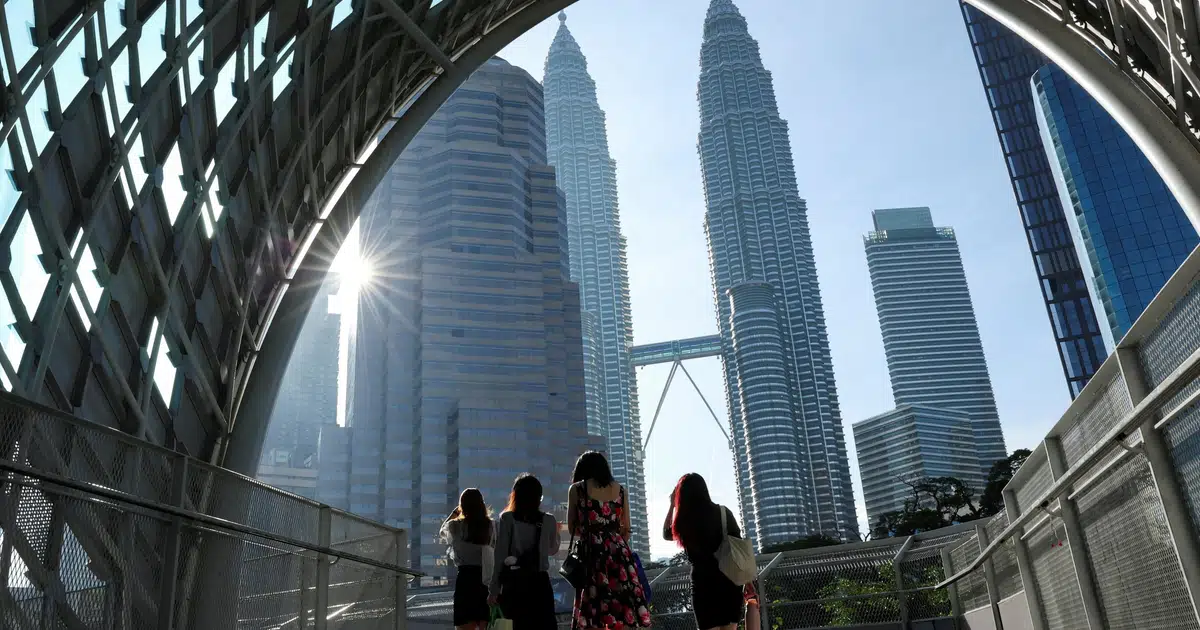
Its central bank forecasts growth above 5% in 2026 and 4.2% to 5.2% in 2027, led by domestic demand
[KUALA LUMPUR] Malaysia’s economy grew 5.5 per cent in the third quarter, driven by technology exports and sustained domestic spending, putting full-year growth on track to exceed 5 per cent despite geopolitical risks.
The final figure was higher than earlier official estimates and a Reuters poll of 5.3 per cent for the July-to-September period, though it slowed from 6 per cent in the preceding quarter.
On a seasonally adjusted basis, the economy expanded 1.5 per cent from the previous quarter, down from the 2.5 per cent growth recorded in the prior period.
The result brought growth for the first nine months of 2026 to 5.6 per cent.
At a media briefing on Wednesday (Nov 18), Bank Negara Malaysia governor Abdul Rasheed Ghaffour said domestic demand, the global technology upcycle and structural reforms would help sustain growth into 2027.
“Malaysia’s economy is very likely to grow by above 5 per cent in 2026 and by 4.2 to 5.2 per cent in 2027, with domestic demand to remain as a major driver of growth,” he said.
Domestic electrical and electronics (E&E) exports surged 66.9 per cent year on year in Q3, as investment in artificial intelligence sustained the demand for chips. Semiconductor exports reached RM136 billion (US$33 billion), nearly double their value a year earlier.
China, Singapore and the US remained Malaysia’s largest E&E export markets, with shipments to all three recording double-digit growth.
Asked about the new US chip restrictions, Abdul Rasheed said it was too early to assess their impact.
He added that ongoing and planned projects should keep data-centre investment strong to at least 2030, while Malaysia’s diversified economy and export markets would help cushion external shocks.
Manufacturing expanded 7.7 per cent and services grew 5.8 per cent, said the Department of Statistics Malaysia.
Agriculture returned to growth as palm-oil yields improved, while mining and quarrying contracted 6.1 per cent as scheduled maintenance reduced oil and gas production.
BIMB Securities is maintaining its 2026 gross domestic product growth forecast at 5.5 per cent, expecting fourth-quarter growth to moderate to 5.1 per cent.
Zafri Zulkeffeli, its deputy chief economist, projects growth to remain robust at 5 per cent in 2027, driven by recovering domestic demand, AI-fuelled E&E exports and stronger tourism.
However, he warned that four key headwinds threaten this outlook: oil prices, AI demand, data centre roll-outs and extreme weather.
“An oil-price spike could weigh on consumer spending, while data-centre delays would hit investment momentum,” he said, noting an AI downturn and prolonged El Nino could also hurt semiconductor exports and agriculture.
Household consumption grew 4.3 per cent, supported by favourable labour-market conditions and steady income growth.
Abdul Rasheed attributed the moderation in spending growth largely to a high base after bigger cash transfers a year earlier.
Private investment rose 9.4 per cent, as companies spent more on structures, machinery and equipment.
Abdul Rasheed said the RM350.4 billion in investments approved in the first nine months should translate into spending over time, particularly in information and communications technology, E&E and chemicals.
Businesses surveyed by Bank Negara reported stronger revenue prospects for Q4 and 2027, and said they were more willing to expand capacity and hire.
Abdul Rasheed noted that E&E labour productivity rose 14.2 per cent in the second quarter, while growth in skilled job creation in the sector held at 7 per cent over the first nine months.
However, he observed that the productivity gains had been slow to translate into higher wages, a pattern that extended beyond the E&E sector. Employees’ compensation stood at 33.9 per cent of GDP, below the 40 per cent target under the 13th Malaysia Plan.
“The industry, therefore, should play a greater role in ensuring workers get their fair share of productivity gains through higher wages,” he said.
Headline inflation held at 1.9 per cent in the Q3 and core inflation eased to 1.7 per cent. Still, the share of consumer price index items recording monthly price increases rose to 48.3 per cent, above its historical average.
The central bank expects headline inflation to average 1.5 to 2.5 per cent this year, and 1.8 to 2.8 per cent in 2027. Abdul Rasheed said the central bank would assess how widespread and persistent price increases were in weighing its next policy decision.
Bank Negara has held the overnight policy rate at 2.75 per cent since cutting it by 25 basis points in July 2025.
Sanjay Mathur, ANZ Research’s chief economist for South-east Asia and India, described Malaysia’s growth as exceptional and said full-year expansion should comfortably exceed 5 per cent.
He expects strong private-sector demand and a tight labour market to push inflation higher next year. ANZ maintained its forecast for a 25-basis-point increase in the policy rate to 3 per cent in the first quarter of 2027.
BMI, a Fitch Solutions company, raised its 2027 inflation forecast to 2 per cent from 1.8 per cent.
It said higher prices and debt repayments would squeeze purchasing power and limit discretionary spending, though it still expects inflation-adjusted household spending to grow about 4.1 per cent in both years.
Decoding Asia newsletter: your guide to navigating Asia in a new global order. Sign up here to get Decoding Asia newsletter. Delivered to your inbox. Free.
Most COE prices fall; Cat A COE is down 6.4% but still costs more than Cat B
Taylor Swift has over 300 trademark filings. Why do most SMEs have none?