Mamata Banerjee and Congress: A political journey comes full circle - The Indian Express
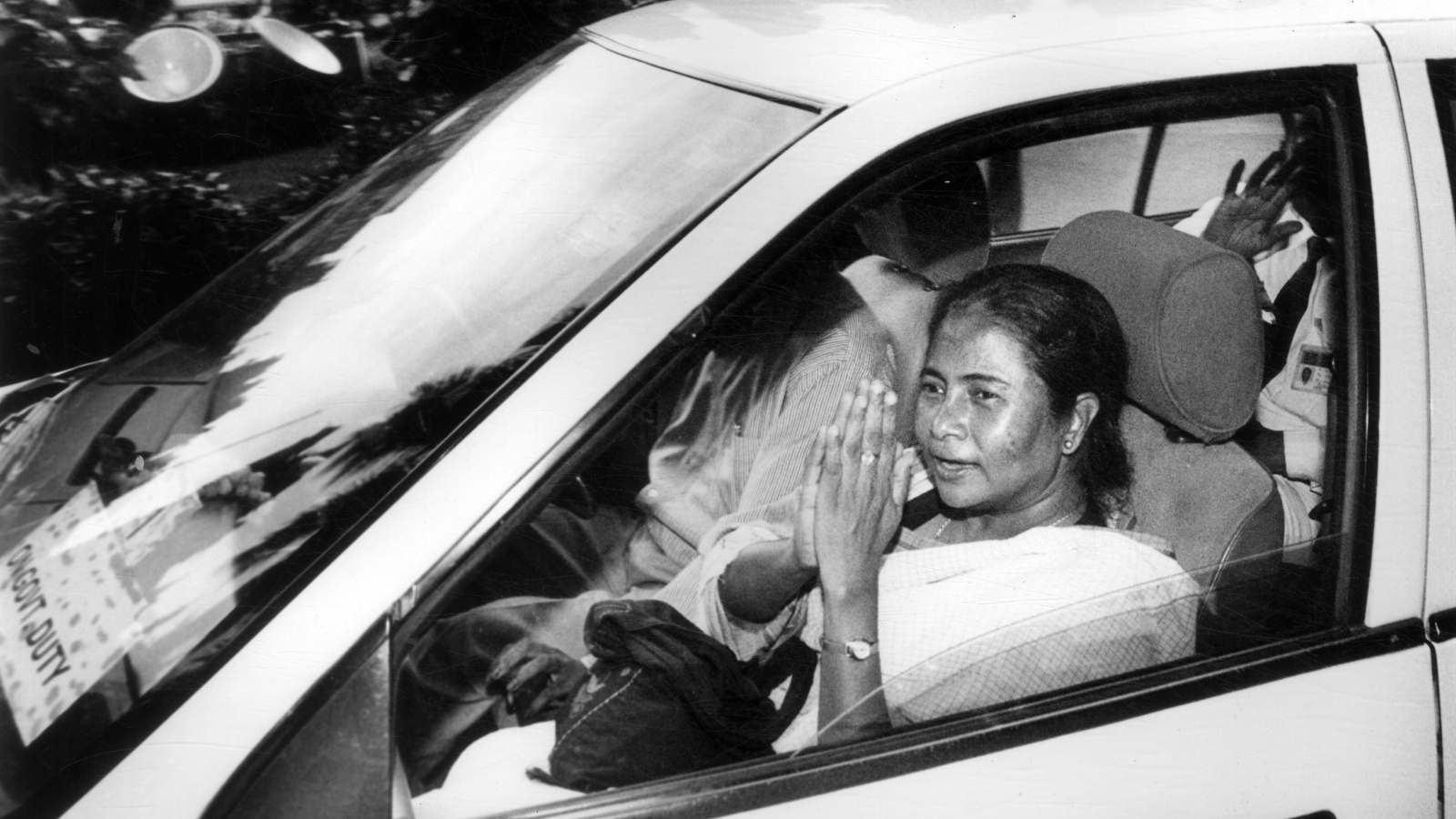
Days after her party denied that it had reached out to the Congress over a pact for the October 6 Nandigram and Rejinagar Assembly bypolls in West Bengal, choosing to opt out of the contest in Nandigram, Mamata Banerjee on Friday announced her party would support the grand old party in the bypoll. The announcement came moments after her party’s candidate withdrew from the contest.
“For better relations, we had already decided that we would support the Congress in Nandigram. This is to strengthen the INDIA alliance. We will decide on Rejinagar bypolls later,” Banerjee said at a press conference at her home in Kolkata’s Kalighat neighbourhood. Earlier in the week, the state Congress leadership had claimed that the party had rejected Banerjee’s seat-sharing proposal for the bypolls.
For Banerjee, this marks a full circle in her political journey. A woman who started her political journey and made her first big mark with the Congress, then broke away from the party to form the TMC and bring down the Left, is now backing that very party while facing the toughest political battle of her career.
In My Unforgettable Memories, the English translation of her memoir, Banerjee writes that her entry into active politics coincided with the loss of her father. At the time, she was a student at Jogamaya Devi College in Kolkata and helped set up the Chhatra Parishad unit in the college, taking on the Left.
After college, Banerjee embarked on her political career in 1970, rising through party ranks as she displayed leadership skills, including a famous incident post-Emergency when she waved a black flag at then Prime Minister Morarji Desai during his visit to Kolkata.
However, she critiqued the Congress culture, the initial signs of what would lead to a decisive break with the party two decades later. “The culture in the party is that when any regional faction gets too active it is immediately censored by the top leadership … The party’s top leadership expected us to be quiet and calm, give the occasional speeches, write the occasional report, make some money, and share some of it with the party – this was the party’s idea of political activism,” she writes.
In 1984, Banerjee pulled off one of the biggest upsets in Indian electoral history when she defeated CPI(M) leader Somnath Chatterjee from the Red citadel of Jadavpur in Kolkata. Banerjee writes she did not think she would win, “but I was quite clear that I would not yield an inch without a fight”. Among those who helped campaign was former Chief Minister Prafulla Chandra Sen who, Banerjee writes, came out of retirement to help her campaign.
Banerjee slowly established herself as the most vocal anti-Left figure in Bengal politics and was the central figure in the 1993 march to Writers’ Building against alleged electoral irregularities. The Calcutta Police opened fire on the Youth Congress protest, killing 13, and, in subsequent years, this moment came to be marked as Martyrs’ Day by the Congress and the Trinamool Congress (TMC).
However, the differences between Banerjee and the Congress leadership continued to simmer over what she saw as Delhi’s refusal to take on the CPI(M) with seriousness and its decision to effectively sideline “several anti-CPI(M) hardliners” who were “summarily dropped and in their place non-controversial softliners were chosen”. She alleged that in 1992, the CPI(M) even tried to have its say in choosing the state Congress president.
In the 1996 Assembly elections, the Congress’s list of candidates had “some names which were unacceptable to me”, Banerjee writes. She decided to withdraw her candidacy for the Lok Sabha elections, but she did not end up following through on her decision, which he writes she came to regret.
The situation came to a head the following year during the party organisational elections when several leaders perceived as anti-Left hardliners were not offered membership.
“We approached everyone up and down the ladder and after our repeated protests fetched no response, met both Sitaram Kesri and Sonia Gandhi. Party members from Bengal, who like us wanted to take on the CPI(M) in the state, made repeated attempts to convince the Delhi leadership. Every time a delegation would come to Delhi, they would be assured that their views would be taken into consideration. Gradually, the softliners among us, having failed to convince Delhi, decided to pick the CPI(M) as a trump card. Hiding behind a façade, the CPI(M) pretended to help the Congress on the outside but plotted to have us cornered within the party,” Banerjee writes.
With the differences remaining unresolved, Banerjee broke away from the Congress on January 1, 1998, to establish the TMC. Over the next decade, she took the fight to the CPI(M) in the state even as she aligned with the NDA led by Atal Bihari Vajpayee nationally, serving as the Union Minister for Railways starting in 1999. The TMC and the BJP fought the 2004 Lok Sabha elections together as allies to counter the Left in Bengal. The alliance, however, lost that election. After the TMC was routed in the 2006 state elections, Banerjee started to distance herself from the BJP.
Then came the agitations in Singur and Nandigram and in 2009, as the Left started to lose its grip electorally, Banerjee joined the Congress-led UPA-2 government at the Centre. In 2011, with the Congress by her side, she ended over three decades of Left rule.
Though both were in government, the alliance was an uneasy one as several top Congress leaders by then had moved to the TMC, including Subrata Mukherjee and Somen Mitra, and the Congress organisation weakened across the state. In September 2012, she abruptly pulled the TMC out of the UPA government over policy disputes, straining ties for the next decade as the TMC worked to shrink the Congress’s footprint in Bengal.
The Congress went on to join hands with the Left ahead of the 2016 elections to oppose the TMC. By then, anti-Mamata figures such as Adhir Ranjan Chowdhury held sway in the state Congress.
This did not sit well with Banerjee, who deemed the alliance as grave a threat to Bengal as the BJP that had emerged as the dominant political force nationally. The TMC chairperson managed to retain power comfortably in 2016, but the threat the BJP posed to the TMC became apparent in 2019 when the BJP won 18 Lok Sabha seats in the state. In 2021, Banerjee returned to power again, keeping the BJP at bay even as the Left and the Congress failed to open their accounts.
But the pulls and pressures of national politics pushed her into an uneasy alliance with these parties ahead of the 2024 Lok Sabha polls. This, however, did not translate into a political pact in Bengal amid the bad blood between the two sides.
Tensions flared ahead of the 2024 Lok Sabha elections when seat-sharing negotiations collapsed. Banerjee announced that the TMC would go solo in West Bengal, criticising the state Congress leadership and that she was not even informed during Rahul Gandhi’s Bharat Jodo Nyay Yatra. She was conspicuous by her absence in the yatra. Banerjee also maintained that regional parties in the INDIA bloc should lead their respective states without Congress interference, effectively boxing out the national party from bargaining power in Bengal.
Now, out of power, her party weakened following large-scale rebellions from MLAs and MPs, and with the party symbol and name frozen, Banerjee is increasingly finding herself cornered. And in her political desperation, she is looking to hold on to her former party and the INDIA alliance to regain her footing, making a political turn that would have once appeared unthinkable.
Ravik Bhattacharya is a highly experienced and award-winning journalist currently s... Read More