Mamata must purge herself of past 'sins' first: CPI(M)'s Md Salim on tie-up
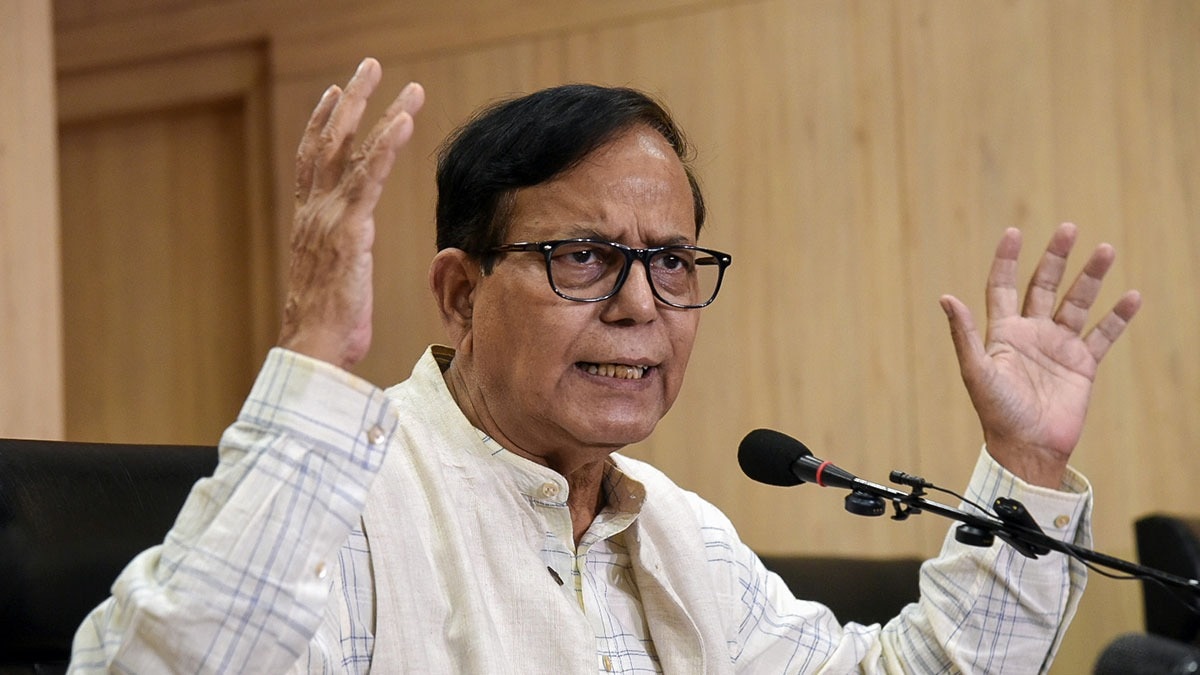
Even as the Opposition attempts to put up a united front against the BJP nationally, questions have arisen again over whether the CPI(M) and Trinamool Congress (TMC) could come together in West Bengal, where civic polls are forthcoming.
CPI(M) state secretary Md Salim, however, has ruled out any immediate electoral understanding, arguing that the TMC and Mamata Banerjee have to first reckon with their “past sins”. At the same time, Salim said the CPI(M) would seek to unite all Left entities and work with “like-minded political forces and individuals” at the local level in Bengal. Excerpts from an interview to INDIA TODAY:
Q. Is a state-level alliance between the CPI(M) and TMC possible given that Opposition parties at the national level are trying to put up a joint fight against the BJP?
A. Mamata Banerjee is paying for her past. The CPI(M) had decided at the Kannur Party Congress [in April 2022] that a united fight should be staged against the BJP. But it was also very clear that in West Bengal and Kerala, electoral alliances are not possible since in these states, we were fighting against the Trinamool and Congress, respectively.
This September, our general secretary M.A. Baby wrote to several Opposition parties, including the TMC, Aam Aadmi Party, Dravida Munnetra Kazhagam and Communist Party of India (Marxist-Leninist), in order to galvanise them to put up a joint fight against the BJP, particularly on the issue of credibility of the chief election commissioner. Mamata Banerjee promptly responded and even spoke to Baby over the phone.Such proactiveness suits Mamata Banerjee’s current status. She will do anything to remain relevant. She might as well look for an entry into Parliament to keep herself afloat nationally. But this proactiveness might have disappeared had she won the West Bengal elections this year.
So, the question of forging an alliance with the TMC in Bengal does not arise yet. Mamata Banerjee has to purge herself of her past, her sins, first.
We understand that several key forces within the INDIA bloc and the Opposition at large disagree with us. While they are aligned with us on other issues, they do not understand the political realities of Bengal.
Q. The BJP is already saying the CPI(M), TMC and Congress will forge an alliance for the upcoming civic polls in Bengal.
A. Of course, they (BJP) will try to float that narrative as it benefits them. The people are very angry and upset with Mamata Banerjee and her party. The kind of corruption, political violence, extortion and authoritarianism she unleashed in Bengal has not been forgiven. The BJP is talking about such an alliance to mislead people and turn voters away from us.
Under Mamata Banerjee, the Muslim electorate was always taken for granted. There was an unwritten diktat that Muslims would vote for her. Under the BJP, Hindus are being taken for granted.
However, our activities across the state have intensified. People are attending our events in big numbers. The BJP is unhappy about that, which is why it is attacking our events, such as the one in Uttar Dum Dum on October 2, and earlier in Bongaon subdivision and Cooch Behar.
These are refugee areas where poor, lower-caste Hindus live, and they are turning towards us. Spreading the fake narrative of an alliance serves the BJP’s purpose of misleading people.
Q. What is the Left’s strategy for the civic polls?
A. Firstly, all Left forces have to be brought together, followed by like-minded political forces and individuals. Individuals with acceptability across sections of people and those aligned to our ideology will get our support to contest. A wider Left alliance is the call now.
A special convention is being organised on October 12 in Bengal against the BJP government’s decision to insult renowned world leaders such as Karl Marx, Vladimir Lenin and Ho Chi Minh by renaming roads named after them. These were personalities whom even Indian luminaries, such as Netaji Subhas Chandra Bose, Bhagat Singh and Rabindranath Tagore, had praised.
The pamphlet for this convention has been issued by SUCI (Socialist Unity Centre of India (Communist), a Left party that was tooth and nail against us. But given the need of the hour, we are getting together.
An apolitical convention will also be organised soon, wherein former bureaucrats, political leaders, lawyers, judges, journalists and victims of the Special Intensive Revision (SIR) of voter rolls will speak.
Q. What about the Durga Puja book stalls? The BJP and its affiliates are dead against them.
A. We will have more stalls than last year. We have plans ready on how to safeguard them. If anything happens, we will be ready. There will be more titles this time than have been in a really long time.
Arkamoy Datta Majumdar is an Assistant Editor with India Today magazine, based in Kolkata. He writes about politics, international relationship, football, and society, with a particular focus on eastern India and the political transformation of West Bengal. He oversees the editorial operations in the eastern states of West Bengal, Odisha and Sikkim.
His reporting sits at the intersection of politics and everyday life. He covers elections and political parties, governance and public policy, political movements, identity and cultural politics, federalism, border issues and the changing relationship between the state and its citizens. In West Bengal, his work has closely followed the rise of the BJP, the evolution of the Trinamool Congress, the Left and Congress, electoral politics, voter-list and citizenship questions, welfare politics and the ways in which political competition increasingly plays out through culture, religion, education and public institutions. He has covered the crucial Bangladesh elections of 2026 from Dhaka.
He also follows the wider politics of the eastern region, particularly where questions of borders, migration, regional identity, security and diplomacy intersect with domestic politics.
For Arkamoy, political journalism is as much about understanding people and places as it is about following politicians. He is interested in what happens between an announcement and its implementation, between a political slogan and its impact on the ground, and in the quieter social and cultural shifts that often reveal where politics is heading.