Map Shows 7 States Hit By Frost Warnings As Early Fall Cold Blast Hits
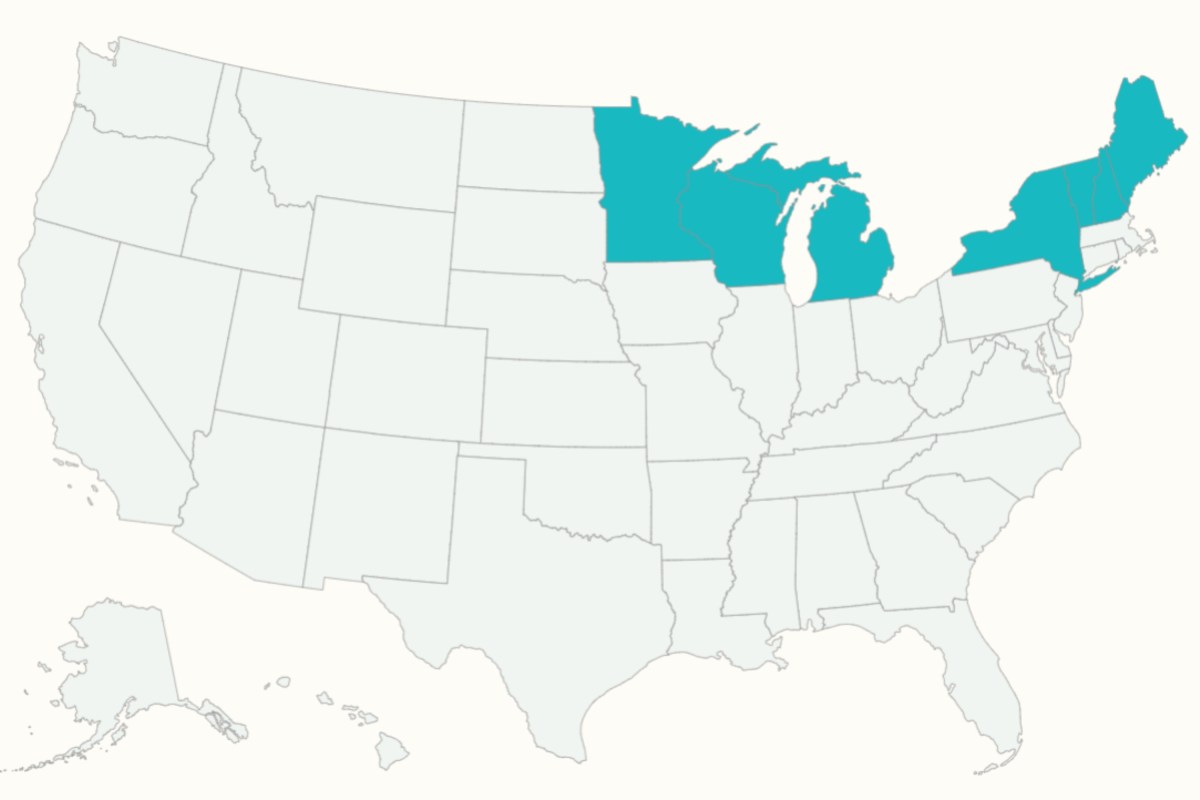
Frost advisories are in place from federal forecasters across portions of seven states for Wednesday morning, with temperatures in the low- to mid-30s threatening sensitive outdoor plants.
The National Weather Service (NWS) issued the advisories for portions of Maine, Michigan, Minnesota, New Hampshire, New York, Vermont and Wisconsin. Its forecasters have advised residents in affected areas to take steps to protect tender plants from the cold and frost, warning that some could be killed if left uncovered.
Wednesday’s advisories come after NWS offices in Minnesota, Michigan and Wisconsin issued frost advisories and even a freeze warning for Tuesday morning. NWS meteorologist Ben Warren told Newsweek that Tuesday’s freeze warning in Michigan was the first issued by the agency’s Marquette office this season.
The alerts also come after Tuesday’s fall equinox marked the start of astronomical fall in the Northern Hemisphere.
The NWS’s advisories for Wednesday span parts of Minnesota, Wisconsin, Michigan, New York, Vermont, New Hampshire and Maine.
In Wisconsin, a frost advisory covering Lincoln, Oneida, Vilas, Florence and Forest counties remains in effect until 7 a.m. CDT Wednesday. The NWS said temperatures in the mid-30s would allow frost to form.
Another advisory is in effect until 8 a.m. CDT for Price, Ashland, Bayfield, Douglas, Iron, Sawyer and Washburn counties. Temperatures could fall as low as 34 degrees, with the greatest chance of frost in inland areas away from Lake Superior, according to the NWS.
In Michigan’s Upper Peninsula, a frost advisory covering central and western Chippewa County and eastern and western Mackinac County remains in effect until 8 a.m. EDT, where the NWS said temperatures could drop as low as 34 degrees.
An additional alert covers parts of central and western Upper Michigan, including Ontonagon, Baraga, Marquette, Alger, Luce, Gogebic, Iron, Dickinson, Delta, Southern Houghton, northern Schoolcraft and southern Schoolcraft. Temperatures could fall as low as 32 degrees before the advisory expires at 9 a.m. EDT, or 8 a.m. CDT, the NWS said.
"With regards to the Upper Peninsula of Michigan, we anticipate that the ongoing frost advisories will be the last ones issued this week as the morning low temperatures will get warmer each day for the rest of the week," Greg Sova, a meteorologist with NWS Marquette, told Newsweek. "We cannot entirely rule out that a few patches of frost may form Thursday morning on some elevated surfaces and local cold spots (such as low-lying areas where cool air settles), but widespread frost is not forecast, so an alert is unlikely."
A frost advisory in Minnesota covers Koochiching, North Itasca, South Itasca, central St. Louis, north St. Louis, and northern Cook and Lake counties until 8 a.m. CDT. The NWS said temperatures could fall as low as 34 degrees, with inland areas away from Lake Superior facing the greatest chance of frost.
A Maine advisory covers southern Oxford County and the Interior Cumberland Highlands, where temperatures could fall as low as 33 degrees. This remains in effect until 7 a.m. EDT as of reporting.
In New Hampshire, northern Carroll and northern Grafton counties are under a frost advisory until 7 a.m. EDT.
Across New York and Vermont, a frost advisory covering the St. Lawrence Valley and parts of northern, central, and southern Vermont remains in effect until 9 a.m. EDT, with temperatures in the lower to mid-30s expected.
“Frost could harm sensitive outdoor vegetation,” the NWS cautioned. “Sensitive outdoor plants may be killed if left uncovered.”
A frost advisory is issued when frost is expected or already forming and could damage sensitive vegetation, according to the NWS.
Freeze warnings, which are more severe, are issued when temperatures are forecast to remain below 32 degrees Fahrenheit for an extended period. Those conditions can kill some commercial crops and residential plants, while prolonged temperatures below 28 degrees can kill most types, the agency says.