
Map Shows Cyclospora Cases Across US As Outbreak Declared Over - Newsweek
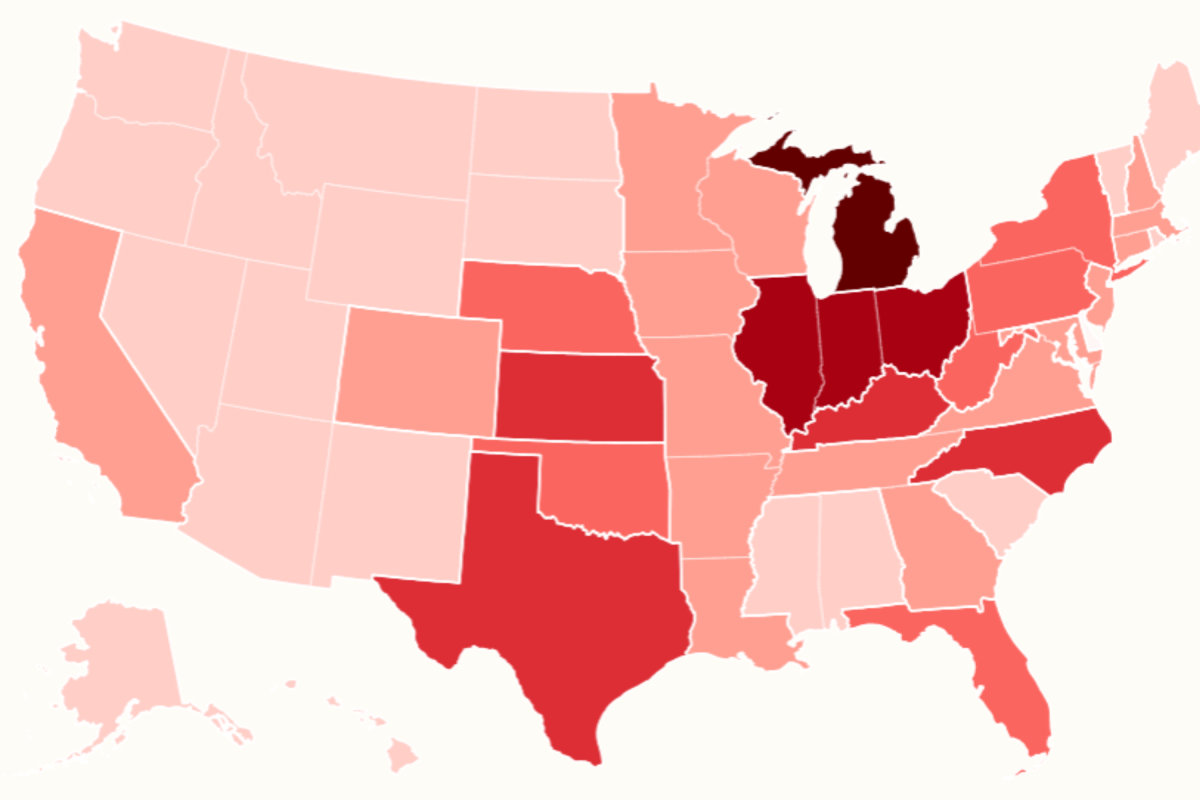
The Centers for Disease Control and Prevention (CDC) has declared a multistate Cyclospora outbreak linked to iceberg lettuce over after it impacted 12,883 people across 21 states, hospitalized 570 and caused two deaths.
Newsweek has mapped these cases, broken down what we know about the cause of the outbreak, and looked at other ongoing foodborne outbreaks.
The outbreak, one of the largest recorded in the United States, was traced to processed iceberg lettuce supplied by Taylor Farms de Mexico. The company recalled all iceberg lettuce sourced from central Mexico on July 17, and the CDC said the affected products are no longer available in stores or restaurants.
“At this time, there is no risk of people getting sick with cyclosporiasis from this source,” the agency said in its final update on September 11.
The outbreak figures represent only part of a much wider rise in infections involving Cyclospora cayetanensis, a microscopic parasite that causes an intestinal illness called cyclosporiasis.
Since May 1, the CDC has recorded 19,595 laboratory-confirmed, domestically acquired cases in 49 states and Washington, D.C., including 1,043 hospitalizations and two deaths.
The agency’s latest map shows where those patients lived, though it does not necessarily show where they encountered the parasite. Newsweek has created a map illustrating these figures below.
https://public.flourish.studio/visualisation/30232133/
Officials know the now-ended outbreak was associated with contaminated iceberg lettuce, but the precise cause of that contamination remains under investigation by the Food and Drug Administration.
Meanwhile, several separate clusters of cyclosporiasis remain under investigation, and federal officials are also examining ongoing outbreaks involving pathogens including Salmonella, E. coli and Listeria.
The link to iceberg lettuce was established through patient interviews and supply-chain tracing, rather than a confirmed positive laboratory test on the recalled produce.
The investigation began with illnesses associated with Taco Bell restaurants. Michigan officials analyzed the food histories of 190 people who reported eating at the chain, 90 percent of whom said they had eaten iceberg lettuce. FDA investigators then traced lettuce supplied to affected restaurants to a single company.
A lettuce sample initially reported as positive was subsequently re-examined and classified as a false positive because it did not show true amplification of the parasite. The FDA said on July 19 that there were “no confirmed positive sample results” from its product testing.
Investigators have not publicly identified the precise point or mechanism of contamination—such as whether it occurred at a growing operation, through contaminated water or during processing. The parasite spreads when food or water becomes contaminated with human feces and generally takes one to two weeks outside the body to become infectious, meaning direct person-to-person transmission is unlikely.
The FDA conducted inspections and sampling at growing operations and the processing facility in Mexico with Mexican authorities. Its inquiry into how the contamination occurred remains open, despite the CDC ending its outbreak response.
The FDA listed eight active foodborne outbreak investigations involving pathogens other than Cyclospora as of September 12. Some have been tied to specific foods, while the source of others has not yet been identified.
Contact Newsweek editor on this story: Edward Pearcey.


