Map Shows When Mail-In Ballots Must Arrive in Each State - Newsweek
The Supreme Court has blocked new White House-backed Postal Service ballot-mail requirements from taking effect in the 2026 elections, leaving voters and election officials to operate under existing state procedures.
The proposed requirements originated in an executive order signed by President Donald Trump on March 31.
It directed the U.S. Postal Service to require approved ballot envelopes, voter-specific bar codes, and state-submitted lists of mail voters, measures the administration said would reduce fraud and protect election integrity.
Under the new rule, the Postal Service could have returned ballot mail that failed to meet its requirements, but Supreme Court Justice Brett Kavanaugh said officials lacked sufficient time to implement it for 2026.
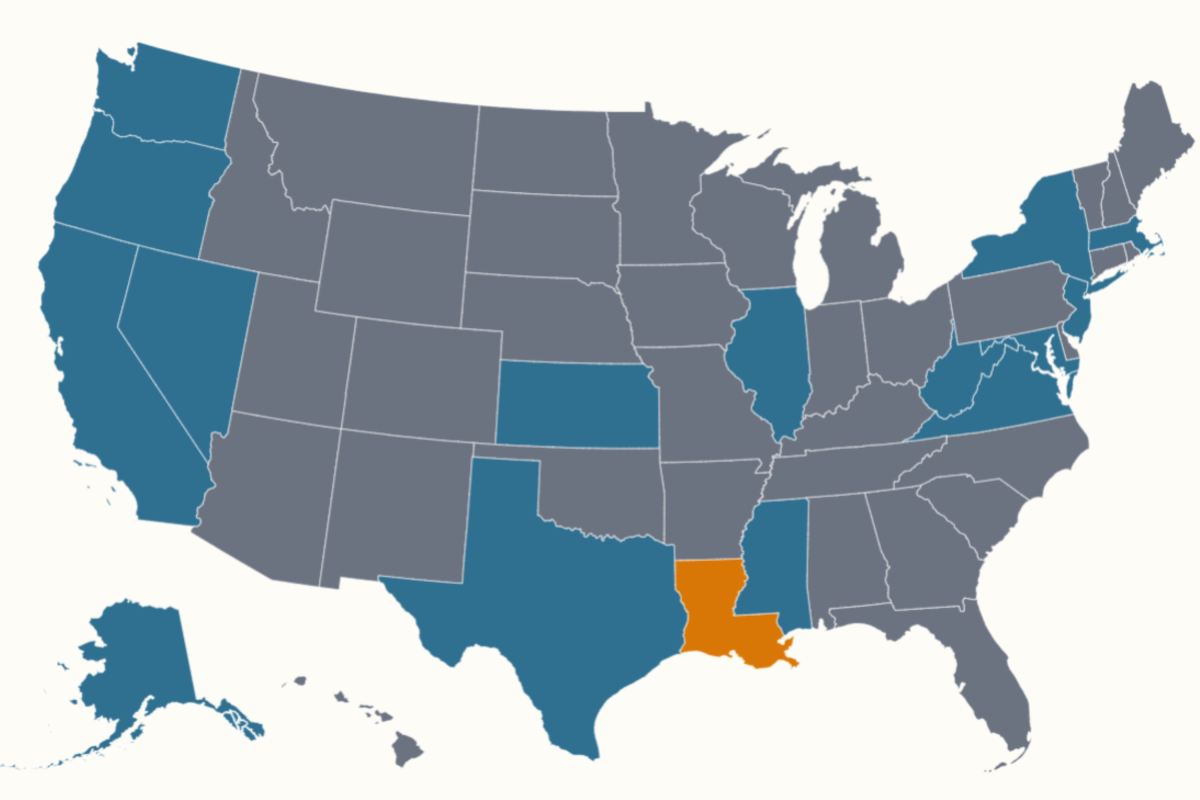
State receipt deadlines therefore remain unchanged: 35 states require mailed ballots to arrive by Election Day, while 15 accept qualifying ballots received later, as shown on the map below.
Still, the decision did not finally determine whether the Postal Service may impose similar requirements in future elections.
A ballot mailed by Election Day is not necessarily valid if it arrives later. Whether it can still be counted depends on the law where the voter casts it.
Use the map below to find your state and see when your mail-in ballot must reach election officials to be counted.
Most states require ballots returned through the mail to reach election officials no later than Election Day, as shown in gray on the map.
That group includes politically competitive states such as Arizona, Georgia, Michigan, North Carolina, Pennsylvania and Wisconsin. Cutoff times vary.
Alabama sets noon, Indiana uses 6 p.m., and Arizona, Florida, New Mexico and Oklahoma use 7 p.m. Pennsylvania, Rhode Island, Utah and Wisconsin allow arrivals until 8 p.m.
Louisiana stands alone in the map’s earliest category. Its absentee ballots must arrive by 4:30 p.m. on the day before the election, regardless of the return method.
Elsewhere, a postmark can preserve a ballot that remains in transit when polls close.
California and Oregon accept qualifying ballots for seven days after Election Day. Alaska, Maryland and Washington, D.C., provide 10-day windows, while Illinois allows 14 days.
Washington state accepts properly postmarked ballots until the day before certification, 21 days after a general election.
Several grace periods are much shorter.
Texas accepts a qualifying ballot until 5 p.m. the next day. Massachusetts and Virginia use the third day after the election, while Nevada allows four days.
Mississippi’s window is five business days.
Kansas is under litigation. A 2025 law moved the state to an Election Day receipt deadline, but a preliminary injunction currently permits ballots postmarked by Election Day to arrive within three days.
A conventional postmark is no longer placed on every piece of mail.
The National Conference of State Legislatures says many states therefore accept an Intelligent Mail bar code as evidence that an envelope entered the postal system on time.
State requirements also differ over illegible or missing marks.
New Jersey, for example, treats ballots without postmarks as valid if they arrive within 48 hours after polls close.
The legal position was clarified on June 29 in Watson v. Republican National Committee.
Writing for a five-justice majority, Justice Amy Coney Barrett said an electorate makes its choice when voting is completed, not when the ballot reaches election officials.
Federal law establishes when votes must be cast, the court found, but does not impose a nationwide receipt deadline.
The decision reversed an appeals court ruling that threatened Mississippi’s policy of counting absentee ballots postmarked by Election Day and received within five business days. It left comparable state laws in place.
“The RNC will continue to back President Trump’s efforts to secure elections. Voters deserve elections they can trust, and that starts with clear rules and strong safeguards against fraud. This fight is far from over, and Republicans will not rest until America’s ballot box is fully protected," Ally Triolo, RNC Election Integrity Communications Director, told Newsweek in a statement.
Postal Service v. California concerned a different question.
The final rule required federal ballot-mail envelopes to carry the Official Election Mail logo, work with high-speed processing equipment and include a voter-specific bar code.
States also would have submitted envelope designs for Postal Service review and uploaded information about ballot recipients.
On September 14, the Supreme Court denied the administration’s emergency request to lift the injunction.
Kavanaugh said applying the requirements in 2026 would violate federal administrative law because election officials did not have enough time to implement them reasonably.
Samuel Alito, joined by Clarence Thomas, dissented. Alito argued that the government was likely to prevail and disputed whether several organizations challenging the rule had shown sufficient grounds to sue.
The order leaves the underlying dispute unresolved. Courts may still determine whether the Postal Service has authority to impose the rule in a future election.
Anyone returning a ballot by mail should check the deadline published by the relevant state or local election office. Voters should not assume that an Election Day postmark protects a late-arriving ballot unless their jurisdiction expressly provides a grace period.
Military personnel and overseas citizens should consult the rules applying specifically to them.