Map Shows Where 870,000 Borrowers Were Banned Over Alleged Pandemic Fraud - Newsweek
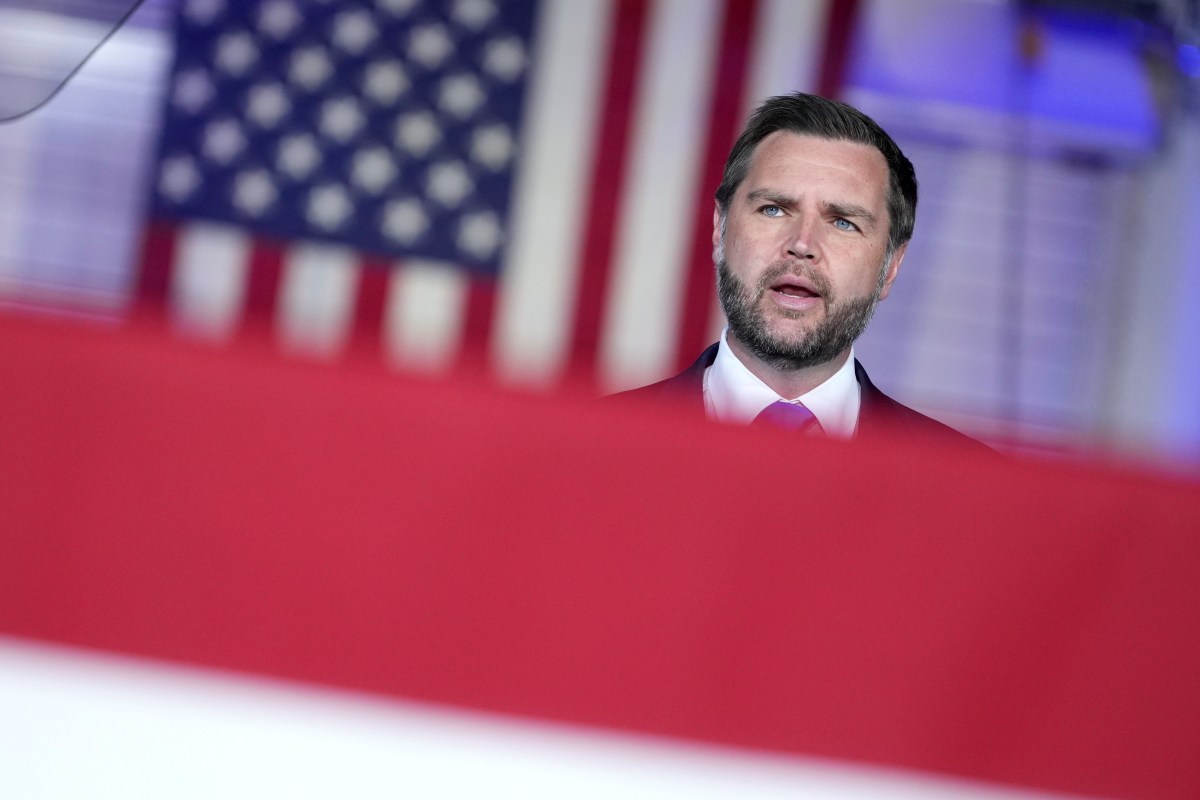
Vice President JD Vance was among Trump administration officials announcing findings of alleged widespread COVID-19 pandemic-era fraud linked to small businesses, totaling more than $39 billion.
The announcement from the Small Business Administration (SBA) in Missouri highlighted the federal government's efforts to crack down on fraud, something Vance has taken a keen interest in since January 2025.
The SBA said hundreds of thousands of businesses, some legitimate and some fake, had been linked to fraudulent payments of Paycheck Protection Program (PPP) funds and Economic Injury Disaster Loans (EIDL).
"The American people have every right to expect that when they write a check to the IRS, when they write a check to the federal government, that money is going to go to where the law says it should go and not to fraudsters," Vance told reporters on Monday afternoon.
Newsweek reached out to the government's Pandemic Oversight panel for further comment.
The SBA said it had already worked to suspend over 150,000 businesses as part of its crackdown, with Monday's announcement vastly expanding those targeted.
SBA Administrator Kelly Loeffler said the 870,000 organizations suspended from receiving government payments were tied to over $39 billion in suspected fraud, mostly during the pandemic. She said that demand letters were being sent to those suspected of defrauding taxpayers, warning they must pay their debts or face further legal action.
The effort falls under the White House's own efforts tied to eliminating fraud, which it has often blamed the Biden administration for. Some of the pandemic-era relief, however, fell under the first Trump administration.
"Pandemic loan relief was meant to keep American small businesses alive during government lockdowns—not line the pockets of fraudsters," U.S. Attorney General Todd Blanche said in a press release. "The defendants charged during our summer surge allegedly fabricated businesses, submitted false payroll and revenue claims, stole identities, and concealed foreign ties on their applications—but they will now be prosecuted to the fullest extent of the law."
Don Kettl, a professor emeritus at the University of Maryland School of Public Policy, told Newsweek that Congress had worked with the first Trump administration to get the funds out at the height of the pandemic.
"The push was on because COVID had devastated many parts of the economy, and the administration wanted to get money quickly out the door," Kettl said. "At the early stages, recipients didn't have to do much more than certify that they met the requirements of the program and that they'd use the money for COVID relief. More than half the money had been distributed before the SBA began instituting tighter controls.
"Then, when SBA started referring cases for investigation of fraud, the Inspector General didn't have enough information to act in two thirds of them. That's the product of an avalanche of cases without enough employees to document them."
While California was not included in the latest announcement, the SBA has previously said it had suspended 112,000 borrowers, totaling an alleged fraud amount of $8.6 billion.
On Monday, the agency said Florida had the highest number of suspensions, at over 118,000. The Sunshine State's total alleged fraud amount was over $5 billion. Texas, Georgia, New York, and Michigan also saw high numbers of borrowers suspended while investigations continued.
Vance, Blanche, Loeffler, and FBI Director Kash Patel all laid out the administration's tough stance on fraud: that perpetrators would be caught and punished.
"Fraudsters took advantage of this country’s generosity when we were most vulnerable. It is disgraceful," Scott Brady, executive director of the White House Task Force to Eliminate Fraud, said in a press release. "Although the previous administration looked the other way, President Donald Trump and Vice President Vance won’t. Fraudsters take note: We’re coming after you."
The SBA previously estimated that over $200 billion in pandemic-era loans and payments was wrongly distributed, roughly 17 percent of the overall total of the two programs.
Part of the issue, the Government Accountability Office has said, is that the federal government was dealing with the need for fast relief when the pandemic hit in early 2020, creating opportunities for fraudsters to exploit the system through self-verification.
That led individuals to create fake businesses and access multiple payments.
"It's hard to make comparisons across administrations," Kettl said. "There's undoubtedly hundreds of billions of dollars of fraud in federal funds every year, and tracking it down requires staff and technology to dig into the details. Any time that the government is in a hurry to get things done—and, especially, to spend money—problems are certain, and that makes the temptation inescapable for some individuals to cheat taxpayers."
In 2024, under the Biden administration, prosecutors charged around 3,500 defendants, recovering over $1.4 billion.
Kettl told Newsweek that tracking the money down now will be difficult, "in part because some of the organizations were shadowy and in part because many legitimate organizations might simply have lost the paper trail."
"Since the goal was to spend money, most of the money has been spent, so the odds of recovering most of it are tiny," he said. "The most that the SBA is likely to be able to accomplish is to put those suspected of fraud on a do-not-contract list, so they can't repeat the behavior."
Contact Newsweek editors on this story: Jenna deJong and Sam Wilson.