Map Shows Where ICE Arrests, Detentions Have Surged Most
Immigration arrests have surged to record levels under President Donald Trump, with federal agents making almost 51,000 arrests in August alone, according to data reviewed by Reuters.
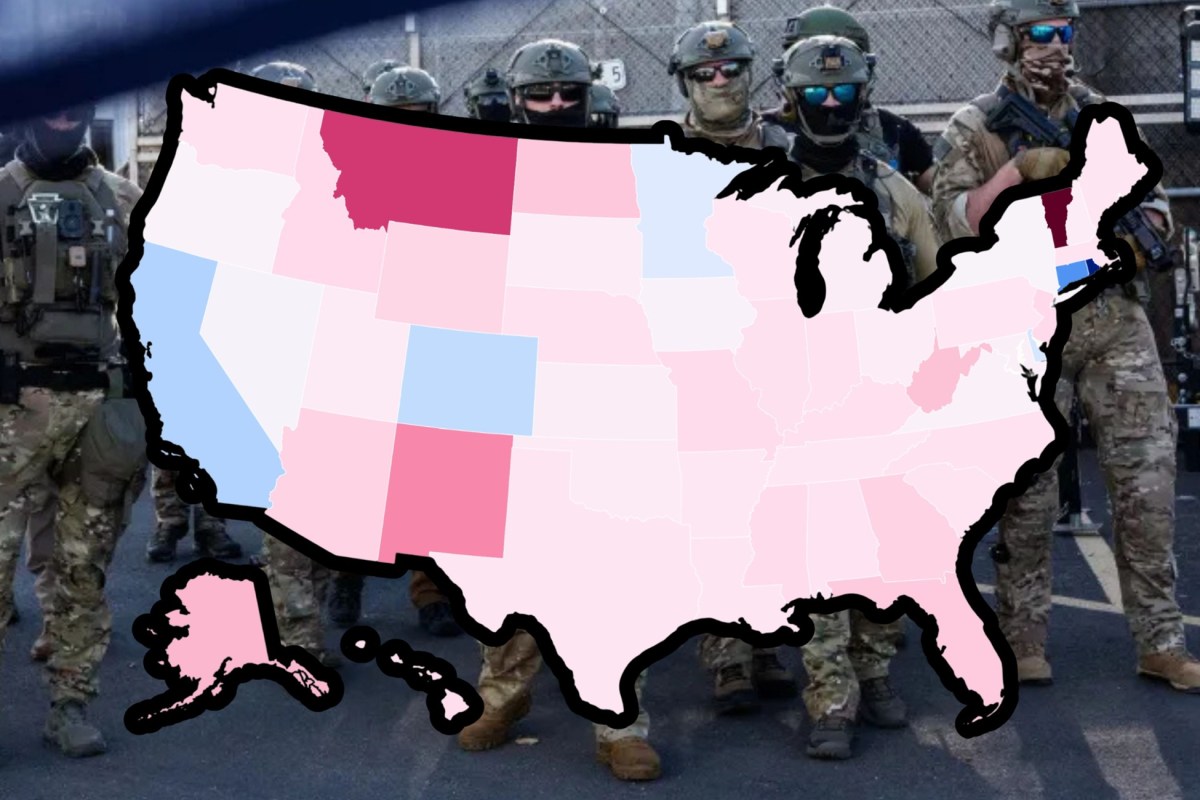
State-by-state figures show the increase has been widespread, with arrests leading to detention rising sharply across much of the country between July 2025 and July 2026 as the administration carries out its mass deportation policy.
Newsweek has created a map using data from the Deportation Data Project to visualize where arrests leading to Immigration and Customs Enforcement (ICE) detention increased in that period.
Trump has repeatedly said that immigration officers are working toward delivering the "single largest Mass Deportation Program in History." According to Reuters, immigration officers have also faced pressure to increase daily arrest numbers as enforcement operations have expanded nationwide.
Homeland Security Secretary Markwayne Mullin highlighted the increase in arrests on social media, writing on September 5 that "DHS continues to break records."
"For the THIRD STRAIGHT month—@ICEgov set a new record for the highest number of illegal aliens arrested in a single month," he said.
Newsweek has contacted ICE for comment via email outside office hours.
According to the data, some of the largest increases have occurred in the South and Southwest.
Texas recorded the highest number of arrests leading to detention in July with 10,331—up from 5,787 in July 2025. Florida almost tripled, increasing from 1,938 to 5,501 arrests leading to detention. Arizona rose from 798 to 2,028, while Georgia increased from 842 to 2,144.
Other states that saw notable increases included New Jersey, which climbed from 822 to 1,854. Pennsylvania rose from 655 to 1,153. Tennessee increased from 598 to 1,009, and Massachusetts rose from 272 to 505.
Among the states that recorded smaller increases or remained relatively stable were New York—which increased modestly from 1,306 to 1,353 arrests leading to detention—and Maryland, which rose from 384 to 496.
"Over the past 21 months, plain-clothed, masked, armed, unidentified and untrained federal agents have terrorized Maryland communities from the Eastern Shore to Park Heights, all the way to Washington County," Shana Khader, the legal director of the immigration advocacy group We Are CASA, said in a news release.
A smaller number of states have experienced declines.
California was one of the focal points of the administration's early enforcement push, recording 2,832 arrests leading to detention in July 2025 during and after Operation at Large. By July 2026, that figure had fallen to 2,386. Colorado declined from 534 to 466, while Rhode Island fell from 56 to 23. Nevada was largely unchanged, declining from 306 to 303.
The rise in arrests does not, however, translate directly into an equivalent increase in deportations. People arrested by immigration authorities can remain in detention while their immigration cases move through the courts, while others may have pending asylum claims or other legal proceedings.
The distinction is significant for the Trump administration's mass deportation policy, which depends not only on increasing arrests but on converting those arrests into completed removals.
October 2025 brought another enforcement surge during Operation Midway Blitz, a large-scale operation led by U.S. Border Patrol official Greg Bovino. According to Deportation Data Project figures, authorities recorded 2,034 arrests in Illinois during that month.
Minnesota also became a focus of immigration enforcement activity. During Operation Metro Surge, authorities recorded 2,052 arrests in January, according to Deportation Data Project data. That increase occurred during the same month that federal immigration agents shot and killed Renée Good and Alex Pretti in Minneapolis.
The latest state figures are consistent with a nationwide rise in arrests. Reuters reported that arrests reached almost 51,000 in August, setting a record for a third consecutive month. Yet deportations have not increased at the same rate. According to the news agency, preliminary government data shows removals have remained relatively steady at 1,200 per day, despite the sharp increase in arrests.
The crackdown increasingly includes people who do not already have deportation orders and who may have pending asylum or other immigration cases, which can slow removal proceedings.
Researchers with the Deportation Data Project similarly found that arrests surged during June and July 2026, reaching the highest levels of Trump's second term. Their analysis said the increase was driven in part by greater cooperation between ICE and local law enforcement agencies, as well as a growing number of arrests involving people without criminal convictions.
While the administration has made mass deportation a defining immigration policy of Trump's second term, the widening gap between arrests and removals shows that a record number of arrests does not necessarily translate into an equivalent number of deportations.
The coming months will show whether the administration can sustain its current pace of arrests while increasing the number of people removed from the country.
Contact Newsweek editors on this story: Matthew Cannon and Shakeema Edwards.