Mark Carney’s pipeline approval puts renewed focus on the unfinished Pathways project - Toronto Star
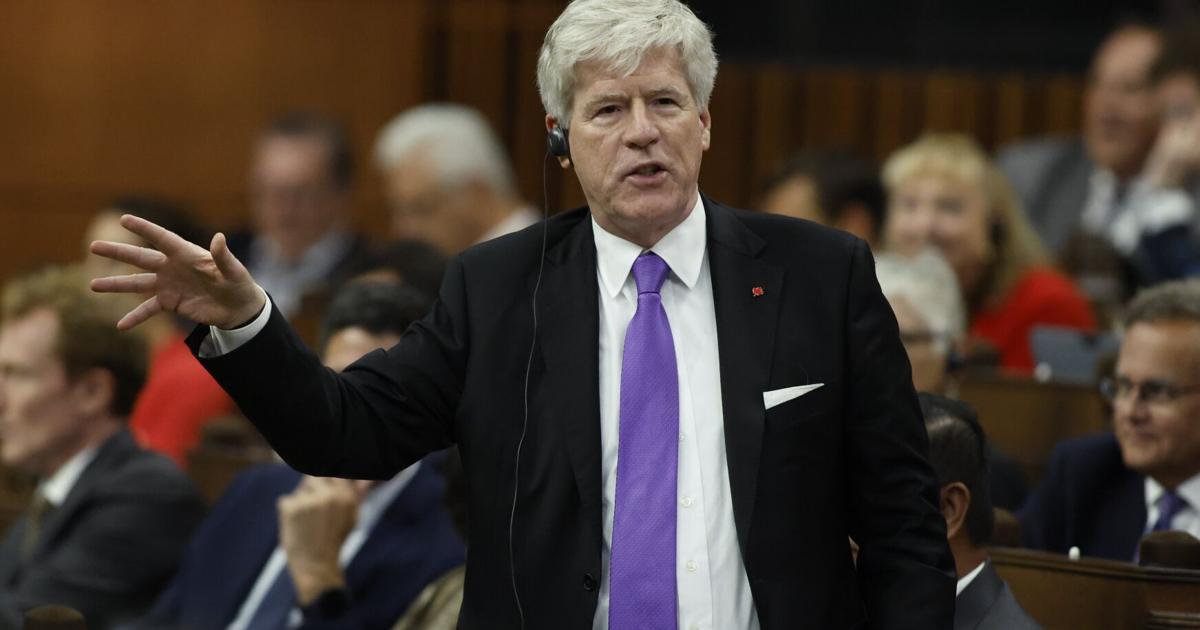
The carbon capture project is meant to mitigate the impact of the new Pacific Link pipeline, but an expert says there's no binding agreement to do it.
Federal Natural Resources Minister Tim Hodgson told the Star he is confident that the energy industry will not only step up on Pathways, but also on new production to fill the new pipeline.
OTTAWA — With the Liberal government’s backing of a fast-tracked pipeline, the only box left to check in the grand Alberta bargain is the Pathways carbon capture project, which has still not been agreed to and which won’t cancel out the new carbon emissions from all the new oil set to be heading down the pipeline.
The carbon capture project is a key part of the government’s deal with Alberta. The province agreed to encourage the project, along with a more stringent carbon tax, and the federal government agreed to back the pipeline. In his announcement Thursday, Prime Minister Mark Carney said the Pathways project would be a new competitive advantage for Canada.
“Pathways will help reduce 16 million tonnes of emissions every year. That’s the equivalent of taking 90 per cent of Alberta’s cars off the road. Pathways alone will create an additional 40,000 jobs and more than $16 billion in GDP,” he said at an event in Fort McMurray, Alta.
The project is being sponsored by the five biggest oilsands companies and proposes a giant carbon sequestration network connected to multiple major production facilities, transporting greenhouse gases via pipeline and storing it deep underground.
However, if the project moves ahead, the emissions reductions it creates will be largely offset by new emissions from the oilsands, as the industry ramps up production to fill the new pipeline. In its own description of the pipeline, the Alberta government estimated that the new production necessary to fill Pacific Link could increase greenhouse gas emissions by 15.5 to 18.7 million tonnes without considering any reductions via Pathways.
Janetta McKenzie, director of the oil and gas program at the Pembina Institute, a clean-energy think tank, said there is still a lot of doubt about whether the oilsands industry is prepared to lay out tens of billions in new spending for both new production and the Pathways project.
“Right now, as it stands today (with) the Pathways project, there’s no binding commitment to do that. There’s sort of no penalty really for not doing that,” she said in an interview with the Star.
The agreement the Alberta and federal governments signed with oilsands companies in July requires the Pathways project to be operational by 2035, two to three years after the pipeline is expected to enter service.
When it was originally pitched in 2021, Pathways was designed to sequester 22 million tonnes of greenhouse gases by 2030, but the new memorandum of understanding signed by Carney and Alberta Premier Danielle Smith required only six million tonnes by 2035. Under that deal, the oilsands firms would have to reduce carbon emissions by another 10 million tonnes by 2045.
Under the agreement, the Oil Sands Alliance (a coalition of the five largest oilsands companies), federal government and provincial government have to come up with a detailed plan for building the Pathways project by Nov. 15. They’re also set to look at ways to encourage more production in the oilsands.
Kendall Dilling, president of the alliance, said in a statement they welcomed news that the pipeline would be moving forward, but said there was still work to do before the industry would have commitments to announce on either Pathways or new oilsands production.
“All parties are continuing to work together on those reforms so Canada can be a competitive destination for energy investment,” he said.
In the past, oilsands companies were restrained by a lack of pipeline capacity and had to resort to shipping oil by rail or even curtailing production, but currently they are shipping more oil than ever and several more pipeline projects are underway. Even without Pacific Link, those other projects could add another 1.5 million barrels of shipping capacity.