
Married true-crime buffs embarked on an obsessive mission to prove a double murderer’s innocence. It got complicated
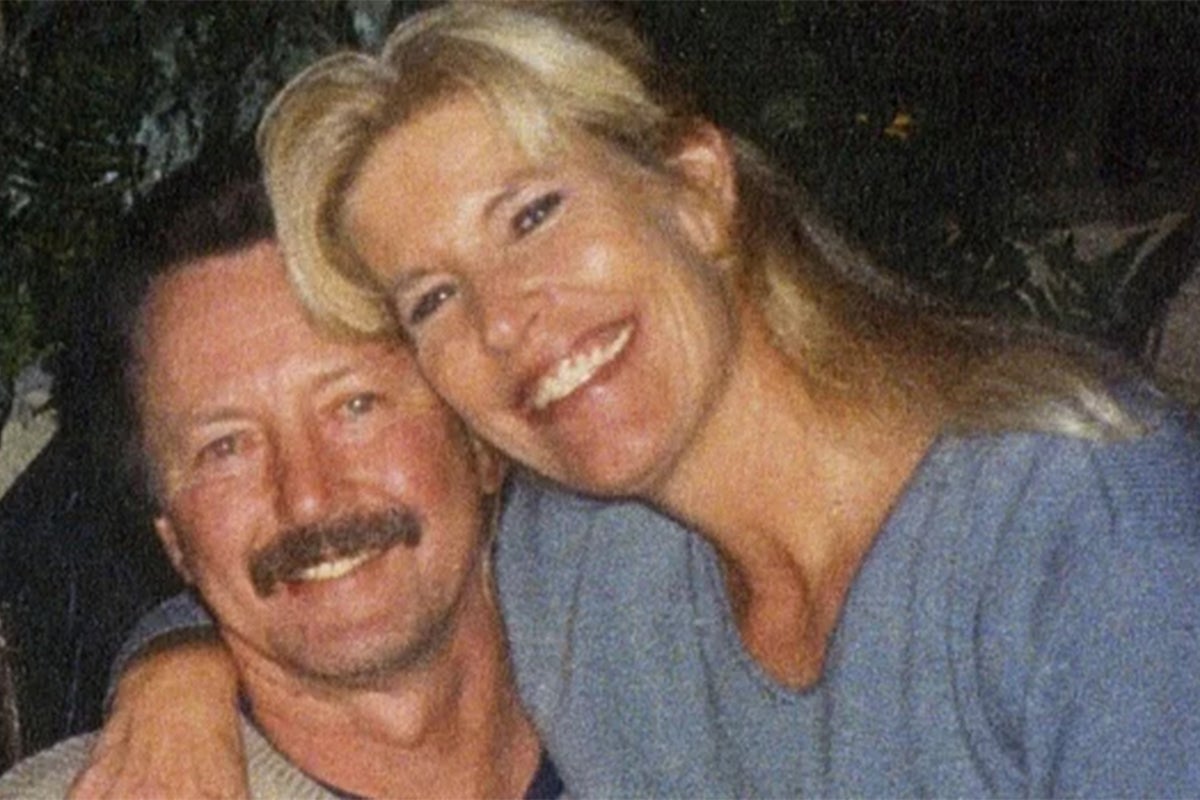
Two married true-crime buffs from a tiny city in Kansas are so convinced that a woman they never knew is wrongly imprisoned for the 2002 slayings of her ex-husband and his girlfriend that they’ve devoted their lives to proving her innocence.
Even though her own children helped put her away.
Eileen and Keen Umbehr's obsession with the prosecution of Dana Chandler led them to spend more than 15 years trying to prove her innocence — an all-consuming odyssey that’s the subject of a new, three-part HBO docuseries.
Chandler, 66, is serving two consecutive life sentences for killing Mike Sisco and Karen Harkness, for which she wasn't arrested until nine years after they were shot in bed inside Harkness's Topeka home early on July 7, 2002.
“When they arrested Dana, everybody believed they got the right person, except for us,” Eileen says in A Killer Story.
The tortuous legal proceedings that followed include an overturned conviction, a hung jury and Chandler's second conviction last year. The case also ended the career of a prosecutor whom the Kansas Supreme Court said used "intolerable acts of deception" to convince Chandler's first jury to find her guilty after just 83 minutes of deliberations.
"We're just so committed to this case that there's nothing else in life that matters," Keen adds in the series, as the couple also shows investigative journalist Joe Sexton a sprawling field dotted with thickets of trees and a pond.
“We’re gonna sell this,” Keen tells Sexton, to help finance their crusade to clear Chandler.
“ Eileen and Keen have always been passionate about seeking justice and have been willing to risk everything for causes they believe in,” Eileen’s brother, attorney Robert Van Kirk, who represented Keen before the U.S. Supreme Court in an unrelated 1995 case, told The Independent.
“The Dana Chandler case is just one of many examples in their lives where they have fought for what they believed was right, often against seemingly insurmountable odds,” added Van Kirk, a powerhouse Washington, D.C., trial lawyer who specializes in complex commercial cases and securities law.
But retired Topeka police Sgt. Richard Volle, who was the lead detective in the case, told The Independent he had no doubt Chandler was the person who shot Sisco and Harkness — at least five times each.
“I'm convinced. The family is convinced. Two juries were convinced — two and a half juries were convinced — that Chandler's in the right place,” he said.
Volle added: “Dana's a psychopath. She's very good at what she does. She can lie easily.”
Chandler is appealing her conviction and is represented by court-appointed lawyer Kristen Patty of Wichita, Kansas, although she filed a motion last year to be appointed a different lawyer. Patty, who's asked for permission to withdraw from the case, didn't respond to voicemail and email inquiries from The Independent.
Chandler and Sisco married in 1982 and were raising a daughter and a son in Lawrence, Kansas, by 1997 when Sisco, a sales manager for a welding-supply company, filed for divorce.
The divorce was finalized the following year, with Sisco granted custody of the kids and Chandler ordered to move out of the family's home and pay child support.
Sisco had been dating Harkness — who was also divorced, with a daughter and a son — for about four years when her father found their bodies ahead of a planned family fish fry at which relatives expected the couple might announce their engagement.
Cops who responded to his 911 call quickly ruled out robbery as the motive in the slayings of Sisco, 47, and Harkness, 53, who'd both spent the previous night at a nearby casino before returning early in the morning.
At the time of her death, Harkness was wearing jewelry that included a diamond bracelet, gold ring and Rolex watch, and Sisco's wallet, found in his shorts, held more than $950 and two uncashed checks.
Sisco's checkbook was also found on the dining room table and Harkness' purse, left on the kitchen counter, held a billfold with more than $350.
But no fingerprints were found on the empty 9-mm shell casings that littered the bedroom and there wasn't any other evidence that pointed to the killer, leaving authorities with little more than the suspicions of family members on both sides who thought Chandler did it.
The case went cold until October 2009, when CBS broadcast the first of three 48 Hours episodes about the killings, which it learned about from Vernon Geberth, a former New York City police official-turned-homicide consultant.
Geberth had been hired by Topeka police to review evidence in the case and concluded in his report that Chandler was “the one and only person who had the motive, means and opportunity to commit these murders.”
During the program, which featured interviews with several family members, Chandler was publicly identified as a potential suspect for the first time.
Video also showed 48 Hours correspondent Harold Dow confronting her as she walked to her car.
“I have no idea what happened to Mike and Karen,” she said.
The program, titled “Haunted,” aired several months after Eileen Umbehr compiled an inch-thick, 200-page dossier that called Harkness's son-in-law, Jeff Sutton, “Person of Interest 2” and sent it to various law enforcement agencies across the state. He has not been arrested or charged in the killings.
Authorities dismissed the dossier because the son-in-law's alibi checked out, with Volle testifying the dossier was based on a “crackpot theory” developed due to a “long-standing feud” between Keen and Sutton, who’s interviewed at length in A Killer Story.
In July 2011, Chandler was arrested in a parking lot in Duncan, Oklahoma, where she was reportedly living in a camping trailer behind her sister's nearby house, local TV station KSWO reported at the time.
Both 48 Hours — which devoted two more episodes to Chandler's case, including a double-length program in 2025 that was rerun in July — and The Topeka Capital-Journal were on hand to watch as she surrendered to heavily armed law enforcement officers from multiple agencies.
They included then-Shawnee County District Attorney Chad Taylor, who took office in January 2009 and was recorded wearing a badge around his neck as he strapped on a handgun.
Chandler went on trial for two counts of first-degree murder in March 2012, with the prosecution presenting a circumstantial case based on more than 900 exhibits and testimony from 80 witnesses, including both of the defendant's children.
The prosecution's theory relied in part on Chandler's purchase of two five-gallon gas cans the day before the killing.
At the time, she was living in Denver, and prosecutors suggested she used the gas cans to refuel her car and return to Colorado without being seen.
Daughter Hailey Sisco, who was 17 when her dad was slain, also revealed that she'd secretly recorded her mom while asking her questions about the killings.
During one conversation in 2005, Chandler denied having committed the shootings but admitted, “I said I could kill him. You ever think about killing him?”
Hailey responded, “No, but —” and Chandler said, “I did.”
“Honestly, I can say I did,” Chandler added.
During closing arguments, prosecutor Jacqie Spradling emphasized those remarks, as well as Volle's testimony that Sisco had obtained a “protection from abuse” order against Chandler in 1998 — a detail the Kansas Supreme Court later ruled he had recanted during defense questioning.
After the jury convicted Chandler, she was sentenced to two life terms.
Eileen Umbehr was in court for every day of the trial, and she and her husband, who live in Alma, Kansas — about 40 miles west of Topeka, with an estimated population of just 1,063 — began digging into the trial records as Chandler's conviction headed for an appeal.
Keen had formerly been the trash collector for surrounding Waubansee County, where he ran afoul of government officials by writing highly critical columns in a local newspaper.
When two of three county commissioners retaliated by terminating his contract in 1991, Keen sued in a case that eventually went before the U.S. Supreme Court.
The high court sided with Keen in a landmark 1996 free-speech ruling, and after settling with the county, he went to college and law school, passed the bar in 2005 and opened his own law office.
Eileen, meanwhile, self-published a 588-page account of her husband’s legal battle, Small Town Showdown, in 2007.
Keen also got involved in politics, mounting an unsuccessful 2012 Republican primary race for the Kansas House of Representatives, and two years later finished a distant third as a Libertarian in the state governor's race, with one of his four sons, Josh, as his running mate.
In 2016, Keen was running in the Republican primary for Shawnee County district attorney when he filed a disciplinary complaint against Spradling, alleging she knew Sisco hadn't obtained a protection from abuse order against Chandler.
An investigation into the complaint was put on hold pending Chandler's appeal, which the Kansas Supreme Court granted in 2018 following oral arguments during which Justice Daniel Rosen blistered Spradling for telling jurors the order had been issued.
“Why isn't that misconduct, and why isn't that something we should look at?” Rosen, now the court's chief justice, said in remarks featured in A Killer Story.
The Kansas Supreme Court later disbarred Spradling in a 101-page decision that also faulted her for misstating evidence and inflaming the “passions of the jury” during an unrelated sex-crimes trial that also led to overturned convictions.
By the time Chandler won her appeal, Eileen had been sending emails about the case for two years to investigative journalist Joe Sexton, a former reporter and editor for The New York Times who was then working for the non-profit news outlet ProPublica.
Sexton, the producer of A Killer Story, serves as its grizzled and frequently foul-mouthed narrator in voiceovers and while sitting at a bar, in front of a bottle of beer and a pack of cigarettes.
Sexton says he largely ignored Eileen's barrage of messages until he “had the dumb luck” to open “email number 2,714.”
“I've done all manner of crime stories. State murder convictions overturned? S*** doesn't happen every day. And the lady was still in prison. They were gonna retry her,” he says.
Sexton recalls being “fueled by the reporter's trademark cocktail of adrenaline and dread” when he arrived to meet Eileen, who he describes as “a housewife who seemed alternately brilliant and deranged.”
And on August 5, 2022, he was in the courtroom gallery for opening statements at Chandler's retrial, at which Spradling was replaced by prosecutor Charles Kitt.
“There was nothing new. There was no, you know, smoking gun. There was no dispositive piece of evidence that established her guilt,” Sexton says. “But now, Dana's defense lawyers had in front of them a detective who, by their lights, had committed perjury in the first trial.”
A Killer Story features extended portions of the cross-examinations of Volle and Chandler's daughter, who'd since gotten married and is now known as Hailey Seel, with Sexton concluding that Chandler's defense lawyers were doing “a pretty effective job of highlighting the deficiencies in the prosecution's case.”
The series also includes an interview with former Shawnee County District Attorney Bob Hecht, who refused to prosecute Chandler before being succeeded by Chad Taylor.
“None of the investigation was able to establish that anyone saw Dana Chandler in Topeka the day before, the day of, or the day after the homicide,” he says.
Hecht, who died in August 2025, acknowledged that his decision “created anger and frustration among members of the police department,” but said, “You shouldn't file charges unless you have sufficient evidence to establish the crime beyond a reasonable doubt.”
Sexton also stood outside the courthouse, asking to interview jurors after they split 7-5 in favor of conviction following six days of deliberations.
“The prosecution never proved beyond a reasonable doubt that she committed the crime,” said juror Carrie Kimes, who voted to acquit. “They could never put her in Topeka. They couldn't put her in Kansas. So I couldn't vote that she was guilty.”
In October 2022, Chandler was released on a $350,000 bond — reduced from $1 million — to await her third trial, which was moved from Topeka to Westmoreland, Kansas, about an hour away, in order to find impartial jurors.
The proceedings began with the bombshell revelation that Chandler had fired her lawyers and would represent herself.
The proceedings included a stunning face-off between Chandler and her daughter, who sparred with her mother, at one point asking, “Is this a good setting to explain our personal relationship?”
“Well, that's a lot of what this trial is about — is my relationship with you,” Chandler replied. “That's what the accusers are trying to put in front of this jury: our relationship or a lack thereof. So absolutely, this is a proper place.”
And if that weren't enough, Chandler also took the stand for the first time, describing how her unhappy marriage led her to start drinking, and her repeated efforts to “get sober.”
But under cross-examination, her claimed alibi for not being in Kansas during the killings fell apart during questioning about the different accounts she gave to the police and a friend.
“And you've had 23 years to figure out what story to tell this jury. Is that true?” prosecutor Kitt asked.
“That's absolutely not true,” Chandler insisted.
The jury took less than four hours to convict her again, and she received the same sentence of two life terms in prison, with no possibility of parole before December 8, 2063 — when she'd be 103.
