Mayoral candidate Bonnie Crombie wants the TTC subway extended to Mississauga’s city centre. But will Doug Ford buy in? - Toronto Star
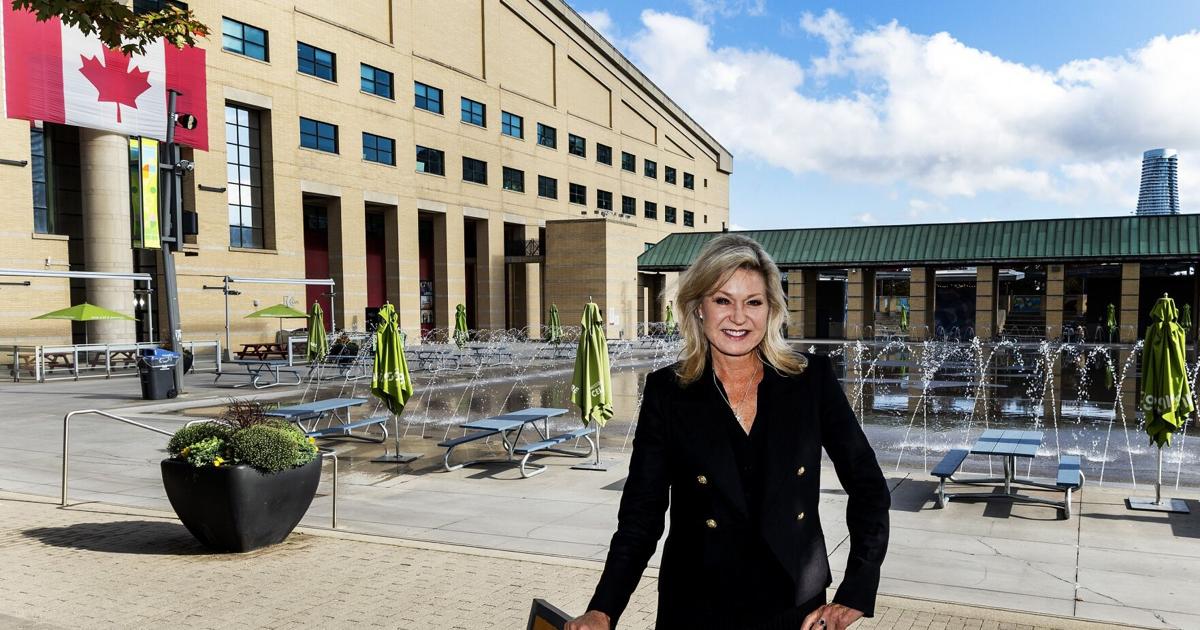
Mississauga mayoral candidate Bonnie Crombie is proposing to extend the TTC’s Line 2 subway from Kipling to Mississauga city centre, creating a central transit hub.
Kipling. Sherway Gardens. Square One?
Mayoral candidate Bonnie Crombie says it’s time for an extension of the east-west Bloor-Danforth subway line to Mississauga’s city centre — and if elected she will launch a feasibility study and appeal to a subway-loving premier and a prime minister looking for nation-building projects.
“Vaughan has a subway and one is being planned for both Markham and Richmond Hill. So why not Mississauga?” said Crombie in an interview. “We need a completely integrated regional transit network.”
The Hurontario LRT or Hazel McCallion line, which is currently under construction as a north-south spine that will extend through Mississauga’s city centre into Brampton, made sense at the time of planning more than a decade ago and was the more affordable option, Crombie said.
“We didn’t have the density then, but we do have the density today and we have the demand for it,” she said, adding that the idea of a subway has been very popular as she speaks to people on the campaign trail.
Carolyn Parrish, who is running for re-election as mayor, has been a fan of the idea of a Mississauga subway, and lamented that McCallion shot the idea down when she was mayor decades ago. But Parrish has also cited the hefty price tag as a barrier, unless the province is willing to pick up the tab of $1 billion per kilometre.
“Listen, if somebody is going to put a subway out to Mississauga, there’s no way anybody in their right mind would turn it down with traffic (as it is) now,” Parrish told Insauga last year.
In 2024, Toronto city council asked for a report on the prospect of a Line 2 extension to Sherway Gardens in south Etobicoke, an idea floated by George Smitherman in the 2010 Toronto mayoral election. In Crombie’s vision, the line could go from Sherway to a spot around Dundas and Hurontario, and end in Mississauga’s city centre, with some elevated sections along the Dundas corridor.
“I think the premier really likes to build subways,” said Crombie. “I thought that this was something that is needed, desired here in Mississauga and would capture his interest as well.”
Crombie thinks the plan will intrigue Premier Doug Ford. She clashed with him when she was Ontario Liberal leader, prompting him to say he’d send “an army” to stop her being elected mayor over Parrish.
“I think the premier really likes to build subways,” said Crombie. “I thought that this was something that is needed, desired here in Mississauga and would capture his interest as well.”
She hopes Prime Minister Mark Carney would see the extension is as a “nation-building project … and, you know, maybe the two of them, the premier and the prime minister, could combine and fund this extension.”
Crombie says that it could be built within a decade, and believes the ambitious idea will help persuade voters she deserves her old job back.
“We are in the ‘magic marker phase’ of the election,” said Matti Siemiatycki, a University of Toronto expert in infrastructure and city planning, adding that a plan for a new subway is part of a time-honoured tradition of Toronto-area elections. “Sometimes these proposals have a kernel of merit, and in practice they often end up being a bit of a distraction.”
There is a need for better and more integrated transit all across the GTA including subways, he said, but the planning has been somewhat haphazard. In that context, the idea could pick up steam.
“It’s entirely conceivable this gets built,” he said. “The politics of ‘everyone else is getting a subway, why don’t we have one,’ has been powerful in this region.”
The problem is that the cost of building subways is extremely high, with the Ontario Line ballooning to double the typically-cited $1 billion per kilometre, he said.
Subways and other major transit projects have also been fraught with delays. The Ontario Line, Hurontario LRT and Yonge North extension are all facing delays.
“The thing we’re struggling with is how to prioritize investing scarce resources when we do have a provincial government that is really intent on building — and when an idea comes forward that’s appealing, they just go for it,” he said.
But voters need to remember that no matter what a mayor or would-be mayor says about a new subway, the actual decision lies at Queen’s Park, he said.
Mississauga has also seen recent transit investment. In addition to the Hurontario LRT, Mississauga is working on a bus rapid transit corridor along Dundas Street through Cooksville. The city is also making plans for a new downtown transit hub by Square One, with the hope that the plan for a downtown LRT loop will go ahead.
Jeff Casello, a transportation planning and infrastructure expert at the University of Waterloo, agrees there is a need for transit that doesn’t falter at municipal boundaries.
But he said there are questions that need to be asked about a subway extension, including whether a subway is the right mode for the number people who’d be making the trip, and how high the cost would be.
Running a portion of the line aboveground rather than underground would be cheaper, said Casello and tunnelling in Mississauga could be less challenging than in Toronto with its old water infrastructure.
“The integration between the city of Toronto and its suburbs has to be better,” he said. “The GO network should be doing that, but we’re not doing it meaningfully.”
Alyshah Hasham is a Toronto-based reporter covering city hall and municipal politics for the Star. Reach her via email: ahasham@thestar.ca or follow her on Twitter: @alysanmati.