Meet the 'hell chicken': The dinosaur that preferred fruits over flesh
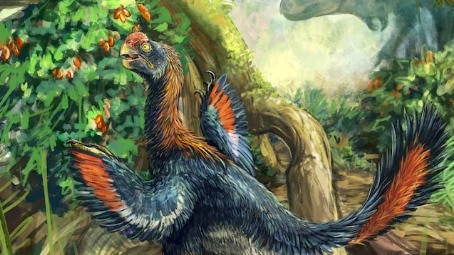
Dinosaurs are often remembered as fearsome predators that hunted and devoured one another, but a newly identified dinosaur from the final days of their reign had a rather different taste.
Instead of tearing into flesh, this turkey-sized creature appears to have specialised in eating fruits.
Named Infernogallus jamesi, meaning “hell chicken”, the dinosaur is the first known species to have developed specialised features for a fruit-based diet, according to a study published in Nature Communications.
“This definitely expands the range of lifestyles we thought dinosaurs had, and it shows how adaptable theropods were,” palaeontologist Greg Funston of Stony Brook University, the study's lead author, told news agency Reuters.
The discovery offers a better understanding of what dinosaurs ate and how they adapted as fruit-bearing plants became increasingly widespread. An illustration of a Triceratops. (Representational Photo: Unsplash) A 'HELL CHICKEN' THAT PREFERRED FRUITS
Infernogallus jamesi lived around 66 million years ago, towards the end of the Cretaceous Period, when dinosaurs still dominated the planet.
Its fossils were discovered in the Hell Creek rock formation in the United States, known for yielding remains of famous dinosaurs. The name “hell chicken” refers to both its bird-like appearance and the place where its fossils were found.
The dinosaur was about 1.5 metres long and weighed around 11 kg, and had a toothless, parrot-like beak. Scientists believe it was likely covered in feathers, based on fossil evidence from close relatives.
The Hell Chicken lived alongside giants such as Tyrannosaurus Rex, Triceratops and Ankylosaurus. Yet, unlike many of its neighbours, it appears to have fed on fruits and other soft plants. An image of a T-Rex's fossil on display in a museum. (Representational Photo: Unsplash) A SKULL BUILT FOR DEVOURING FRUITS
Scientists reached this conclusion after studying the dinosaur's unusually well-preserved skull, and identifying three features that pointed towards fruit eating. The dinosaur’s jaw muscles were suited to back-and-forth chewing, a flexible joint allowed the lower jaw to move forward, and ridges and grooves on its beak that helped mash soft food.
“We see these features separately in birds and turtles today that eat soft foods. But no living animal has all three adaptations, showing just how specialised Infernogallus was,” Funston told Reuters.
Unlike many plant-eating dinosaurs that swallowed stones to grind food in their stomachs, Infernogallus appears to have processed food through active chewing. A representational model of a feathered dinosaur. (Photo: Pexels)
The findings also raise new questions about the possible relationship between dinosaurs and flowering plants, which spread across the planet during the Cretaceous Period. Fruit-eating animals help plants spread by carrying their seeds to new places. Researchers believe Infernogallus and its relatives may have played such a role, although more evidence is needed.
“The discovery of Infernogallus shows that dinosaur diets were likely far more diverse than we previously thought,” said study co-author Thomas Dudgeon.- Ends