Mining deaths surge 50% in 2026 as unions express outrage over safety risks - IOL
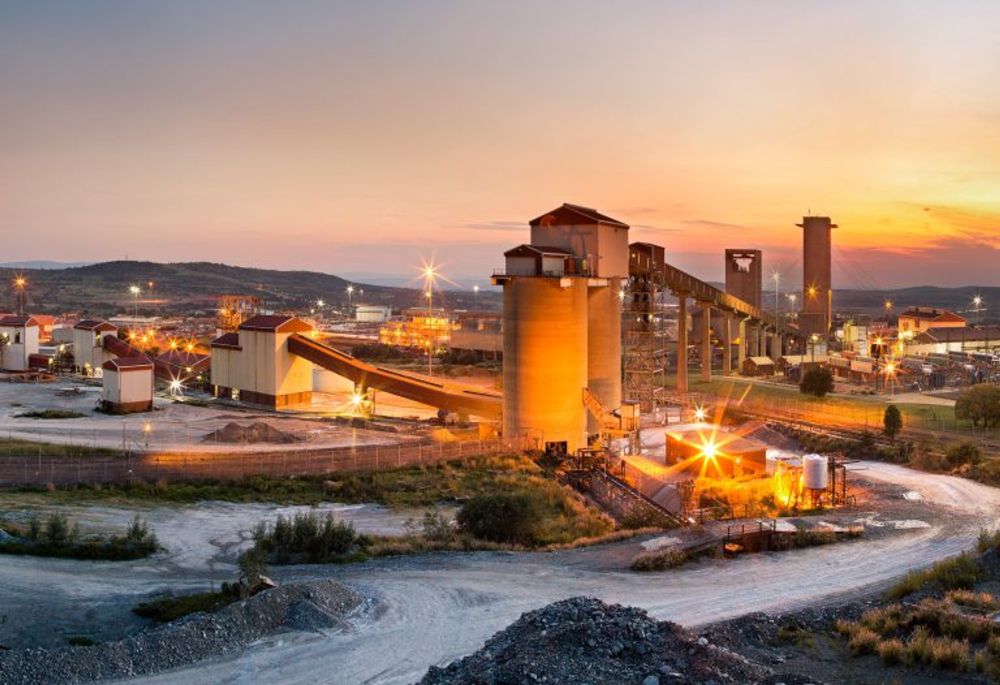
Unions raise the alarm as mining deaths climb to 50 in 2026.
Two of South Africa’s most prominent unions representing mineworkers have expressed deep concern about the country’s rising mining death toll.
Fifty mining fatalities have occurred in 2026 so far, according to the Association of Mineworkers and Construction Union (AMCU), compared with 33 during the same period in 2025.
The union expressed anger and outrage after the latest death occurred at Harmony’s Mponeng Mine in Carletonville on September 14, when a mineworker succumbed to his injuries following a fall allegedly caused by a seismic event measuring 0.7 in magnitude.
AMCU took particular aim at Harmony, which has reportedly recorded 10 fatalities in 2026.
“This is not a statistic. It is a failure of prevention, accountability and leadership. Ten mineworkers have died at Harmony this year, yet the same recurring hazards continue to claim lives. How many more mineworkers must die before Harmony is forced to answer for its safety failures?” AMCU president Joseph Mathunjwa asked.
According to the union, four fatalities have occurred at Mponeng alone this year. These include a loco guard who was fatally injured after being caught between a hopper and a pier pack in January, two engineering artisans who died after falling from a shaft conveyance canopy in May, and a female onsetter who was killed by a conveyance in July.
“Workers are repeatedly exposed to known and foreseeable hazards while management continues to proclaim that safety is its highest priority. If safety truly came first, we would not be standing here counting 10 dead mineworkers,” Mathunjwa said.
Approached for comment, Jared Coetzer, head of investor relations at Harmony, told IOL that the company was deeply saddened by the loss of their colleague, but refuted AMCU’s claim of 10 deaths in 2026, saying the correct figure was eight.
“However, this is not about correcting numbers. Behind every loss of life is a family, friends and colleagues whose lives are profoundly impacted. We take every loss of life extremely seriously,” Coetzer said.
“We remain committed to strengthening critical controls, investing in training and development, learning from every incident and high-potential event, and working with the Department of Mineral and Petroleum Resources and other stakeholders to eliminate loss of life across our operations.”
He added that as the investigation into the incident is ongoing, it would be inappropriate to speculate on its causes or assign responsibility before the facts have been established.
“Our focus remains on understanding what happened, identifying any contributing factors, and implementing measures aimed at preventing a recurrence.”
The National Union of Mineworkers (NUM) has also expressed its “profound concern” about deteriorating health and safety standards in the mining and construction sectors, particularly over the increasing number of female workers losing their lives in the workplace.
At a meeting in late July, the union’s National Health and Safety Committee (NAHSCO) said it was deeply concerned that major mining houses were allegedly retreating from structured safety engagements by abandoning tripartite health and safety forums.
“At a time when the industry continues to experience unacceptable fatalities, employers should be strengthening cooperation, not withdrawing from it,” the NAHSCO committee said.
“The Committee notes with disappointment that Anglo American withdrew from the Tripartite Forum initiative, with Valterra subsequently following suit. The cancellation of all planned Tripartite Health and Safety meetings for 2026 demonstrates a disturbing lack of commitment to genuine stakeholder engagement.”
Tripartite forums bring together organised labour, employers and government, and are regarded as important mechanisms for identifying risks, resolving safety challenges and preventing fatalities.
“Employers who distance themselves from these structures actively weaken collective efforts to save lives,” NAHSCO added.
NUM also criticised a recent “Safety Day” held by Impala Mine following a number of workplace fatalities, saying the union was excluded despite representing workers at the operations.
The union said safety could not be achieved through public events or public relations campaigns, but required effective leadership, properly maintained equipment, adequate supervision and meaningful worker participation.
It accused Impala of using the event to divert attention from what it described as urgent safety reforms.
In response to NUM's accusation, Impala Platinum Holdings Limited (Implats) said the organisation takes safety extremely seriously and that production target or operational objective is more important than the wellbeing of its people. To that end, it said the Group proactively suspended mining operations at its Impala Rustenburg complex from 24 to 28 July 2026 to conduct a comprehensive safety reset in response to an increase in safety incidents at the operation.
“The safety reset was a deliberate intervention to strengthen visible felt leadership and employee engagement. Safety reset actions included comprehensive workplace inspections, audits, make-safe activities and re-verification of workplace conditions; revalidation of critical controls associated with Impala Rustenburg’s principal fatal risks; and targeted training and competency reinforcement,” an Implats spokesperson told IOL.
“These were all aimed at preventing future safety incidents in pursuit of our commitment to achieving zero harm. NUM recently lost organisational rights at Impala Rustenburg to AMCU, following the consolidation of Impala Bafokeng into Impala Rustenburg.”
Likewise, AMCU is demanding urgent legislative reform, stronger enforcement and tangible consequences for repeat safety failures.
“Fifty fatalities nationally are enough to demand accountability. We will continue campaigning for amendments to the Mine Health and Safety Act to ensure that those responsible for unsafe mining operations cannot hide behind corporate structures while mineworkers pay with their lives,” Mathunjwa concluded.
Harmony, meanwhile, said it was committed to achieving a record of zero harm to its workers.
“While the company has made progress in reducing injuries, including achieving its lowest-ever LTIFR of 5.05 per million hours worked, we recognise that progress cannot diminish the profound impact of each loss of life. Every loss is one too many, and we remain resolute in our pursuit of Zero Harm,” Coetzer concluded.