Minister says corruption and sabotage are disrupting water services - IOL
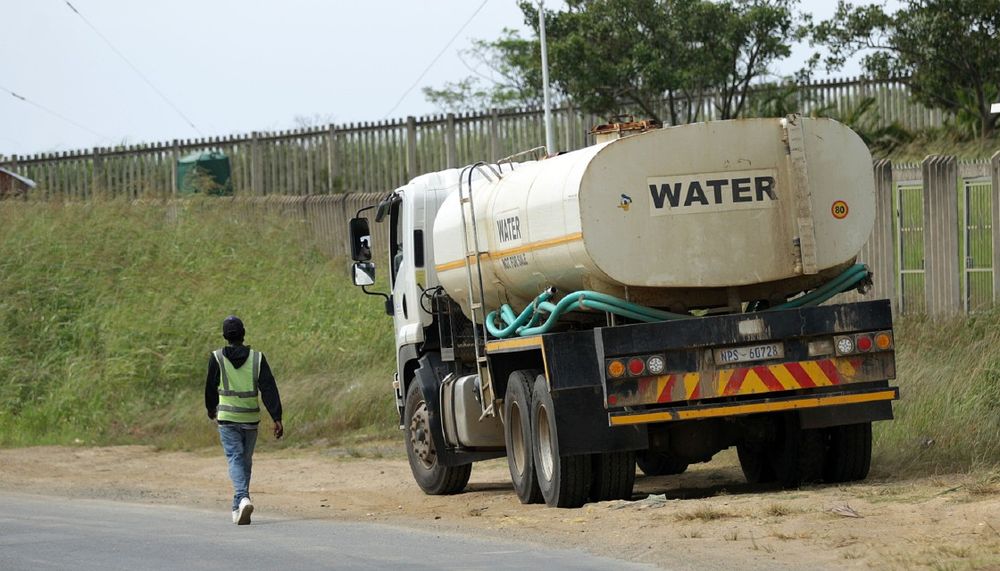
Water tankers have come under scrutiny amid allegations of corruption and contract abuse.
Water and Sanitation Minister Pemmy Majodina said corruption, infrastructure theft and sabotage are disrupting water services, while municipalities are being urged to reduce their reliance on emergency tankers.
Responding to a written parliamentary question from MK Party MP Visvin Reddy seeking clarity on the government’s response to the alleged water tanker mafia, Majodina said the National Water Action Plan included co-ordinated measures involving government departments, law enforcement agencies and intelligence structures.
The South African Human Rights Commission (SAHRC) has warned that emergency tankering during municipal water shortages can create opportunities for corruption. The commission has received complaints alleging that municipal workers and other officials sabotage infrastructure to secure repair work and tanker contracts.
The Portfolio Committee on Water and Sanitation has also called for stronger controls over tanker procurement, including a possible solution of municipalities acquiring and managing their own emergency fleets.
“The Department of Water and Sanitation (DWS) is aware that corruption and criminality have become major drivers of the deterioration of water services across many municipalities. In addition, theft and vandalism of water infrastructure - including both sabotage of infrastructure and the theft of metal components for resale as scrap metal also disrupt the continuity of water and wastewater services,” Majodina said.
She said the National Water Action Plan included measures to improve co-operation between government departments, law enforcement agencies and intelligence structures.
Majodina said the department is participating in the National Joint Operational and Intelligence Structure (NATJOINTS), to strengthen efforts against infrastructure theft, sabotage and corruption in water-tanker provision. The Water Sector Anti-Corruption Forum is also used to coordinate efforts to prevent, detect, and investigate corruption within South Africa’s water sector.
She also said municipalities were being advised to procure their own tankers to improve expenditure control and reduce opportunities for criminal infiltration.
“National Treasury, supported by the DWS, has formally advised municipalities that water tankering should not be utilised as a long-term service delivery model, but rather as a temporary emergency intervention. Municipalities are encouraged to progressively insource tankering services through the acquisition and management of their own tanker fleets,” Majodina explained.
“In addition, municipalities requesting approval for expenditure on water tankering are required to demonstrate measurable progress towards permanent infrastructure repairs, upgrades or alternative sustainable water supply solutions.”
Reddy said the minister’s response confirmed that prolonged dependence on tankers could create opportunities for abuse.
“I’m not merely making an opposition (party) allegation about a water tanker mafia because the minister herself acknowledges this as a problem,” Reddy said.
He said the public needed to know who owned the tankers, who received the contracts, how much municipalities paid, how suppliers were appointed, how long the contracts existed for, and whether there are any politically connected people benefiting from the failure to provide permanent water infrastructure.
“There’s no political will to deal with this tanker mafia and the corruption that has now become endemic in the water sector, and the reason for that is simple. When you get to know who these people are, you realise who they are funding, which parties they are funding,” Reddy said.
He said broken pipes and failing reservoirs created an incentive to keep communities dependent on tankers because contractors continued to be paid for transporting water.
When asked about specific municipalities where the mafia is alleged to be sabotaging infrastructure, Reddy noted that while widespread rumours and talk persist, concrete proof remains elusive and relies mostly on hearsay.
He also rejected the idea that bringing tankering services in-house was a complete solution, saying it could imply that the water crisis would continue.
Instead, Reddy proposed a maximum daily rate for tanker services and stronger security for pumps and other water infrastructure.