Mkhwanazi is no hero: He was doing his job - IOL
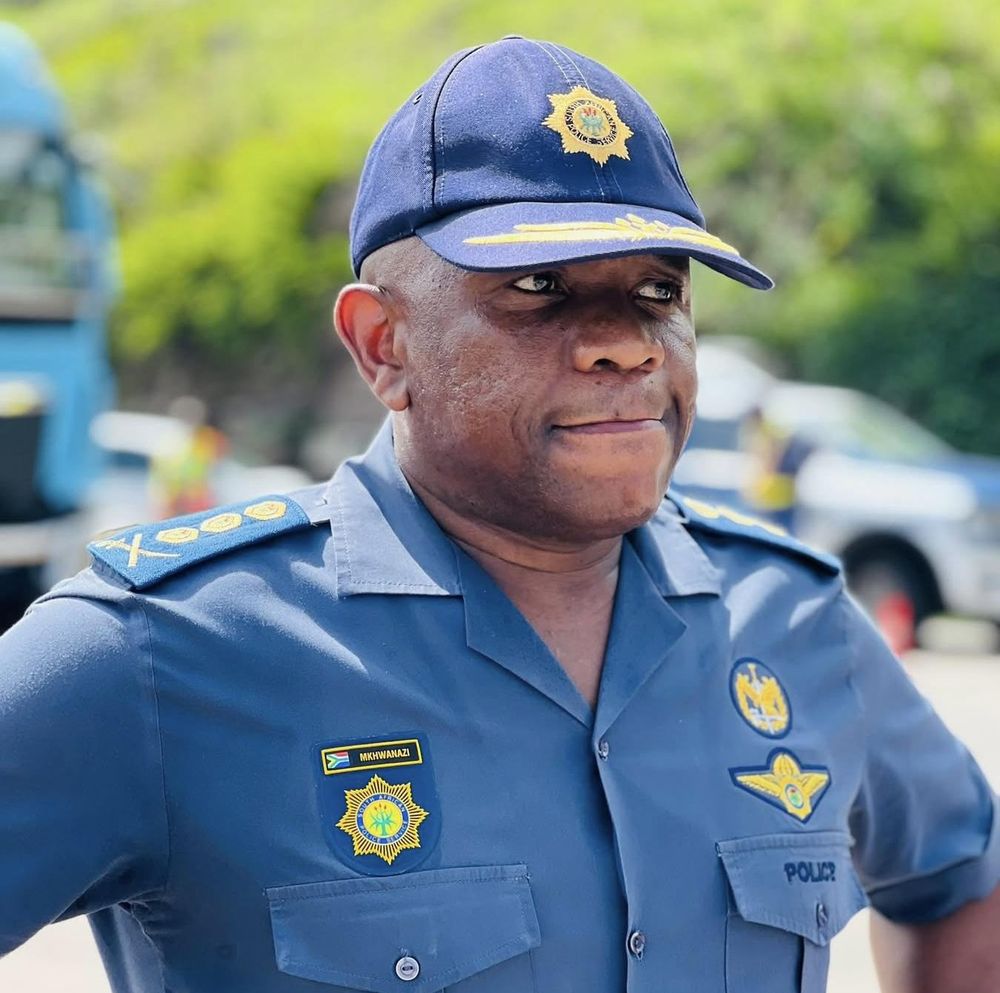
The writer says that Lieutenant-General Nhlanhla Mkhwanazi, KwaZulu-Natal's Provincial Commissioner was doing his job when he made certain revelations in July 2025.
ON JULY 6, 2025, the Provincial Commissioner of KwaZulu-Natal did his job. That's all. He did his job.
What happened: a senior police officer stood in front of South Africa, lifted the lid on a can of worms, and within days the nation had crowned him a hero. Not for solving the corruption. Or ending it. Simply for naming it out loud.
That reaction tells us more about South Africa than it does about Lieutenant General Nhlanhla Mkhwanazi. It tells us how far we have sunk into accepting criminality as background noise, how thoroughly we have made peace with decay inside the institution meant to protect us. When basic honesty becomes so rare that speaking it aloud earns a standing ovation, it was never about the man who spoke. The problem is us, and what we have quietly learned to tolerate.
More than a year beyond the exposé, we have watched and listened as the Madlanga Commission methodically dissected the beast. The commissioners and evidence leaders proceeded with professionalism, at times even empathy, that gave the public a rare window into the legal process itself.
But it did more than that. It also exposed how some police officials conduct themselves in the field and, in doing so, shone an unflinching light on how the criminal justice system fails the ordinary citizen.
Can we expect a turning point in our constitutional democracy? And what is the possibility for real change, not only in the SAPS, but across the criminal justice ecosystem at large?
I would argue that the first turning point towards greater accountability was the courageous action of Mkhwanazi. The second was the appointment of the Madlanga Commission by President Ramaphosa. But, profoundly, the most direct impact came from the way the Commission conducted itself over the past year, alongside an investigating task team that, in real time, followed up on witness statements and evidence laid before it.
This was a successful approach that pursued the truth, despite "slow-down" tactics by legal representatives and doubtful claims of unavailability from some witnesses. Although we do not have access to the two interim reports already compiled for the President, we may fairly assume that action has been taken on their findings.
Institutions must be able to investigate, prosecute or report on power without fear, or without having their leadership replaced for political convenience. Minister Senzo Mchunu clearly overstepped boundaries, and the revelations by Lieutenant-Colonel Deena Govender about an attempt to influence his testimony before the Commission raised more than eyebrows, if proven true.
Successful institutions operate in ways the public can see and scrutinise. One of the key features of the Commission during the hearings was that it forced, in a sense, the public disclosure of documents and text messages. What I've called the Investigating Directorate Against Corruption (IDAC) fiasco proved the immense benefit of public access to documents. Unfortunately, junior members were forced to record their interactions with senior officials to withstand institutional abuse of power. The conduct of Advocate Andrea Johnson is a case in point.
Exposing wrongdoing means little without follow-through. This effect was, although painfully slow, evident in the dismissal of Major-General Feroz Khan. As concerned citizens, we may, and should, ask why he was not dismissed earlier. Revelations without consequence risk becoming spectacle rather than reform. Indeed, a spectacle is exactly what surrounded Khan.
Democratic institutions need to endure despite individual personalities. A commission's findings should outlast the commission itself; a police service's integrity shouldn't hinge on one honest general. The recent SAPS proposals raised by Dr Mark Shaw during a session imply a re-evaluation of personnel. My own interpretation of such a proposal is that proper vetting of entry-level personnel is not off the table, followed by continuous lifestyle audits as officers progress through their careers.
No single institution should hold unchecked power; courts, oversight bodies, a free press and civil society all need to test and pressure one another. IDAC provides a perfect example of how power went unchecked. The arrest of Lieutenant-General Dumisani Khumalo, both the manner and the timing of it, appeared designed to inflict public humiliation, to name one example.
Trust in institutions is earned incrementally, through visible, repeated fair conduct, not restored by a single dramatic act, however courageous.
One act of courage isn't institutional health; it's a symptom that institutional health was already absent. Rebuilding trust will be a function of time and of repeated, visible police behaviour that proves to the community that their safety and security are genuinely being prioritised.
So no, Mkhwanazi is no hero. He was a man who did his job, in a system where doing one's job had become extraordinary enough to be mistaken for heroism. That, more than anything he said in front of the cameras, is the real indictment.
The Madlanga Commission will close. Its records will be archived, its transcripts filed away, its commissioners will return to their ordinary lives. What remains will not be the memory of a dramatic testimony or a viral clip of a senior officer speaking truth to power. What remains will be whether the institutions he exposed look different a year from now, five years from now, a decade from now. Whether prosecutions were pursued to their end. Whether the vetting happens. Whether the audits continue. Whether the next whistleblower is protected rather than isolated.
South Africa does not need a hero. It needs an institution so ordinary in its integrity that no one ever must stand up and be one again. Until that day, the real work of this commission is not what it revealed; it is what we, as citizens, choose to demand happens next.
Cobus Steenkamp served for 20 years in the SAPS (Lt. Col. Ret) and is more than 10 years in a lecture and research role at the North-West University. He focuses on Police Management, Leadership and Police Practice.
*The views expressed do not necessarily reflect the views of IOL or post.co.za