
Monster review: Ella Beatty as Lizzie gives a haunting face to an American mystery
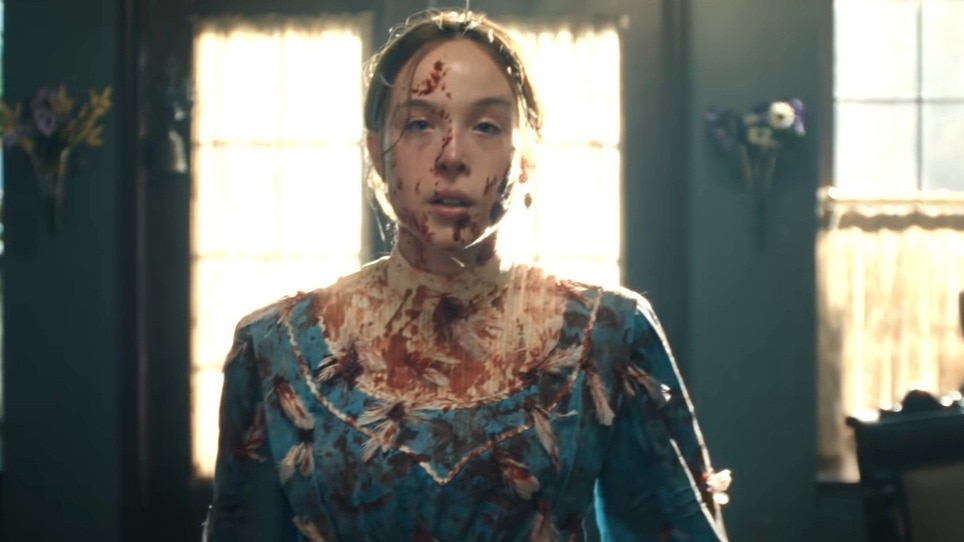
Lizzie Borden has been dead for nearly a century, but the question surrounding her has proved remarkably difficult to bury. Did she murder her father and stepmother, as the infamous story suggests, or did she simply become the perfect vessel for a crime that had no satisfying ending? Monster: The Lizzie Borden Story understands that the mystery isn’t necessarily in finding a definitive answer. It is in understanding why the world has remained so fascinated by the possibility that an apparently respectable young woman could commit such a brutal act.
Ryan Murphy and Ian Brennan’s latest chapter in the Monster anthology moves away from the serial-killer mythology of its earlier seasons and into something more complicated: a story about repression, gender, class, desire and the making of a woman who history would eventually reduce to two bodies and an axe.
Ella Beatty plays Lizzie Borden, with Charlie Hunnam as her father Andrew, Rebecca Hall as her stepmother Abby, Vicky Krieps as housemaid Bridget Sullivan, Billie Lourd as her sister Emma and Jessica Barden as actor Nance O’Neil. Sarah Paulson also appears as Aileen Wuornos, creating a broader connection between the season’s examination of women whose lives became inseparable from public fascination with their crimes.
The series’ most interesting decision is refusing to make Lizzie obviously monstrous. Beatty plays her as a woman who is difficult to pin down. There is anger beneath the restraint, but also loneliness, curiosity and a growing awareness of how little control she has over her own life. The performance works because Lizzie isn’t presented as a killer waiting for her opportunity. She is presented as a person whose inner life we are constantly trying and sometimes failing to understand.
That ambiguity is essential to the show. The Borden household is a pressure cooker, with Andrew’s authority and Abby’s hostility creating an environment where Lizzie’s choices are severely restricted. Her relationship with Bridget becomes one of the few spaces where she can imagine a different existence. Vicky Krieps brings a quiet intensity to Bridget, and the relationship gives the series a way to explore desire not simply as romance but as another form of escape.
This is also where Monster becomes more interesting than a conventional true-crime retelling. It is less concerned with reconstructing the crime than with reconstructing the emotional circumstances around it. But this is also where the series can become frustrating.
Murphy’s instinct for heightened drama is impossible to miss. The production is lavish, the violence graphic and the performances often deliberately theatrical. Rebecca Hall, in particular, embraces the heightened register as Abby, while Hunnam’s Andrew carries the cold authority of a man accustomed to being obeyed.
There are moments when this works beautifully. But at times, the excess threatens to overwhelm the psychological detail that makes the story compelling in the first place.
The series wants to explore female rage and the social restrictions imposed on women in the late 19th century, but it occasionally reaches for spectacle when the quieter observation would have been more powerful.
The show’s decision to bring Aileen Wuornos into the narrative is similarly intriguing but uneven. Paulson’s presence creates a thematic link between women whose crimes became public mythology, raising questions about why society remains particularly fascinated by female violence. But the connection sometimes feels imposed rather than organically emerging from Lizzie’s story.
Still, the central mystery remains compelling precisely because the series doesn’t pretend history has supplied all the answers.
Lizzie was acquitted. What happened inside that house can never be reconstructed with complete certainty. Monster uses that gap between evidence and imagination to its advantage, allowing multiple possibilities to coexist. It doesn’t ask one simply to decide whether Lizzie was guilty. It asks what it means that we are still so desperate to decide.
That makes Ella Beatty’s performance even more important. Her Lizzie is neither victim nor villain, and certainly not the cartoonish monster suggested by the rhyme that immortalised her. She is a woman constantly negotiating the boundaries imposed around her until those boundaries become impossible to ignore.
Monster: The Lizzie Borden Story is not always as subtle as its subject deserves. Its appetite for melodrama can occasionally make the psychology feel secondary to the spectacle. But when it trusts its central ambiguity, the series becomes genuinely unsettling.
All 8 episodes of Monster: The Lizzie Borden Story have been released on Netflix.- EndsPublished By: Priyanka SharmaPublished On: Sep 18, 2026 05:42 ISTALSO READ | The Paper Season 2 review: Newsroom spin-off finally escapes The Office's shadow

