
Morgan Stanley eyes record Asia year as AI investment boom fuels financing, dealmaking - The Business Times
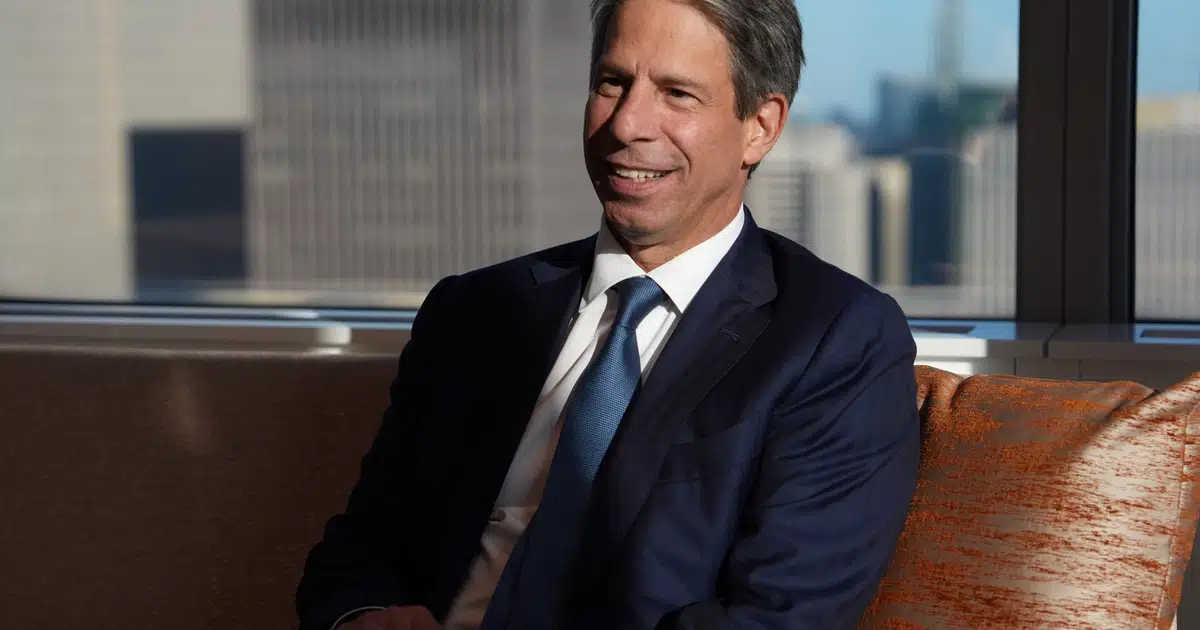
[SINGAPORE] Morgan Stanley’s Asia business is on track for a record year, propelled by a surge in artificial intelligence investments across the region’s technology supply chain and strong dealmaking, said the bank’s co-president Daniel Simkowitz.
Simkowitz, who was in Singapore for Morgan Stanley’s annual Asia-Pacific Summit last week, said that AI infrastructure spending is reshaping global capital markets and driving sustained commercial activity across Asia.
“There is a big part of (commercial activity) that is AI-driven, and Asia plays a really big role in that,” he said in an interview with The Business Times. “Asia has an important role in the entirety of the ecosystem… and we expect it to be busy for many, many years to come.”
Asian markets are engaged across the ecosystem, from the manufacturing of chips to the development of AI factories.
Taiwan has carved out a niche for itself in chip fabrication and server assembly, South Korea in specialised high-bandwidth memory, and China in its rapidly scaling, self-reliant domestic AI models and infrastructure.
Hong Kong, meanwhile, acts as a financial hub with corporate headquarters to facilitate all this activity. And when it comes to Singapore, Simkowitz said the city-state maintains a good balance between the finance and the manufacturing aspects.
Rather than funding massive capital expenditure solely through internal cash flows, cash-rich tech giants – which Simkowitz dubbed the “central bank of AI” – are increasingly tapping credit and equity markets to finance the build-out.
He pointed to Alphabet, Amazon, AMD, Broadcom, Meta, Microsoft, Nvidia and SpaceX as key players, using credit instruments ranging from unsecured debt and third-party guarantees.
There is also asset-backed financing, which can be tied to graphics processing units, tensor processing units, data centre facilities and equipment to raise funds.
“There has been an amazing amount of innovation in the last two years,” said Simkowitz. He added that equity has played a larger role than many realise, from private fundraising by OpenAI, Anthropic and SpaceX, to public-market activity involving Alphabet and Meta.
He also highlighted major cross-holdings, such as Alphabet’s stake in SpaceX, alongside Alphabet and Amazon’s significant holdings in Anthropic.
Morgan Stanley was one of the lead underwriters for Anthropic’s initial public offering last week.
Because the AI sector remains at an early stage where assets risk being mispriced, companies must be deliberate about timing, currency exposure and capital structure, said Simkowitz.
Institutional investors, including commercial banks, insurers and sovereign wealth funds, similarly face critical choices on where to deploy capital across the ecosystem.
Addressing concerns over private credit’s heavy exposure to the software sector – where buyout firms relied on private debt to acquire companies that are now facing disruption from generative AI – Simkowitz played down fears of systemic risk.
“It’s a matter of classic asset management,” he said. “Did you do a good job? Did you get caught up in the euphoria and overdo it?”
He added that while not every borrower will default, powerful AI tools mean legacy enterprise software may no longer hold its historical value.
Simkowitz flagged the recent US midterm elections and US-China relations as key geopolitical variables, though he is confident that neither issue will affect the long-term growth trajectory of AI capital expenditure.
While data centre spending was hotly debated in the run-up to the US midterms, his view is that the financial and growth concerns were “overdone”.
However, he cautioned that as tech firms transition from pure software providers to physical infrastructure builders, they will need to engage municipalities more proactively and offer stronger financial incentives to local communities.
On US-China tensions, Simkowitz said that component restrictions or political friction might alter the timeline or quality of compute deployment, but the underlying economic value to enterprises will ensure investments are still likely to go ahead in both the US and Asia.
He contrasted this momentum with the situation in Europe, which he said lacks comparable domestic silicon, infrastructure layers and frontier model-building capabilities, while facing a far more rigid regulatory regime.
Data centre politics in the US and restrictions on a specific component or competition are not enough to prevent the ecosystem from continuing to invest, he added, because there is value to the client and the company using it.
“The timing may change depending on politics and economics, the quality of it may change because of financing levels and/or politics, geopolitics,” he noted. “But it’s coming, and I will say in that context, Asia and the United States (will stand to benefit).”
Beyond AI, Simkowitz expects corporate mergers and acquisitions (M&A) and private equity activity to remain robust, supported by pent-up demand following several subdued years of dealmaking – even though private equity exits have lagged the bank’s earlier expectations.
Morgan Stanley’s latest third-quarter Asia revenue across all its businesses came in at a record high, up 55 per cent year on year. Its year-to-date Asia revenue in 2026 is US$11.3 billion, versus US$ 9.4 billion for the whole of 2025.
In its Q3 earnings call, the firm also noted strength and growth in its Asia investment banking and equity revenues.
Simkowitz said that dealmakers are acting with urgency to capitalise on a currently favourable US regulatory and political backdrop – characterised by pro-growth policies and deregulation across tech and energy – before that window potentially narrows.
The bank will be focusing on data protection and AI use, he added. This includes using AI to enhance the bank’s work in cybersecurity, a major concern of large companies and governments.
In the longer term, the wider implications of AI should also be explored, around issues such as employment and how AI can be used properly.
“There (are) big debates because we have… people saying, ‘Oh, it’s employment building,’ and some people saying that… it will create more thinking and then more jobs in some form,” he said. “I think that is still to be determined.”
