Mortgage Rates Break 7% Threshold: What It Means For Millions of Homeowners - Newsweek
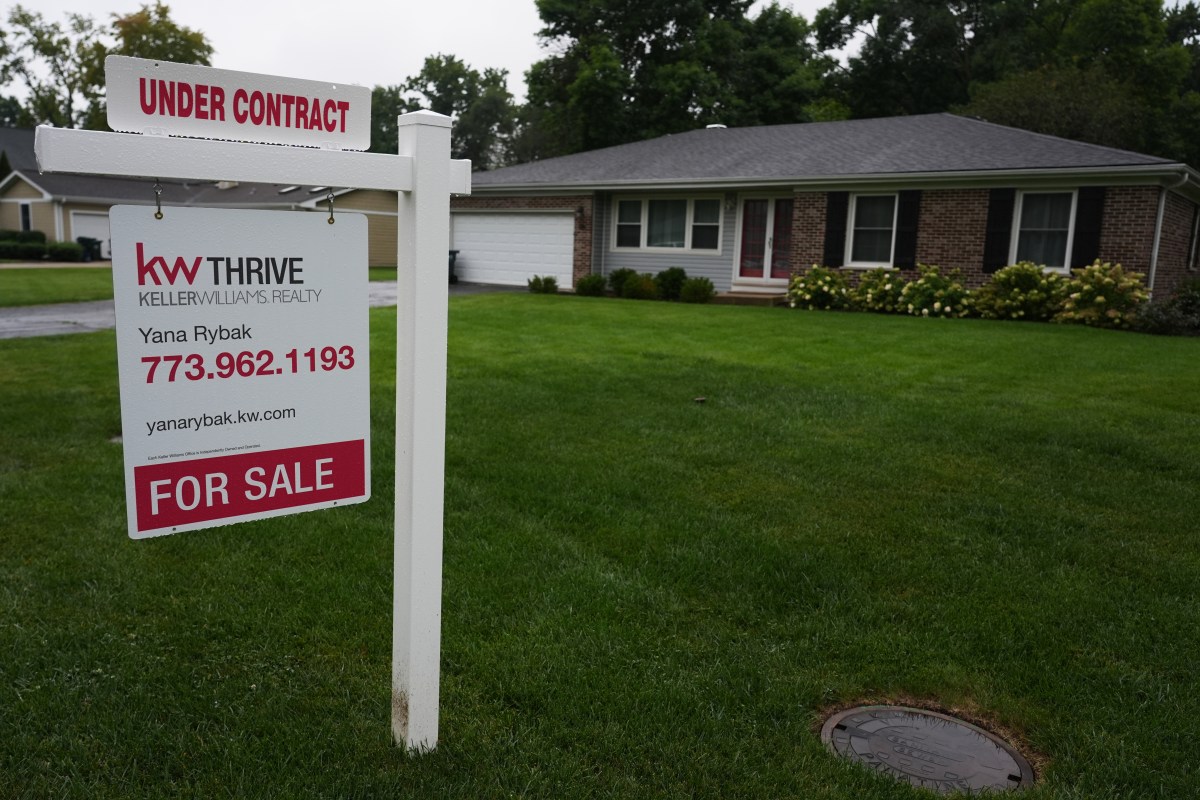
The Freddie Mac 30-year fixed mortgage rate climbed above 7 percent in today’s release, marking the highest level since January 2025, when President Donald Trump returned to the White House with the promise to lower borrowing costs.
Rates entered the week just 5 basis points below that line, according to Realtor.com Senior Economist Anthony Smith, after jumping 19 basis points to 6.95 percent in last Thursday’s release from the mortgage giant. It was the largest one-week increase since April 2025, and a sign that investors were feeling antsy about inflation and the Federal Reserve’s meeting last Wednesday.
On that day, the central bank raised its key interest rate for the first time in three years, as Chairman Kevin Warsh said the Fed had to take responsibility for lower inflation after years of it being much higher than it should have been. The central bank aims for a 2 percent annual inflation rate; in August, inflation in the U.S. was at 3.4 percent.
While the central bank has no direct authority over mortgage rates, its decision influences financial markets, particularly the yield on the 10-year U.S. Treasury note, which mortgage rates tend to follow.
And as many came to expect an interest rate hike at the Fed’s September meeting, the 10-year Treasury yield started moving up, pushing up mortgage rates as well.
“The 10-year Treasury yield drove most of that increase and has kept climbing, with inflationary pressure building and Brent crude oil prices hovering above $100 per barrel again,” Smith said in a statement shared with Newsweek.
On Wednesday, the 10-year Treasury surged 15 basis points to 5.11 percent, a 19-year high. With yields heading upward, “mortgage rate pressure seems likely to linger,” Smith said.
For buyers and sellers across the U.S., “the highest mortgage rates in more than a year and a half are landing on a market that is in the midst of a slowdown,” Smith said.
Mortgage rates, which were widely expected to drop to 6 percent throughout this year, started climbing again in late February after reaching a promising 5.98 percent after the start of the war in Iran. Higher-than-expected rates have taken away the chance for that boost in demand and home sales the experts were counting on this year.
Instead, the housing market has remained sluggish this year, even during the normally busy spring season, and is now emerging from a slow summer marked by falling sales and still-climbing prices.
“Existing home sales hit their 2026 low in August and pending sales have turned negative year-over-year,” Smith said, referring to Realtor.com data.
Would-be buyers and sellers have somehow adjusted to a high-mortgage rates environment since 2022, which has forced many homeowners to stay “locked” into their homes and kept many renters to the sidelines.
But while higher rates might not make a meaningful change for those who were already on the fence about buying or selling a home, a 7 percent rate “is as much psychological as mathematical, and it arrives at the point in the season when leverage usually shifts toward buyers,” according to Smith.
“For buyers, the practical response is to build the range into the budget rather than react to each weekly print,” he said. “Our analysis of mortgage rate volatility since 2000 finds that buyers three months out from closing should plan for 50 basis points of movement in either direction, meaning anything between 6.5 percent and 7.5 percent from here, a swing worth roughly $30,000 in purchasing power on a $2,000 monthly principal and interest budget.”
For sellers, the question is still whether to cut prices to lure in reluctant buyers, “as a greater share has recently done,” Smith said, or pull their property off the market, a move that could exacerbate the current affordability challenges for buyers.
“Either way, this will continue to add to the headwinds in place for home sales,” Smith said.
A majority of experts think that mortgage rates are likely to continue climbing in the coming weeks, especially as the Fed seems poised for another rate hike later this year.
A lot will depend on what happens with oil and gas prices, loanDepot Chief Investment Officer and Head Economist Jeff DerGurahian told Newsweek.
“Oil prices and inflation are now the market’s primary focus,” he said. “If oil supplies improve and prices stabilize or move lower, that could ease some of the inflation pressure weighing on bonds and mortgage rates. But if oil remains elevated or moves higher, it could keep inflation concerns alive and make it harder for rates to improve.”
For now, DerGurahian said, “rates appear to be standing at a fork in the road. Softer inflation and lower oil prices could provide relief, while continued energy pressure could keep mortgage rates near or above 7 percent.”
Newsweek’s reporters and editors used Martyn, our AI assistant, to produce this story. Learn more about Martyn here.
Contact Newsweek editors on this story: John Fitzpatrick and Gray R. Thomas