Mumbai man died in 2022. Family kept his body frozen for 4 years in clinic
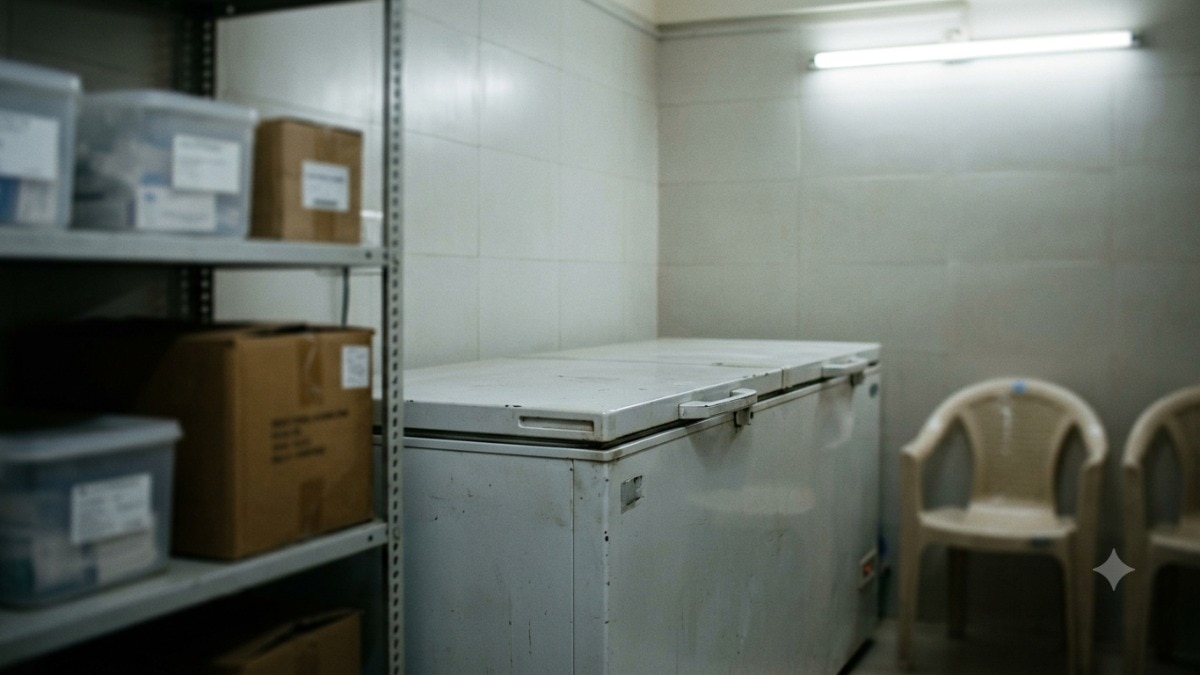
Police in Mumbai have stumbled upon the body of an 80-year-old man who died four years ago in a bizarre case that involves a family’s hope that medicine of the future will one day be able to bring back the dead. The body was discovered at a local medical clinic in Malad after receiving a tip-off from an informant.
According to police, the man's family had instructed the clinic to preserve his body after his death.
The family reportedly told police that they were deeply disturbed by his death and wanted to move the corpse to a cryonics centre in the US offering long-term preservation services.
While cryopreservation of cells, tissues and embryos is an established scientific practice, cryonics remains experimental.
Cryonics involves preserving human remains at extremely low temperatures after death, with the hope that advances in medical technology could one day make revival possible.
In India, there is no specific law that bans or permits the practice.
The man's aged wife and adult children live in Mumbai. Their identities, as well as that of the deceased, have not been disclosed.
The family and the clinic management did not inform the police while the corpse remained at the facility.
Police learnt about the matter through an informant and are now seeking legal advice on the next course of action, while consulting experts on the legality of preserving a body in such a manner and how long it can be kept.
A decision on conducting the man's final rites is yet to be taken.WHAT DOES INDIAN LAW SAY ABOUT CRYONICS
India does not have a specific statutory law that explicitly governs or regulates the long-term freezing or cryogenic preservation of human bodies. As a result, human cryopreservation remains largely unregulated and operates in a legal grey area.
However, preserving a human body intersects with constitutional, criminal and healthcare frameworks.
The Supreme Court has held in landmark judgments that the right to life and dignity under Article 21 extends to the dead. This requires a body to be treated with dignity and disposed of in accordance with appropriate customs.
Some legal experts have argued that this right could potentially extend to a person's voluntary choice to undergo cryopreservation, but there is currently no formal legal recognition of such a right.FREEZER STORAGE NOT SAME AS CRYONICS
Indian jurisprudence has dealt differently with temporary refrigeration of a body and indefinite cryonic preservation.
In a notable case involving spiritual leader Ashutosh Maharaj, who was declared clinically dead in 2014, the Punjab and Haryana High Court allowed his disciples to continue preserving his body in a commercial freezer.
The court's decision involved the disciples' religious freedoms and their claim that the leader was in a state of deep meditation, or "samadhi", rather than ordering his cremation.
Keeping a body frozen privately without informing authorities, however, can invite police scrutiny.
If a body is concealed to deliberately hide a death or facilitate financial fraud, such as illegally drawing a deceased person's pension, it can have serious criminal consequences under applicable law.CRYONICS RAISES QUESTIONS AROUND DEATH, MEDICAL LAW
The legal definition of death in India is closely linked to medical and organ-transplant frameworks, including the Transplantation of Human Organs Act, 1994.
Since cryonics requires preservation to begin soon after a person is declared legally dead, the practice raises complex questions around legal death, post-mortem procedures and succession of property.
Authorities may preserve tissue samples and other biological material at sub-zero temperatures in forensic and medico-legal cases to maintain the chain of custody and protect DNA evidence.
Such preservation for evidentiary purposes, however, is distinct from the long-term preservation of an entire human body for potential future revival.- Ends
Mustafa has been with TV Today for more than 5 years and covers crime and Mumbai centric stories as a Principal Correspondent. His inquisitive nature further developed his aspirations to be a journalist as a teenager. He looks at stories with thorough detailing to get to the facts that are beyond obvious. When he isn't working he enjoys reading and watching movies.
Journalist. Where ever there is news, you will find her there. Covers court, crime and is also part of the India Today Fact Check Team. But her first love remains - Photography.