Munich, Berlin, Cologne-Rhine-Ruhr – Germany's three Olympic candidates
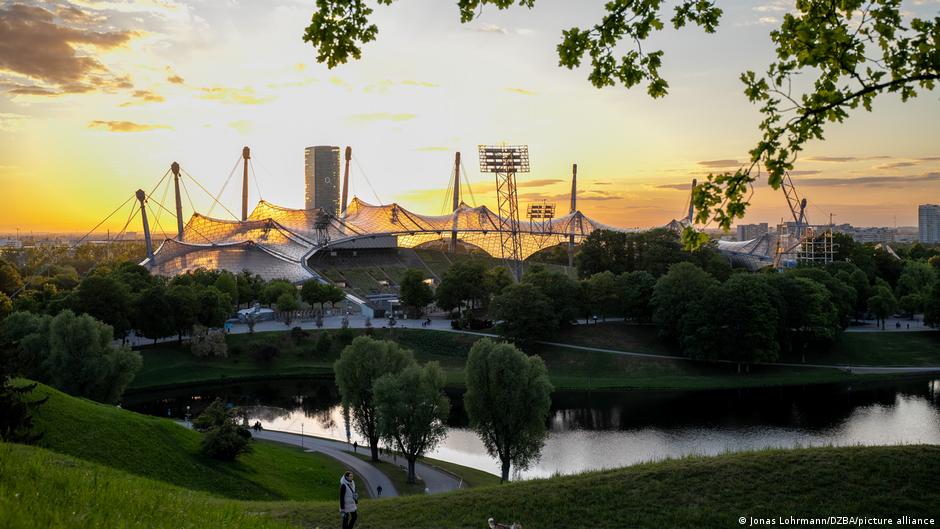
Munich's Olympic Stadium was the main venue for the 1972 Summer OlympicsImage: Jonas Lohrmann/DZBA/picture allianceAdvertisementGermany is hoping to win the right to host the Olympic Games in 2036, 2040 or 2044. On Saturday, the German Olympic Sports Confederation (DOSB) is to meet to vote on which of three bids (Munich, Cologne-Rhine-Ruhr, Berlin) to throw its support behind.
The motto of Munich's Olympic bid is "For Games with heart and soul." The concept focuses on sustainability, with the 1972 Olympic Park serving as the centerpiece. According to documents published by the bid committee, around 90% of the competition venues are located less than 30 kilometers (18.6 miles) from the Olympic Village. Most of the venues that would be used already exist, with only a few temporary facilities to be constructed.
In addition to existing infrastructure, other advantages include Munich's experience in hosting major sporting events and its Olympic legacy from 1972. The organizers aim to offer an alternative model to the pricey Olympic projects of the past.
Political support for the Munich bid is strong: "In Munich, we have the perfect conditions to host the Summer Olympic and Paralympic Games," Munich Mayor Dominik Krause is quoted as saying on the city website, "muenchen.de."
"Hosting the Olympic Games in Munich would be an investment in the future — not only because of the immense social value but also due to the resulting acceleration of key urban development and infrastructure projects. Munich is ready for the Olympics!"
Munich residents also appear to support the bid. In a city referendum held last October, just over 305,000 residents cast their votes, with 66.4% voting in favor of an Olympic bid.
The situation is different in Germany's capital. The Left Party (Die Linke) won the most votes in Sunday's election in Berlin, meaning Elif Eralp, its chairperson, could become the city-state's new governing mayor. She is on the record as opposing the idea of bringing the Games to the capital, describing the bid as a "waste of taxpayer money." The Green Party, a potential coalition partner for Eralp, also opposes an Olympic bid.
The prospect of hosting the Games in 2036 has sparked further debate. Critics point to the 1936 Berlin Olympics, which were exploited by Adolf Hitler's Nazi regime as a propaganda tool. Proponents, however, argue that the 2036 Games could showcase the values of a democratic and cosmopolitan Germany.
Berlin's bid also envisages mainly using existing sports facilities for the Games.
"Ninety-seven percent of the required sports facilities already exist. Apart from one privately financed arena, we do not need to build any new venues," said Kaweh Niroomand, Berlin's Olympic commissioner, told the "Die Welt" newspaper.
"The Games should fit Berlin — not Berlin the Games."
Unlike Munich and Berlin, this third bid encompasses an entire region, featuring numerous venues that are widely dispersed. Cologne would serve as the "lead city" in the bid that features 15 municipalities in the western state of North Rhine-Westphalia. Cologne would host the Olympic Village and a temporary athletics stadium.
Organizers highlight the fact that all of the venues either already exist or would be temporary and to the fact that 66% of those who voted in lasts April's referenda in the affected municipalities voted in favor of the bid.
Apart from sustainability, the Rhine-Ruhr region's dense sports infrastructure is considered a key strength. A potential drawback is the location of competitions across many cities in Germany's most densely populated region. Traffic jams are a daily occurrence and many trains run late or are cancelled altogether.
A total of 144 votes are up for grabs in Saturday's vote. Eligible to vote are Germany's 42 Olympic sports federations — including those for winter sports — along with the 10-member DOSB Executive Board and eight individual DOSB members. The individual sports federations each hold three votes.
If none of the three bids wins an absolute majority in the first round of voting, the last-placed bid drops out for the second round – meaning a decision will come after no more than two rounds of voting.
The final report by a DOSB evaluation commission makes Munich's bid the slight favorite, with 87.03 out of a possible 100 points, ahead of Cologne-Rhine-Ruhr (85.02) and Berlin (74.64).
This is just the next step in a long process of deciding who will host the next three Olympic Summer Games. The International Olympic Committee isn't to decide on who will host the 2036 Olympics until 2029.
This article was adapted from German.