Myanmar calls International court's Rohingya genocide ruling ‘unfair’ | World News
Myanmar has rejected a landmark ruling by the International Court of Justice (ICJ), which held the country responsible for committing genocide against its Rohingya minority. The country's presidential spokeswoman, Khaing Khaing Soe, on Friday described the decision as unfair.
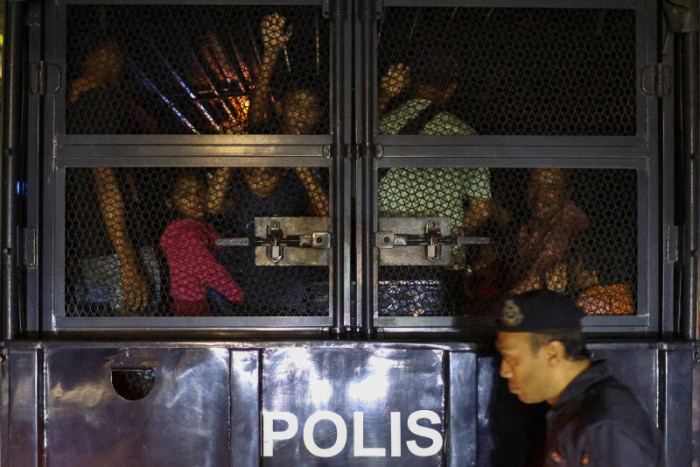
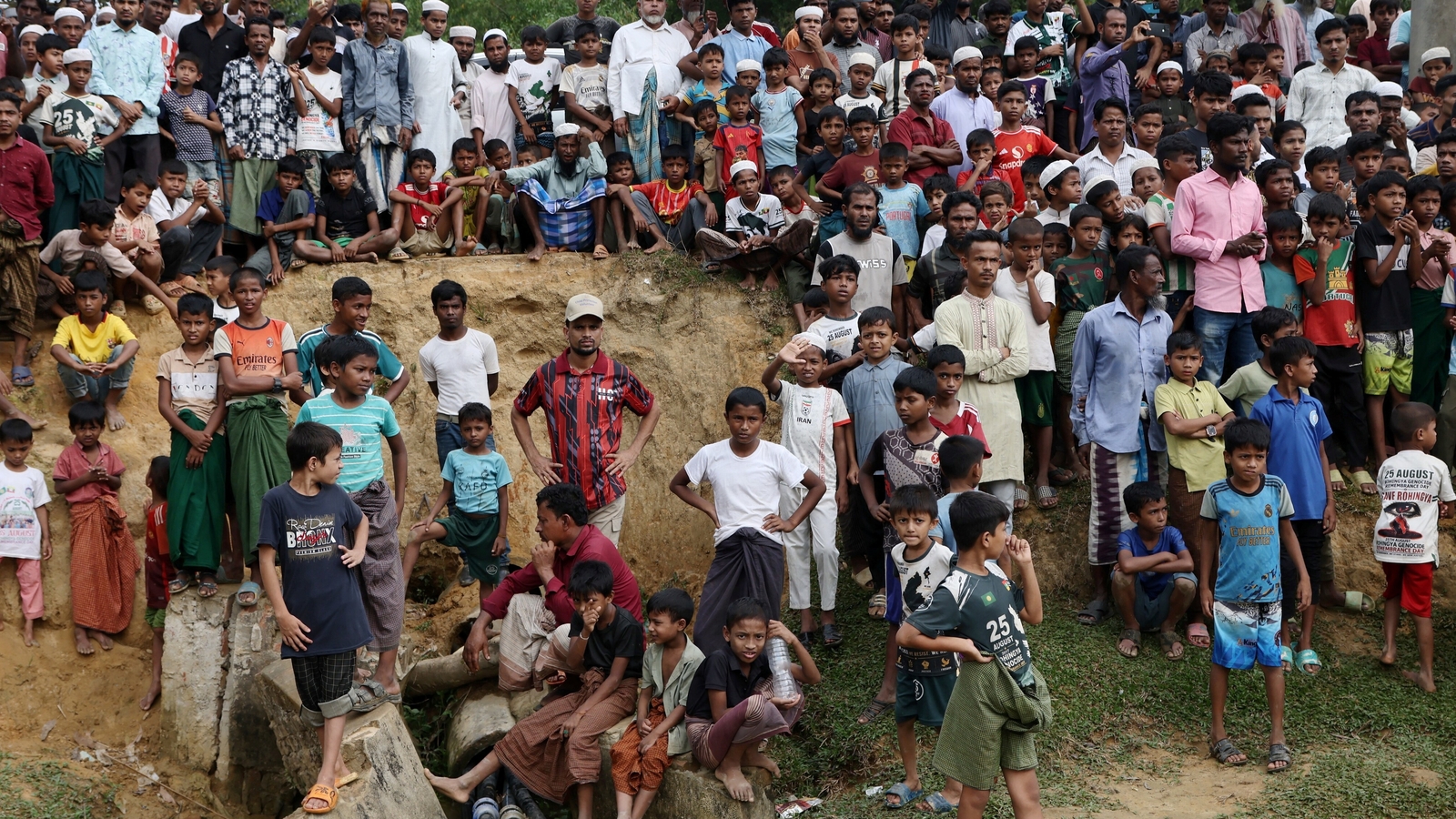
Myanmar has repeatedly denied committing genocide against the Rohingya. (REUTERS)The ICJ on Thursday presented evidence of atrocities committed against the mostly Muslim Rohingya community during a military crackdown in Myanmar's western Rakhine state in 2017. The court said thousands of Rohingya civilians were killed, women faced widespread sexual violence and children were subjected to extreme brutality, news agency AFP reported.
Speaking at a press conference in the capital, Naypyidaw, Khaing Khaing Soe questioned the court's decision, pointing out that its 15 judges were divided over the verdict.
"Despite efforts from our side, when we look at the result, not all 15 judges agreed with the decision," she said, referring to the 9-6 vote.
"So this was not a unanimous decision," she added. "I would say it is not fair."
Myanmar has repeatedly denied committing genocide against the Rohingya. It has maintained that its military operations were aimed at suppressing an armed insurgency after attacks by militants killed a dozen security personnel.
However, the ICJ rejected Myanmar's claim that the 2017 operations were part of a counter-insurgency campaign.
The court's judgment said there was no evidence to show that Myanmar's security forces had differentiated between civilians and alleged Rohingya fighters during the operations.
"There is no evidence before the Court that, in the conduct of the clearance operations, Myanmar distinguished between civilians and alleged (Rohingya) fighters," the judgment said.
China has expressed concern over the International Court of Justice's (ICJ) ruling that Myanmar committed genocide against its Rohingya minority, questioning the court's interpretation of its powers and warning that the decision could make resolving the conflict more difficult, news agency AFP reported.
Beijing made the remarks on Friday, a day after the top United Nations court ruled that Myanmar's 2017 military crackdown on the mostly Muslim Rohingya community amounted to genocide.
China remains one of Myanmar's few long-standing partners following the 2021 coup led by Min Aung Hlaing, which resulted in Western nations cutting ties with the Southeast Asian country.
Chinese foreign ministry spokesperson Guo Jiakun said Beijing was concerned about what it described as an expansion of the court's authority and interpretation of the law.
"China is concerned about issues such as jurisdiction overreach and expanded interpretation, and believes that such practices are not conducive to the settlement of disputes," Guo Jiakun told a news briefing when asked about the ICJ ruling.
"The international community should make joint efforts in this direction to avoid complicating this issue," he added.
Follow the latest breaking news, major developments and agenda-setting stories from India and around the world with the newsdesk at Hindustan Times. Operating round the clock, the desk brings together experienced editors, reporters and correspondents to deliver fast, accurate and contextual reporting across subjects that influence public policy, governance, business, society and international affairs. The HT News Desk covers politics, elections, government policies, the economy, business and markets, science and technology, the environment, law and order, infrastructure, education, climate issues and geopolitics, while closely tracking developments across states, institutions and global capitals. The team also leads coverage of major breaking news events, policy announcements, court proceedings, natural disasters, public emergencies and significant international developments. Reports published by the newsdesk are based on information gathered from reporters on the ground, official statements, government agencies, court records, regulatory filings, recognised institutions and other authoritative sources. Stories undergo editorial scrutiny and verification processes to ensure accuracy, fairness and relevance, and are updated as events evolve and additional information becomes available. Whether covering a key political decision in New Delhi, an economic policy shift affecting millions, a landmark court ruling or a major global event, the HT News Desk aims to provide readers with reliable, fact-based journalism that delivers not only the latest developments but also the context and analysis needed to understand their wider implications.Read More