Myanmar genocide ruling: Rohingya say struggle for justice not over
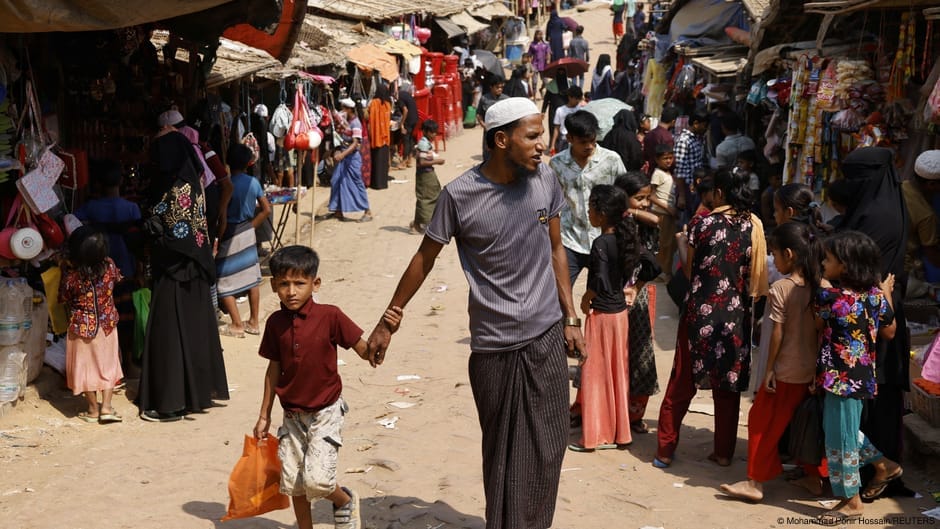
Some 700,000 Rohingya crossed the border into Bangladesh after Myanmar military's operartions in 2016-17Image: Mohammad Ponir Hossain/REUTERSAdvertisementThe International Court of Justice (ICJ) on Thursday ruled that Myanmar committed genocide against the country's Rohingya community a decade ago, in a historic judgment hailed by the long-persecuted minority and rights groups.
The United Nations' top court also ordered the Myanmar government to prevent a repeat of the crimes, undertake legal reforms to protect the Rohingya, and provide the victims with reparations or, where it cannot, compensate them.
The judgment came seven years after The Gambia filed the case with the court in 2019, accusing Buddhist-majority Myanmar of a deliberate campaign of arson, rape and murder against the country's predominantly Muslim Rohingya community in 2016 and 2017.
It is the ICJ's first finding of genocide against a state, and the first ruling in any of the cases filed against Myanmar or its leaders in multiple courts around the world.
Lucky Karim was 14 when she and her mother and brothers were forced to flee their village in Rakhine State to escape the Myanmar military's advance in August 2017.
She joined the roughly 700,000 other Rohingya who crossed the border into Bangladesh at the time.
Now a prominent Rohingya activist, Karim heard the court's judgment in person in The Hague.
"For me … it's a very personal day, a personal moment, as someone who survived and escaped genocide in 2017. It took nearly a decade for the world to finally hear our voice," she said.
"For generations the [Myanmar] military stripped away our identity, our citizenship, tried to erase us from our homeland, told the world that what they did to us in 2017 was merely clearance operations, or worse, that we didn't even exist," said Wai Wai Nu, another Rohingya activist and former political prisoner.
Today, she said, their decades of persecution "is actually validated, and the truth has come out."
Tun Khin, a Rohingya activist and plaintiff in a universal jurisdiction case against Myanmar in Argentina, called the judgment "a historic moment" and "a big day for the Rohingya."
The press bureau of the Myanmar president's office did not respond to DW's requests for comment. The government's main mouthpiece, the state-run New Light of Myanmar newspaper, has made no mention of the ruling online.
Throughout the trial, Myanmar claimed that its actions in Rakhine State were strictly part of legitimate counterinsurgency operations against the Arakan Rohingya Salvation Army, an armed group in the area that had been attacking police and military posts.
The ICJ flatly rejected the argument. "The court views casualties and damage far in excess of what was justified by military necessity," ICJ President Yuji Iwasawa said, reading from the 15-judge panel's 9-6 ruling in The Hague.
"The execution of Rohingya men and boys in some locations, the widespread sexual violence, the targeting of children and babies, the methodical burning of villages and attacks on fleeing civilians are not consistent with an intent to conduct counterinsurgency operations," he added.
A UN-backed fact-finding mission concluded that some 10,000 people likely died in the pogroms. By some estimates, about 1 in 5 of them were children.
Michael Becker, an associate professor of international human rights law at Trinity College Dublin, said the court's ruling was both historic and "monumental" not only because it found a state responsible for genocide, but also because "it demonstrates that establishing genocidal intent is not impossible."
He noted that the panel took pains to show that The Gambia's case passed the court's established "only reasonable inference" test for genocidal intent. The ruling also "helpfully affirms" that forced transfer, targeting children and sexual violence could be relevant factors, he added.
Amid the elation among the Rohingya and rights groups, their focus quickly turned to making the court's prescribed remedies real.
The ICJ said Myanmar was now obliged to allow the "safe, voluntary and dignified" return of those who fled, investigate the crimes, and prosecute those found responsible. It also told Myanmar to return or replace all stolen property or, within two years, show the court it was compensating victims for what it could not.
But those behind the genocide, including former military chief and current President Min Aung Hlaing, have remained in power since toppling Myanmar's democratically elected government in 2021.
Much of the country, including Rakhine State, is still in the midst of a brutal civil war between the military and an array of armed resistance groups. And the group that now controls most of Rakhine, the Arakan Army, is widely accused of persecuting the Rohingya as well.
"These are not conditions amenable to realizing the relief ordered by the ICJ anytime soon," said Becker.
Enforcing the court's orders ultimately falls to the UN Security Council. But China and Russia, which both back the Myanmar government and keep it well armed, would "almost certainly" veto any proposed Council resolution that aims to punish Myanmar, said Richard Horsey, senior Asia adviser at the International Crisis Group.
"Whatever pressure there is will come from governments and the General Assembly, not the Council," he said.
Immediately after Thursday's ICJ judgment, the UK said it was expelling Myanmar's defense attache in London and would call for a UN Security Council session to discuss the court's decision.
A number of Western governments have already buried Myanmar under round after round of sanctions over the past decade, but with little to no apparent effect.
Myanmar is even taking tentative steps to shake off its global pariah status and restore regular relations with the rest of the world. Min Aung Hlaing has been warmly hosted by eight Asian and Eastern European countries since arranging his transition from army general to president earlier this year following rigged elections.
Horsey says the ICJ judgment will slow those efforts but not reverse them.
"Most governments in the region will keep engaging, but those with Muslim-majority publics, especially Malaysia and Indonesia, will find it harder to justify at home," he said.
Japan and South Korea, which maintain extensive business ties with Myanmar, are likely to remain cautious, he added, while the United States, which has reportedly had recent meetings with senior government officials, would keep up a transactional relationship.
"For [Myanmar], the real cost is that every government that deals with it will now have to explain why it is engaging a state found responsible for genocide," Horsey said.
The Rohingya, meanwhile, expect a long and hard fight for real change.
"A judgment in The Hague will not on its own stop the bombs or feed starving families or stop the atrocities in Rakhine State," said Wai Wai Nu. "It is imperative that the international community take action to enforce the ruling," she added.
Karim said other countries should use the ICJ judgment "as a tool to open every possible door to help us and protect the people on the ground."
The Gambia's lead counsel in the case, Arsalan Suleman, said the genocide ruling could be used to help hold the perpetrators to account in other courts. The International Criminal Court, for one, is weighing an arrest warrant request for Min Aung Hlaing for alleged crimes against humanity, also against the Rohingya.
Tun Khin said the wish of most Rohingya is simple, if still hard to foresee. "They want to return home, to their houses and own villages," he said, but this time with full citizenship rights and legal protection.
"It will take time," he acknowledged. "This is just the beginning."