Naledi Chirwa-Mpungose hits back at Jacinta Ngobese-Zuma over Nhlamulo Sambo defamation case - TimesLIVE
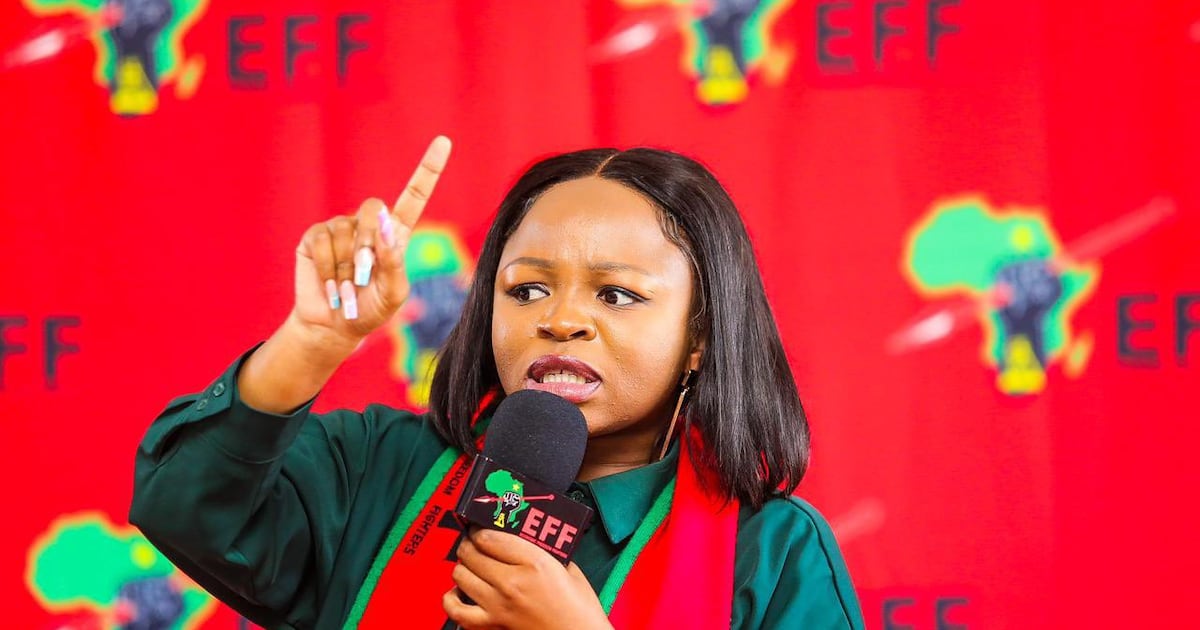
EFF MP Naledi Chirwa-Mpungose has hit back at March and March movement leader Jacinta Ngobese-Zuma’s defamation case, denying that she accused the activist of killing or facilitating the death of 19-year-old Nhlamulo Sambo.
In her newly filed answering affidavit on September 21, Chirwa-Mpungose says Ngobese-Zuma has misrepresented her Facebook post and parliamentary remarks, arguing that they were political commentary on xenophobia, Afrophobia, tribalism and violence — not an allegation that Ngobese-Zuma was responsible for Sambo’s death.
Chirwa-Mpungose wants the high court in Johannesburg to dismiss the application, arguing that Ngobese-Zuma has failed to establish the factual and legal foundation for the relief she seeks.
At the centre of the dispute is a Facebook post Chirwa-Mpungose republished on June 1 about Sambo’s death.
Ngobese-Zuma’s founding affidavit alleges that Chirwa-Mpungose’s comments created the impression that she had somehow caused, or set in motion, a chain of events that led to the teenager’s death.
Chirwa-Mpungose’s version is starkly different.
She says the post she republished was understood by her to be a warning about xenophobic attacks and the dangers posed by xenophobia and Afrophobia.
“I did not understand the statement as an allegation that the applicant personally caused the death of Mr Sambo.”
Chirwa-Mpungose says she did not add words accusing Ngobese-Zuma of killing Sambo and argues that the original statement did not expressly accuse her of doing so.
She says Ngobese-Zuma’s case rests on an interpretation of the post that she does not accept.
“I did not understand the statement to mean that the applicant had killed Mr Sambo or had procured, facilitated or influenced his killing.”
The MP also disputes Ngobese-Zuma’s interpretation of comments made in parliament.
According to Chirwa-Mpungose, she did not mention Ngobese-Zuma by name during her parliamentary address and did not accuse her of killing Sambo.
Instead, she says the speech was directed at condemning tribalism, xenophobia and conduct capable of creating social division and violence.
“I did not mention the applicant by name.”
“Nor did I state or imply that the applicant killed Mr Sambo.”
Chirwa-Mpungose’s defence then turns to what she says is a fundamental problem with Ngobese-Zuma’s case — the meaning attributed to her words.
The EFF MP argues that the court must assess the statements objectively and within the context in which they were published, rather than through the applicant’s personal interpretation.
She says Ngobese-Zuma has failed to distinguish between an express accusation of wrongdoing and political commentary concerning broader social and political issues.
“The reasonable reader understands political commentary within its political and social context.”
That context was the public debate surrounding xenophobia, Afrophobia, tribalism and Sambo’s death.
Her intention was not to make a criminal allegation against Ngobese-Zuma but to condemn conduct that she believed could contribute to violence and social division.
Chirwa-Mpungose also takes issue with Ngobese-Zuma’s claims that the Facebook post caused threats, hostility and reputational damage.
She says the applicant has not identified a specific threat, incident or act of harm that was caused by her post.
She further argues that the existence of comments, criticism or disagreement after a social media post does not, without more, establish actionable defamation.
“The applicant has not identified any particular threat, incident or conduct suffered by her which was caused by my publication.”
Chirwa-Mpungose says Ngobese-Zuma has similarly failed to establish a causal link between the post and the alleged risk to her safety.
She says no evidence has been provided establishing that her post caused the alleged comments or threats.
“The applicant must establish a factual and legal causal connection between my conduct and the alleged harm upon which she relies.”
The answering affidavit then moves beyond the individual dispute and places freedom of expression at the heart of Chirwa-Mpungose’s defence.
She invokes section 16(1) of the constitution, which protects freedom of expression, and argues that her comments constituted political expression on matters of substantial public interest.
Those issues included xenophobia, Afrophobia, tribalism, social cohesion and violence.
“The expression complained of was political expression.
“These are not private or trivial matters.”
Chirwa-Mpungose argues that the constitutional protection of political speech cannot simply be displaced because the subject of the criticism takes offence or says their reputation has been damaged.
She accepts that dignity and reputation are constitutionally protected but says those rights must be balanced against the right to participate in public and political discourse.
“I acknowledge that the applicant’s dignity and reputation are constitutionally protected.
“The protection of dignity and reputation cannot be applied in a manner which unnecessarily suppresses legitimate political expression.”
She also denies that she acted with an intention to injure Ngobese-Zuma’s reputation.
She did not publish or reshare the statement to humiliate, degrade or lower the March and March leader in the estimation of others.
Instead, she says her purpose was to participate in a public debate about xenophobia, Afrophobia and tribalism.
In the alternative, Chirwa-Mpungose relies on the defence of reasonableness and public interest.
She argues that even if the court finds that the post conveyed a defamatory meaning, it was lawful because it concerned matters of legitimate public concern and was reasonable in the circumstances.
Her affidavit says the purpose of the communication was to discourage xenophobic and tribalistic conduct capable of causing violence.
Chirwa-Mpungose also rejects the idea that publishing the comments on Facebook changes the legal position.
She says the medium of publication may form part of the circumstances considered by the court, but it does not automatically make the statements defamatory.
“The fact that the publication was made through Facebook does not alter the legal enquiry.”
Her answering papers further attack the interdict sought by Ngobese-Zuma, describing it as excessively broad.
Chirwa-Mpungose argues that an order preventing her from generally discussing or commenting on matters involving Ngobese-Zuma could amount to an unjustifiable restriction on freedom of expression.
“The applicant must identify with precision the unlawful conduct which she seeks to restrain. She has failed to do so.”
And Chirwa-Mpungose is refusing to apologise.
Ngobese-Zuma’s lawyers previously demanded that the MP retract the allegedly defamatory statements, apologise and undertake not to repeat them. Ngobese-Zuma subsequently launched the application after Chirwa-Mpungose rejected those demands.
Chirwa-Mpungose now says she cannot be expected to apologise for something she never said.
“I will not admit to having made an allegation which I did not make.”
The answering affidavit asks the court to dismiss Ngobese-Zuma’s application.