Nasa's Crew-13 launched to study disease, crop growth for future space missions
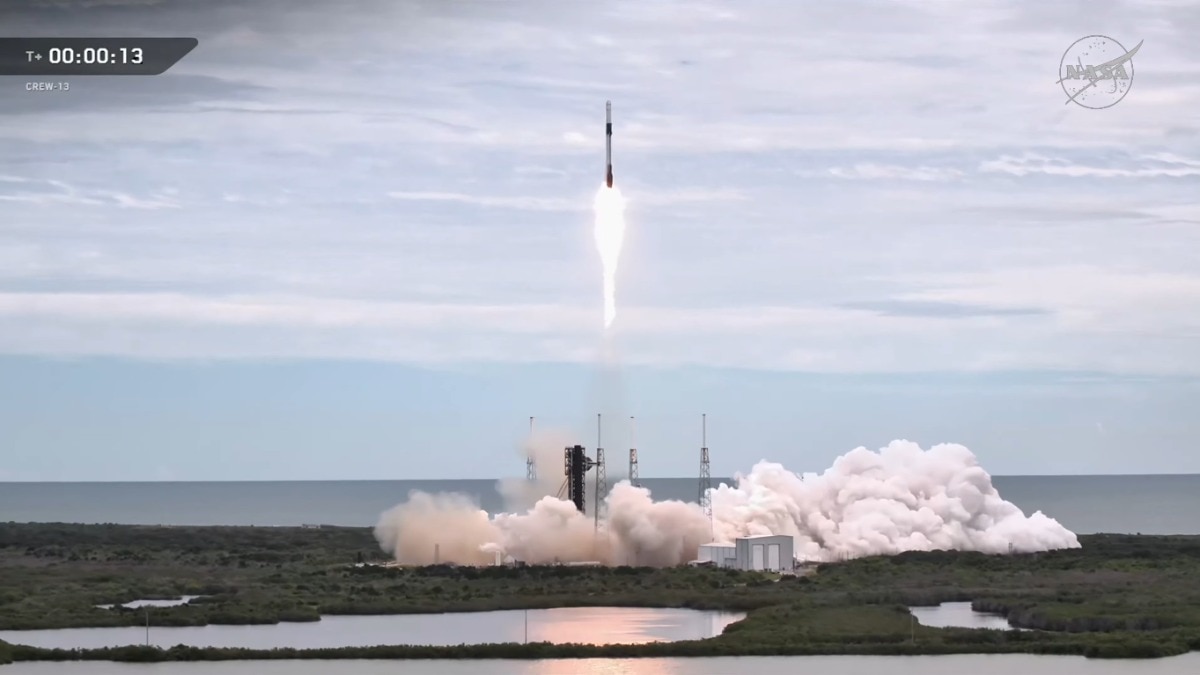
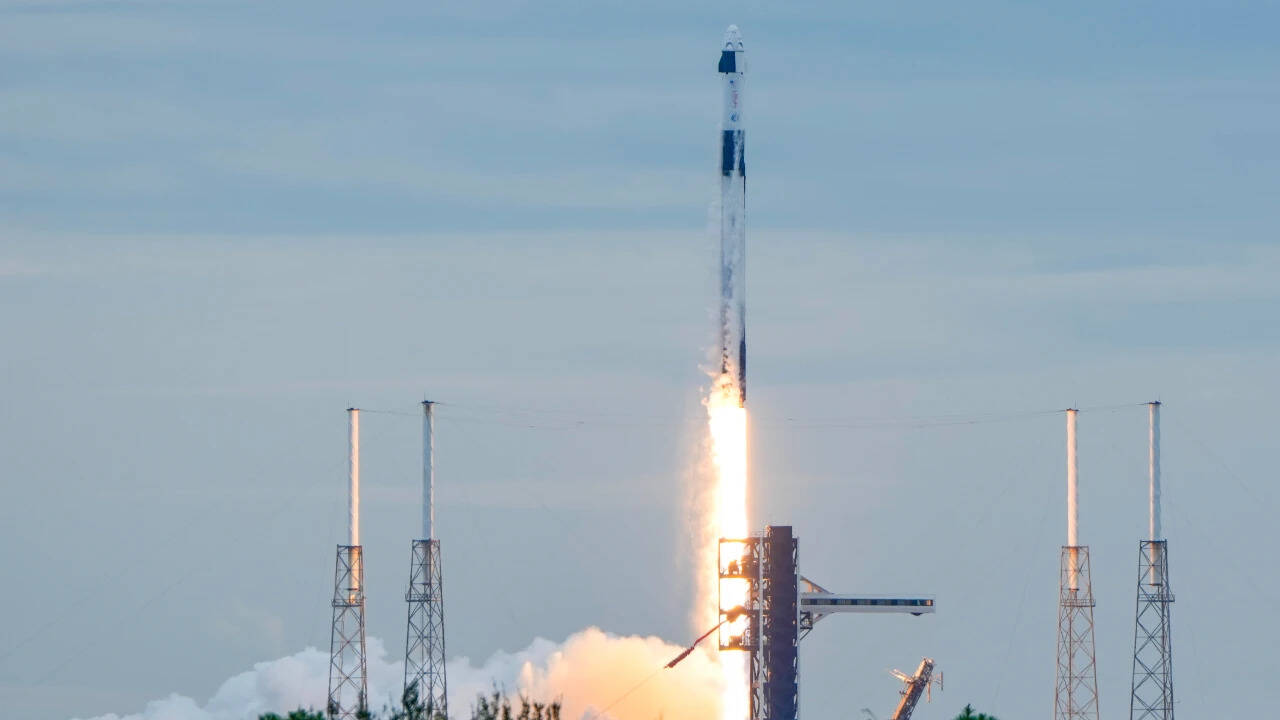
Four astronauts are now on their way to the International Space Station (ISS) aboard Nasa and SpaceX’s Crew-13 mission after a successful liftoff from Space Launch Complex 40 at Cape Canaveral Space Force Station in Florida on Thursday, October 1.
The SpaceX Falcon 9 lifted off at about 8:40 pm, carrying the Dragon spacecraft Grace and its four-member crew, including Nasa astronauts Jessica Watkins and Luke Delaney, Canadian Space Agency (CSA) astronaut Joshua Kutryk and Roscosmos cosmonaut Sergey Teteryatnikov. The SpaceX Falcon 9 rocket is seen blasting off to space to commence Crew-13 mission. (Photo: Nasa/Screengrab) advertisement❮❯ Read Full StoryCREW-13 EN ROUTE TO INTERNATIONAL SPACE STATIONCrew-13 is the 13th crew rotation mission of SpaceX’s human space transportation system and the 14th flight carrying people to the station through Nasa’s Commercial Crew Programme, including the Demo-2 test flight.
Watkins is the commander, Delaney the pilot, and Kutryk and Teteryatnikov are mission specialists.
For Watkins, this is her second spaceflight and her second mission aboard a SpaceX Dragon. Delaney, Kutryk and Teteryatnikov are making their first spaceflight. Crew-13 members are seen seated in the launch vehicle. (Photo: Nasa)
Watkins is also set to become the first Nasa astronaut to fly aboard a Dragon spacecraft twice.
The crew is flying aboard Dragon Grace, which previously travelled to the International Space Station on Axiom Mission 4 in 2025. The Falcon 9 first stage supporting Crew-13 is making its third flight.
The mission had previously been delayed after a leak was detected in Dragon's propulsion system.
SpaceX replaced the affected component before Nasa and its international partners cleared the mission for launch. A view of the control room prior to launch of Crew-13 Mission. (Photo: Nasa/Screengrab) WEATHER THREATENED CREW-13 LAUNCH
Weather had remained the biggest uncertainty in the final hours before liftoff.
The US Space Force’s 45th Weather Squadron had put the chance of favourable conditions at 55% on September 30, before lowering it to 40% on launch day.
The main concerns were the cumulus cloud rule, thick cloud layers and the possibility of the rocket flying through precipitation. Falcon 9 rocket is seen on the launch pad under a cloudy sky. (Photo: Nasa/Screengrab)
Moist air and scattered showers were moving across Florida, making the timing and location of the clouds and rain difficult to pin down.
Nasa nevertheless proceeded with the countdown, expecting a 60% chance of favourable conditions at the time of launch, and succeeded in sending a new crew of astronauts to the ISS.WHAT'S THE NEXT IMPORTANT STEP?
After reaching orbit, Dragon will carry out a series of manoeuvres to catch up with the International Space Station before beginning its final approach. The space capsule carrying the crew is seen moving towards ISS after a successful launch. (Photo: Nasa/Screengrab)
The spacecraft is designed to dock autonomously, although the crew can take manual control if necessary.
Dragon is scheduled to dock at the forward-facing port of the station's Harmony module at approximately 4:30 am on Friday, October 2.
The planned journey from liftoff to docking is about seven hours and 50 minutes, which Nasa said would make Crew-13 the fastest launch-to-docking journey by a US spacecraft to the ISS.
After docking and hatch opening, the four astronauts will join the Expedition 75 crew aboard the station.
They will spend roughly six months conducting scientific experiments, technology demonstrations and maintenance work, including research aimed at improving human health and preparing for future missions to the Moon and Mars.
Crew-13 is currently scheduled to return to Earth in 2027.- Ends