Need money in minutes? Read this before taking your first digital loan
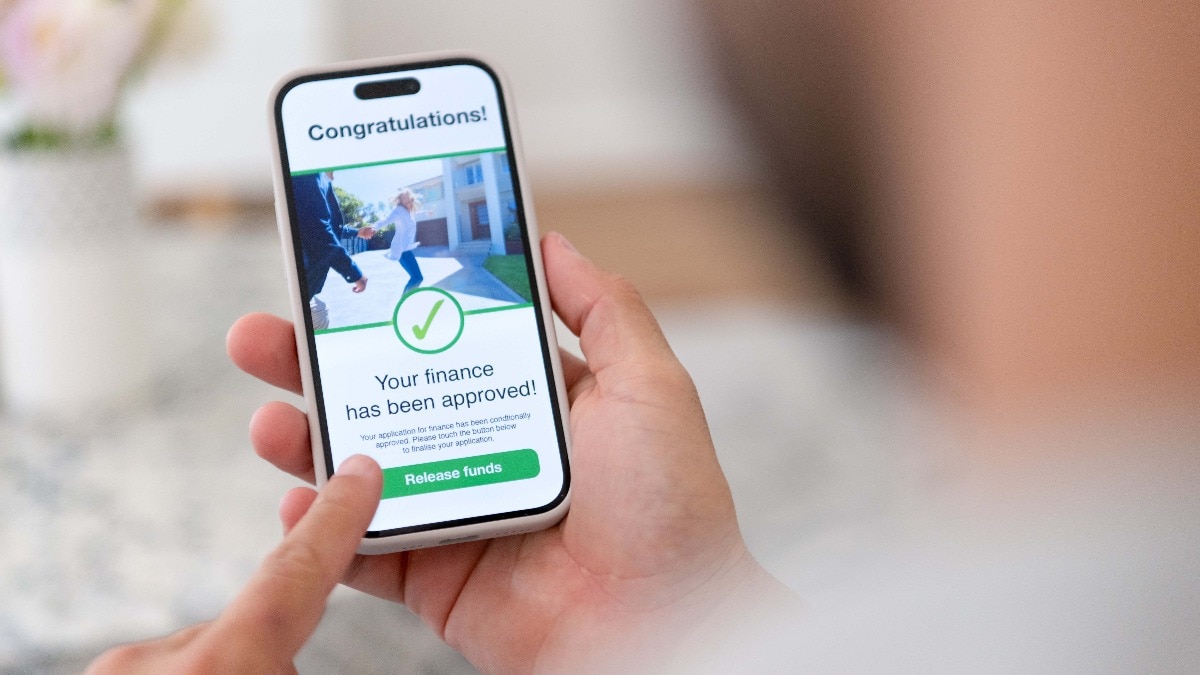
Your salary is still a few days away, an unexpected bill has landed, or you need money urgently for an emergency. You open a loan app, enter a few details and, before you know it, you have an offer for Rs 20,000 or Rs 50,000.
Sounds convenient, doesn't it? But before you hit that 'Apply Now' button, there is more to a digital loan than instant approval. How much will you actually pay? Is the app legitimate? What happens if you miss an EMI? And why does a loan app need access to your phone contacts?
These are questions first-time borrowers often overlook in the excitement of getting quick credit. With digital lending growing rapidly in India, understanding the terms and conditions is no longer optional.
According to a report by the Fintech Association for Consumer Empowerment (FACE), based on CRIF High Mark data covering more than 110 digital NBFCs, digital lenders sanctioned 3.4 crore personal loans worth Rs 64,656 crore in the April-June quarter of FY27. They accounted for 70% of all personal loans sanctioned by volume, although their share by value was 22%. The outstanding loan portfolio of these lenders also rose around 28% year-on-year to Rs 1.54 lakh crore as of June 2026.
Clearly, digital loans are becoming a popular way to borrow, particularly for smaller amounts. But before taking your first one, here are seven things you should know.
The first thing to establish is whether the loan is being offered by a legitimate, RBI-regulated bank or non-banking financial company (NBFC). Many digital lending apps are merely intermediaries that connect borrowers with lenders. The actual lender's identity should be clearly disclosed.
Gaurav Garg, Head of Research at Lemonn, said borrowers should check three things before sharing any documents: the lender's identity, the total cost of the loan and the conditions for exiting it.
"Every legitimate loan offer must name the bank or NBFC that actually lends the money, and it must give you a Key Fact Statement (KFS) before you sign. The KFS shows the all-in Annual Percentage Rate (APR), every fee, and the full repayment schedule," he said.
Borrowers can also verify the app through the RBI's directory of digital lending apps deployed by regulated entities, available on the central bank's website under Citizen's Corner.
Prashant Kumar, Founder and CEO of Kredit.Pe, said first-time borrowers often focus on how quickly they can get the money and how much they are eligible to borrow.
"The more important question is who the lender actually is. Every legitimate digital loan in India comes from an RBI-regulated bank or NBFC, and the app has to name it clearly," he said.
He added that borrowers should decide how much EMI they can comfortably afford before applying, rather than borrowing simply because a lender has approved a higher amount.THAT LOW INTEREST RATE? LOOK CLOSER
An app advertising a personal loan at 12% or 18% interest may look attractive, but the advertised rate is not necessarily the actual cost of borrowing.
Processing fees, GST, convenience charges, platform fees and bundled insurance can push up the overall cost. Some charges are deducted upfront, meaning the amount credited to your account could be considerably lower than the loan amount on which interest is calculated.
This is why borrowers should compare loans using the Annual Percentage Rate (APR), which captures the overall borrowing cost, including applicable charges.
"Compare loans on APR, not on the interest rate. The advertised rate leaves out processing fees, GST on those fees, convenience or platform charges, and insurance that comes bundled in," Garg said.
For instance, a Rs 50,000 loan advertised at 18%, with a 3% processing fee plus GST deducted upfront and a six-month repayment period, could have an effective annualised cost of around 31%, according to Garg's illustration. For a three-month loan, it could be closer to 40%.
Kumar also cautioned borrowers against overlooking processing fees, as these are often deducted from the disbursed amount even though interest is charged on the full loan.
The KFS should clearly disclose the APR and all applicable charges. If a lender introduces an additional fee that was not disclosed, seek clarification rather than accepting it blindly.WHY DOES THE APP NEED YOUR CONTACTS?
You download an app to borrow money, but it asks for access to your photographs, contacts, call logs and other phone data. Should you allow it?
The answer is no. A legitimate lending app needs very limited access to your device. RBI guidelines prohibit regulated lenders and their lending service providers from accessing contacts, call logs, telephony functions and files or media on a borrower's phone.
Limited access to the camera, microphone and location may be sought with explicit consent for specific purposes, such as completing KYC.
Garg said bank statements should be accessed through consent-based channels such as an Account Aggregator, rather than by allowing an app to read files stored on the phone.
Kumar warned that requests for access to personal information should be treated as a serious red flag.
"When an app asks for these, it has nothing to do with assessing credit. That data gets used later to pressure and shame borrowers, and this is how most harassment cases begin," he said.
Borrowers should also understand their right to refuse or withdraw consent for optional data access and seek deletion of their personal information, subject to applicable requirements.READ THE FINE PRINT BEFORE AGREEING TO THE EMI
Getting the loan approved is one thing; repaying it is another. Before accepting an offer, check the EMI, repayment dates, loan tenure and total amount payable. Also understand the penalties for delayed payments and whether you will be charged for closing the loan early.
The Key Fact Statement is particularly important because it lays out the loan's key financial terms.
Garg said late-payment penalties must be disclosed and reasonable. Under RBI rules, penal charges cannot be added to the interest rate, and no further interest can be charged on the penal charge itself.
Prepayment conditions also matter. For personal loans at floating rates sanctioned from January 1, 2026, lenders cannot levy prepayment charges, subject to applicable RBI conditions. However, many small digital personal loans are fixed-rate loans, where disclosed foreclosure charges may apply.
There is also a cooling-off period that borrowers should know about. RBI requires digital lenders to provide at least one day during which a borrower can exit the loan by repaying the principal and proportionate interest without a penalty.
Kumar said borrowers should pay particular attention to three things in the agreement: the EMI, the due date and the total repayment amount.
"Very few borrowers know about the cooling-off period. For at least a day after disbursal, the loan can be returned without penalty by repaying the principal and interest for those days," he said.A SMALL LOAN, A BIG CREDIT IMPACT
A Rs 10,000 digital loan may seem insignificant, but it can have a lasting impact on your credit history. A timely repayment can help first-time borrowers establish a credit record, while missed EMIs can make future borrowing more difficult.
Digital loans from regulated lenders are reported to credit bureaus just like other formal loans. Therefore, even a small personal loan should be treated as seriously as any other borrowing.
Kumar said a digital loan often becomes the first credit entry for young borrowers. A consistent repayment record can improve their chances of accessing loans at better rates, while a missed EMI can remain on their credit report for years.
Garg also cautioned against applying to several lending apps in quick succession, as multiple credit enquiries can leave a trail on the borrower's report. Settling a loan for less than the outstanding amount can also affect how future lenders assess the borrower.SPOT THESE RED FLAGS BEFORE IT IS TOO LATE
Not every app promising instant credit is genuine. Unsolicited loan offers through WhatsApp, Telegram and SMS links, demands for upfront fees, unclear lender details and repayment requests to personal UPI IDs should immediately raise suspicion.
Be particularly careful if an app disburses money you never requested, deducts a large amount upfront, offers extremely short repayment periods or pressures you into accepting a loan within minutes.
Kumar said predatory lending often involves seven- to 15-day loans, unexpected charges and pressure to take another loan to repay an existing one.
The biggest warning sign, however, is the recovery process. Threats, abusive language, calls to family members and threats to circulate morphed photographs are unacceptable. Regulated lenders must follow RBI's recovery guidelines and cannot resort to harassment or intimidation.FACING HARASSMENT? KNOW YOUR RIGHTS
If a lending app imposes hidden charges, misuses personal data or harasses you over repayments, do not ignore it. Keep screenshots, messages, bank statements and call recordings, wherever legally permissible.
Start by filing a written complaint with the lender's grievance redressal officer. If the issue remains unresolved for 30 days or the complaint is rejected, you can approach the RBI Ombudsman through its Complaint Management System at cms.rbi.org.in, subject to eligibility conditions.
For fraudulent apps, extortion, threats or misuse of photographs, borrowers can call the cybercrime helpline at 1930, report the matter at cybercrime.gov.in and approach the local police. Unregulated lending activities can also be reported through the RBI's Sachet portal.
Kumar said borrowers should not hesitate to report harassment or misuse of their personal information.
"Borrowers shouldn't feel embarrassed about complaining. These systems were built for them," he said.
In other words, digital loans can offer quick financial support when you need it, but convenience should not come at the cost of financial safety. Verify the lender, compare the APR, read the KFS and understand the repayment conditions. Most importantly, borrow only what you can comfortably repay. An instant loan may take minutes to get, but the responsibility of repaying it can last much longer.- Ends
Jasmine Anand is a Senior Reporter (Emerging Tech) at India Today. With over 15 years of experience, she has earlier worked as a Financial Journalist in a multinational equity research firm, tracking equities, stock market, economy, IPOs and market-moving stories. Jasmine's forte is to scribe meticulously complex facts and figures into lucid and interesting reads. In her leisure time, she loves binging on movies and is passionate about painting, calligraphy, arts and crafts.