
Nepal's Balen Shah walks the India-China tightrope in first UN address
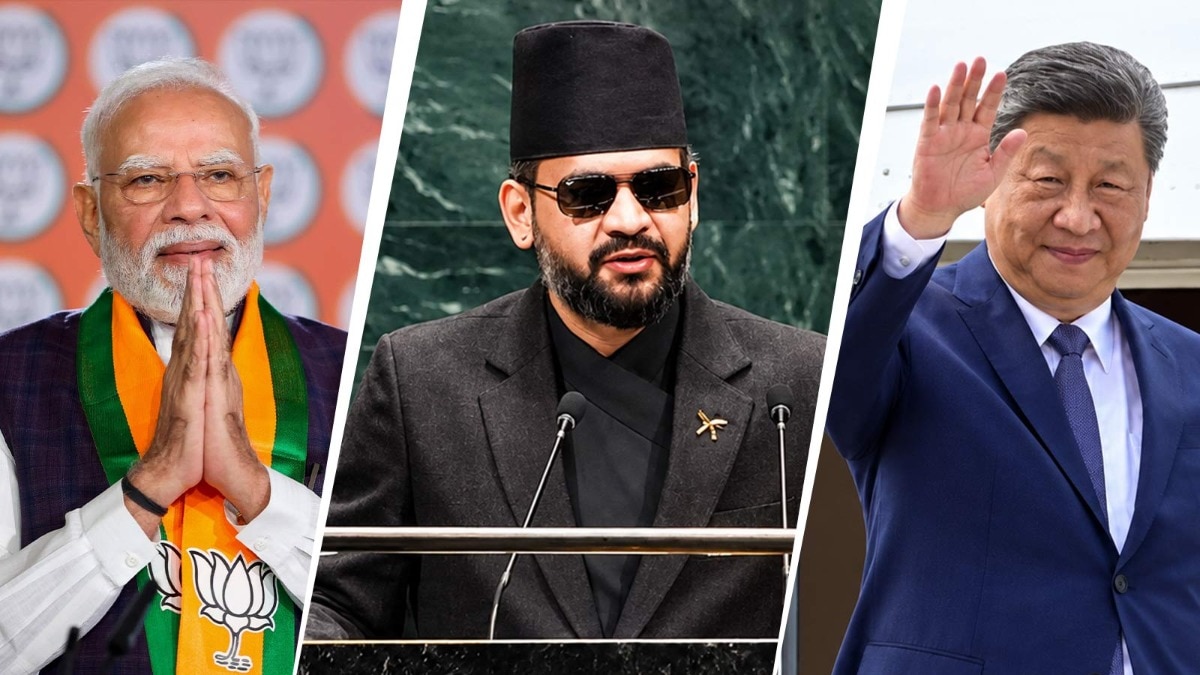
Due to its unique geographical location, landlocked Nepal has long sought to balance its ties with India and China. Nepal Prime Minister Balen Shah, in his first address at the UNGA, appeared to carry that approach forward, proposing a climate mechanism led by India, Nepal and China in the wake of last month's devastating floods.
Shah, wearing his signature rectangular sunglasses, called for greater cooperation among the Himalayan countries in tackling climate-change-related disasters. Proposing a Himalayan Climate Resilience Mechanism, Shah pitched for satellite data sharing and strengthening early-warning systems between India, China and Nepal.advertisement❮❯ Read Full StoryWHAT BALEN SHAH SAID ON INDIA, CHINA?"The Hindu Kush Himalaya is home to nearly two billion people. These mountains provide water, ecosystems, agriculture and livelihoods to populations far beyond Nepal," the rapper-turned-politician said.
"That is why, as an urgent first step, we propose that we establish a Himalayan Climate Resilience Mechanism, led by Nepal, India and China," Shah said.
Shah also sought cooperation in monitoring dangerous glacial lakes, believed to be behind the July floods, and disaster management.
Over 1,400 people have died, and 6,000 are missing after a flash flood swept through parts of the Nepal-Tibet border on August 26, swallowing towns, roads and bridges. A glacial collapse in upstream Tibet is believed to be behind the catastrophe. It is no secret that Nepal, which sits wedged between India and China, is a hotspot for climate disasters as the planet heats up.
"The devastation unleashed havoc on both sides of the Nepal-China border. The flood continued downstream towards India," Shah said at the UNGA. He also had a message for the world.
"Climate change does not recognise borders. Glaciers and floods do not travel with stamps and passports," the Nepal PM said.
Shah also singled out India and China as he expressed his "deep gratitude" to the countries that rushed to its aid following the disaster.
China has provided emergency financial aid worth $2.2 million to Nepal.
India has rushed over 140 tonnes of relief material and equipment between August 26 and September 19, according to the Ministry of External Affairs (MEA). It reinforced India's "first responder" image whenever its neighbours face a crisis.
Interestingly, not several days ago, Nepal's foreign minister said aid to the country after natural disasters was not "charity" but "legal and moral liability" of major greenhouse gas emitters like India and China.
Shah's outreach to India and China at the UNGA is being seen as a climbdown from the earlier rhetoric. India has sent over 140 tonnes of relief material to Nepal after the floods NEPAL'S INDIA-CHINA BALANCING ACT
By naming India and China, Shah essentially sought to play along with the efforts of successive Nepali governments to balance ties between its two neighbours.
For decades, Nepal has leaned heavily on India for trade and connectivity. However, over the past decade, Nepal has worked steadily to deepen its ties with Beijing for military supplies, manufacturing and hydropower.
Since the former rapper assumed office earlier this year, following bloody Gen Z protests in 2025, he has sought to cultivate an independent, non-aligned foreign policy.
In fact, Shah has made limited engagement with foreign leaders. The approach has been viewed by geopolitical experts as possibly to avoid speculation over which side Nepal is leaning toward. The visit to New York for the UNGA was his first foreign trip.
For India and China, Nepal is a crucial piece in the regional security map.
For New Delhi, five states - Bengal, Uttarakhand, UP, Bihar and Sikkim - share borders with Nepal. These are close to areas where Indian and Chinese interests overlap. For New Delhi, a Nepal that drifts too close to China will always be a cause for concern.
On the other hand, for Beijing, Nepal offers it an opportunity to wield influence in the southern flank of Tibet. Moreover, Beijing also relies on Nepal for security guarantees, especially regarding the activities of the Tibetan exiles in Nepal. External Affairs Minister S Jaishankar with Nepal foreign minister Shisir Khanal (PTI)
The present state of ties with India and China was tactfully put out by Nepal's foreign minister Shisir Khanal during an event in New York on the sidelines of the UNGA.
Khanal said the Balen Shah government would not follow the "ideological approach" of previous regimes and instead concentrate on practical areas of collaboration like trade, connectivity and energy. In the same vein, he underlined that Nepal's relationship with India was currently in a "very good phase".
Against this backdrop, Balen Shah's first UNGA address offers a glimpse of the India-China balancing act that is likely to define his foreign policy.
By naming both the neighbours as part of a proposed climate initiative, Shah signalled that Nepal intends to work with both without dancing to anyone's tune. He was a rapper after all.- Ends
Senior Assistant Editor at India Today, covering foreign affairs, geopolitics, defence and politics. Enjoy breaking down complex global developments, from strategic conflicts and military doctrine to diplomatic shifts, into sharp, accessible reporting. Also track South Asia's evolving security landscape.

