
Nepal’s Tragedy: Faith, loss, and the long road to recovery - IOL
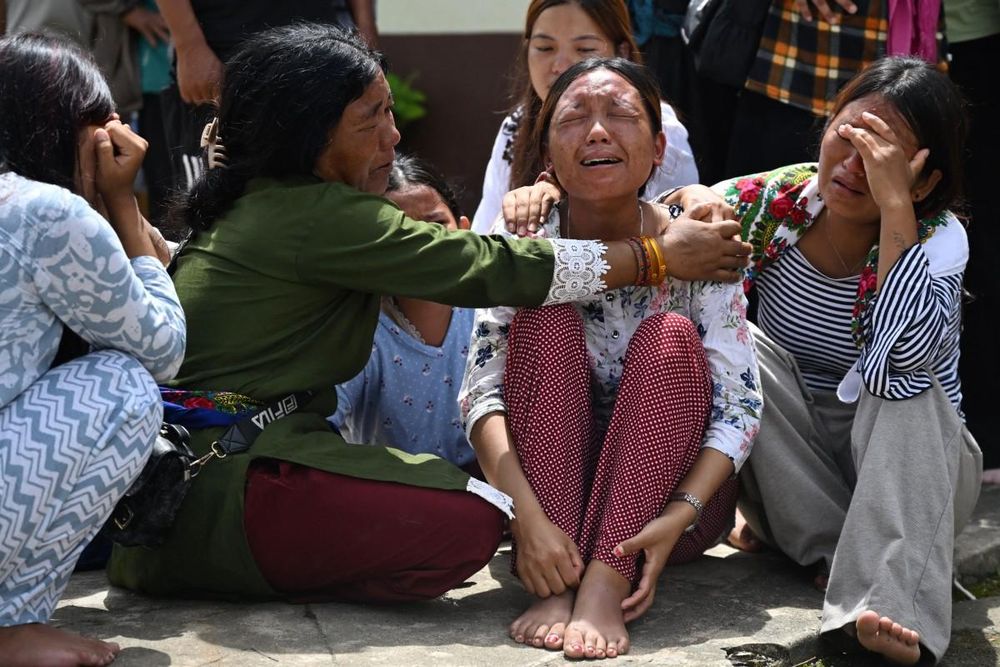
Relatives grieve during a prayer inside a Buddhist monastery at Trishuli Bazar in Nepal's Nuwakot district for missing flash flood victims.
THE devastating flash floods that recently struck the Nepal-Tibet border region have shocked the world and left an indelible mark on the hearts of millions. Triggered by a sudden and catastrophic mountain flood, the disaster swept through valleys, villages, roads, bridges and pilgrimage routes with terrifying force.
Entire communities were overwhelmed within minutes, and the death toll has climbed beyond a thousand, with many others still missing. Rescue operations continue under difficult conditions, while families across the region and around the world anxiously await news of loved ones.
For Indians and people of Indian origin around the world, including many South Africans, this tragedy feels especially personal. Every year, thousands of pilgrims travel through Nepal on their spiritual journey to Mount Kailash and Lake Manasarovar. Many South Africans of Hindu faith save for years to undertake this sacred pilgrimage, regarding it as one of the most profound spiritual experiences of their lives.
The affected region is not merely a tourist destination; it is a gateway to one of Hinduism's holiest places. Tragically, many of those caught in the disaster were pilgrims undertaking the ultimate journey of faith and self-discovery.
To understand the depth of this loss, one must understand what Mount Kailash represents. Unlike other mountains that attract climbers for adventure or achievement, Mount Kailash is revered as a living symbol of the divine. Hindus believe it is the abode of Lord Shiva and Goddess Parvati.
For generations, the pilgrimage routes through Nepal have drawn devotees seeking far more than a physical journey. Pilgrims undertake these yatras as acts of faith, self-reflection and spiritual renewal. Many spend months preparing themselves mentally, physically and spiritually before embarking on the sacred journey.
The journey is often viewed as a form of prayer in motion, where each step becomes an expression of devotion. Many describe the experience as life-changing, an opportunity to disconnect from the pressures of modern life and reconnect with their faith, nature and inner selves.
For many, reaching the region surrounding Mount Kailash represents the culmination of a lifelong dream, a sacred duty and an intensely personal encounter with the divine. The loss of life in such a setting therefore resonates not only as a human tragedy but also as a deeply emotional blow to a global community of worshippers who hold these sacred landscapes close to their hearts.
Tourism and pilgrimage have long been essential to Nepal's economy and cultural identity. Local communities depend on visitors for income through accommodation, transport services, guiding, hospitality and small businesses. The influx of pilgrims and tourists supports countless families living in remote mountain regions where economic opportunities are limited.
When disaster strikes, the consequences extend far beyond the immediate loss of life. Roads disappear, bridges collapse, businesses close, and livelihoods vanish overnight. The impact is felt not only by those who live in the affected areas but also by the broader network of families and communities that depend on tourism-related activities.
As the rescue phase gradually gives way to recovery, Nepal faces the enormous challenge of rebuilding. Infrastructure will need to be restored, homes reconstructed and businesses re-established. Schools, healthcare facilities and community centres may require repair or complete replacement.
For many survivors, the road ahead will involve not only rebuilding physical structures but also recovering emotionally from the trauma of loss and displacement. Counselling services, community support programmes and long-term economic assistance will be vital in helping affected families regain stability and hope.
History reminds us that even the most devastating disasters do not define a community forever. When Hurricane Katrina struck the United States in 2005, entire neighbourhoods in New Orleans were submerged, thousands of families were displaced, and the city faced years of recovery. Likewise, the devastating wildfires that repeatedly swept through California destroyed homes, businesses and entire communities, leaving many wondering how recovery would ever be possible. Yet, over time, roads were rebuilt, homes were reconstructed, businesses reopened, and communities found the strength to move forward.
Nepal now faces a similar journey. The scars left by these floods will remain visible for years, and the pain experienced by affected families will not disappear quickly. Nevertheless, the people of Nepal have repeatedly demonstrated extraordinary resilience in the face of adversity. Following earthquakes, floods and other natural disasters, they have shown remarkable courage, determination and unity. Their strong cultural traditions, deep spiritual values, and close-knit communities will once again serve as powerful foundations for recovery.
The rebuilding process will require support from government agencies, humanitarian organisations, international partners and private donors. Investment in infrastructure, housing, tourism facilities and community development projects will be essential. Equally important will be the restoration of confidence among pilgrims and tourists, whose return will help revive local economies and create opportunities for those whose livelihoods have been disrupted. The journey to recovery may take years, but history has shown that communities built on faith, perseverance and solidarity can emerge stronger from even the darkest circumstances.
As members of the South African community, many of whom share cultural, religious and ancestral ties with the Indian subcontinent, we cannot remain indifferent to this suffering. Reports indicate that pilgrims and travellers from several countries, including South Africa, were among those affected by the floods. This tragedy has therefore touched our own communities in a deeply personal way.
Our thoughts and prayers are with every family that has lost a loved one in this heartbreaking disaster. No words can fully capture the grief of parents who have lost children, children who have lost parents, or spouses waiting for loved ones who may never return home. Their sorrow is shared by millions across the world who understand both the human and spiritual significance of this tragedy.
We extend our deepest condolences to all those affected and pray that they find strength during this difficult time. We also encourage members of the South African community, religious organisations, charitable foundations and businesses to support reputable relief and recovery initiatives. Financial contributions, humanitarian assistance and ongoing support can help survivors rebuild homes, restore livelihoods and reclaim hope. Together, through compassion, generosity and solidarity, we can help the people of Nepal rebuild their lives and ensure that hope rises once again from the valleys of the Himalayas.
Dr Andrisha Beharry-Ramraj is a senior academic at the University of KwaZulu-Natal.
** The views expressed do not necessarily reflect the views of IOL or post.co.za


