
New Delhi BRICS Summit: Making BRICS future ready - IOL
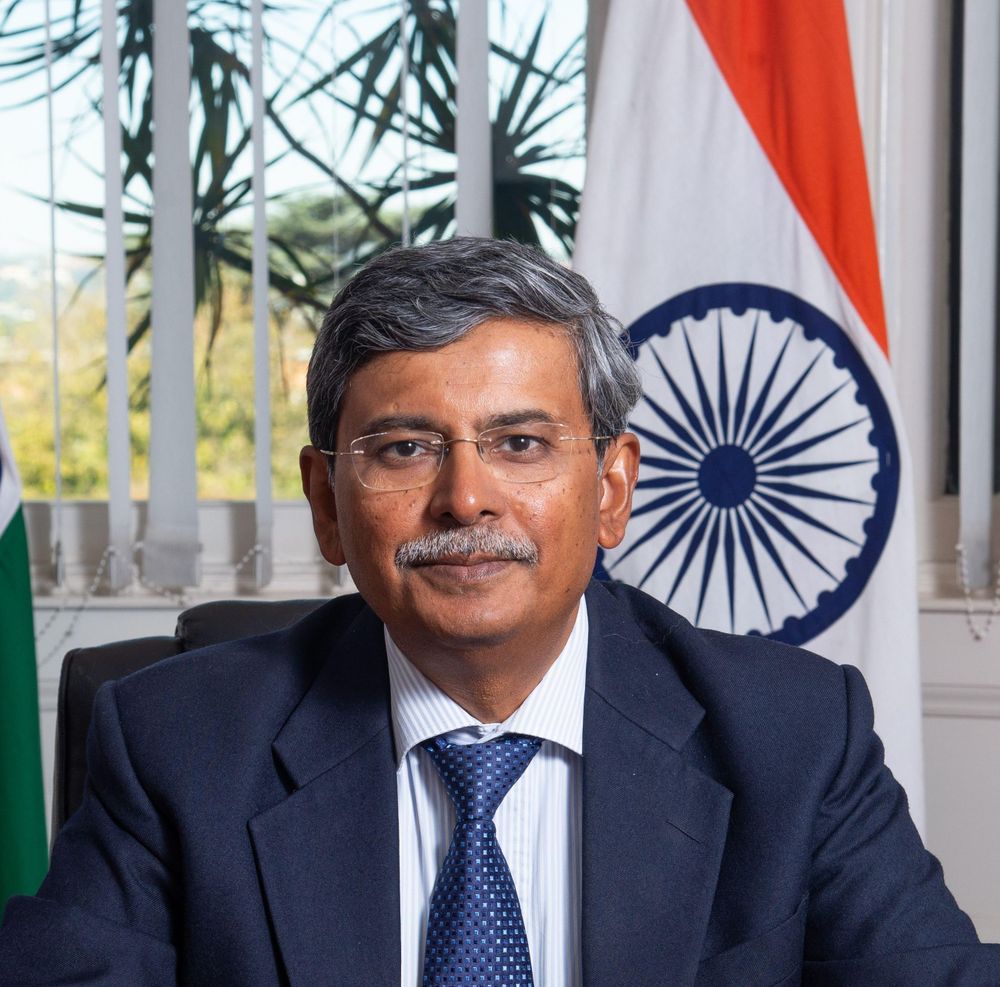
India’s 2026 BRICS chairship will focus on resilience, innovation, cooperation and sustainability ahead of the New Delhi summit on September 12-13, writes Prabhat Kumar, High Commissioner of India to South Africa and Lesotho.
The New Delhi BRICS Summit, scheduled to take place on September 12 and 13, 2026, will be attended by leaders of BRICS member countries, partner countries and outreach invitees, as well as heads of several international organisations. India looks forward to welcoming President Cyril Ramaphosa of South Africa to the Summit.
The theme of this year's BRICS Summit is “Building for Resilience, Innovation, Cooperation and Sustainability”. The theme is inspired by Prime Minister Narendra Modi's vision of “Humanity First” and reflects India's commitment to placing people at the centre of the BRICS agenda. Accordingly, this year's Summit will adopt a distinctly people-centric approach, with a focus on how BRICS can contribute to improving the lives and livelihoods of people across the Global South.
BRICS has evolved considerably since its establishment. It now comprises 11 member countries and 10 partner countries. The grouping expanded during South Africa's BRICS presidency in 2023, with the inclusion of Egypt, Ethiopia, the United Arab Emirates, Saudi Arabia and Iran. Indonesia subsequently joined as a member country.
The BRICS partner-country framework has further expanded the grouping's outreach, with Bolivia, Cuba, Nigeria, Uganda, Kazakhstan, Uzbekistan, Thailand, Malaysia, Belarus and Vietnam joining as partner countries.
With this expansion, BRICS has acquired considerable global weight. The grouping now represents approximately 49% of the world's population, 40% of global GDP and 26% of global trade. Its growing membership and economic and demographic weight give BRICS an increasingly important role in shaping discussions on the priorities of the Global South.
At the same time, BRICS has steadily expanded the scope of its work. It now has 35 Ministerial and Heads-of-Agencies tracks, working on issues identified as priorities and common concerns of BRICS countries.
This work is guided by the fundamental pillars of BRICS cooperation: political and security cooperation; economic and financial cooperation; and cultural and people-to-people exchanges.
India's approach is to strengthen BRICS as a platform for practical cooperation, while ensuring that its agenda remains relevant to the needs of ordinary people.
Under the Resilience pillar, India's BRICS Chairship is focusing on strengthening collective resilience in areas such as health, agriculture, food and energy security, disaster-risk reduction and resilient supply chains.
Under the Innovation pillar, India seeks to promote greater cooperation in start-ups, MSMEs, science and technology, entrepreneurship, research and development, digital public infrastructure and artificial intelligence. These are areas in which BRICS countries have considerable expertise and where greater collaboration can generate practical benefits for developing economies.
Under the Cooperation pillar, India places emphasis on strengthening multilateralism, advancing reforms of global governance institutions and fostering practical cooperation on developmental issues across the various BRICS tracks. The objective is to ensure that BRICS remains a constructive platform for dialogue and collective action on issues of common concern.
Under the Sustainability pillar, India's Chairship is focusing on clean and renewable energy, climate action and adaptation, nature-based solutions and sustainable consumption and production. These priorities are particularly relevant to the Global South, where the challenges of development, energy access, climate change and environmental sustainability are closely interconnected.
A large number of meetings have already taken place in preparation for the Summit, and several decisions have already been taken to advance the BRICS agenda through the ministerial and Heads-of-Agencies tracks.
For example, in agriculture, BRICS countries have agreed to establish a BRICS Network of Centres of Excellence on Agro-ecology and Regenerative Agriculture, as well as a BRICS Network on Digital Agriculture. These initiatives can help countries share knowledge, technology and best practices while promoting more productive, resilient and sustainable agricultural systems.
Similarly, in the health track, an Expert Group on Traditional, Complementary and Integrative Medicine has been established. An Expert Group on a BRICS Integrated Early Warning System for the Prevention and Response to Mass Infectious Diseases has also been formed, reflecting the lessons learned from the COVID-19 pandemic and the need for stronger preparedness against future pandemics.
In the energy sector, BRICS is working towards establishing a BRICS Centre of Excellence for Smart Grids and Energy Storage. This is particularly important as countries seek to expand renewable energy while ensuring reliable and affordable energy supplies.
These initiatives illustrate the direction in which BRICS is taking. It is increasingly focused on practical cooperation, institutional mechanisms and deliverables.
The New Delhi Summit will seek to take this process forward. India believes that BRICS effectiveness will depend on its ability to translate its growing economic and political weight into concrete cooperation that benefits its peoples.
India's Chairship seeks to contribute to that process by keeping the organisation people-centric, practical and forward-looking.
The objective is clear: Building for Resilience, Innovation, Cooperation and Sustainability will make BRICS future ready.
* Prabhat Kumar, High Commissioner of India to South Africa and Lesotho.
** The views expressed do not necessarily reflect the views of IOL.


