New poll shows Mary Peltola leading Dan Sullivan in Alaska Senate race - Newsweek
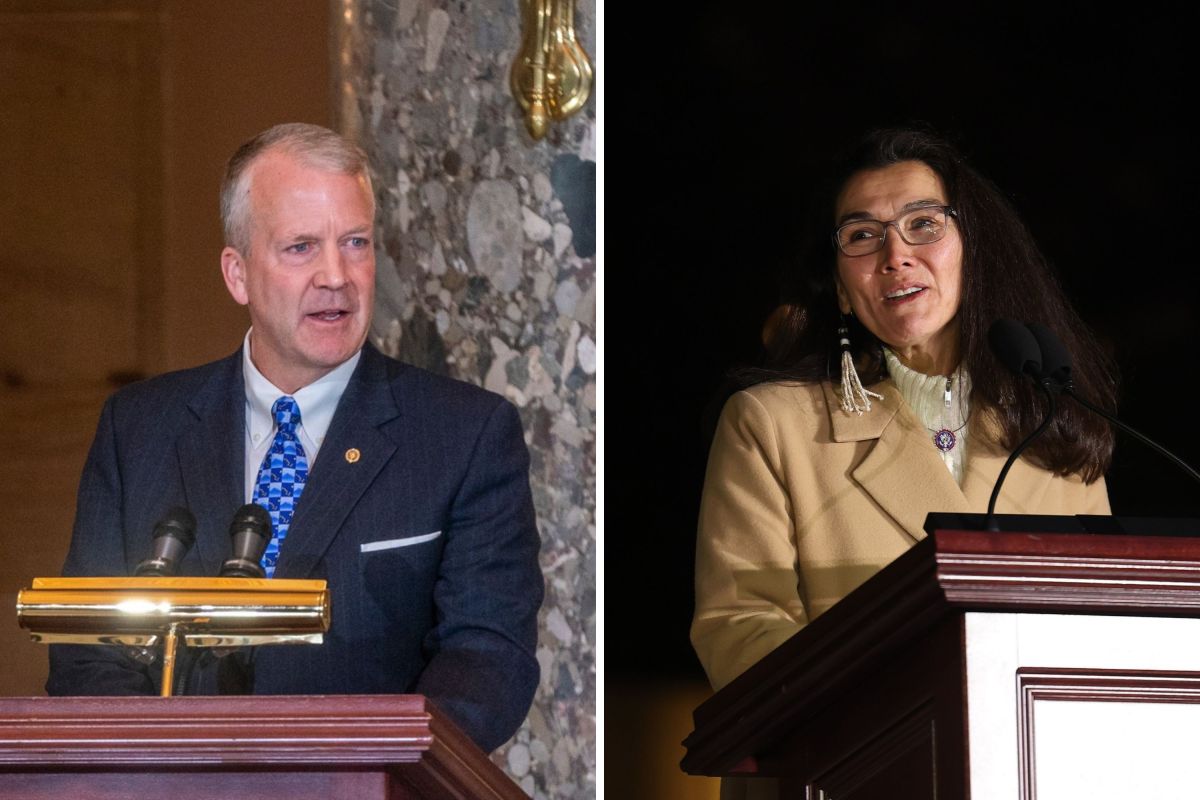
Democratic hopeful and former Representative Mary Peltola is leading Republican Senator Dan Sullivan in Alaska's closely watched Senate race, according to a new AARP survey, adding to a growing body of polling showing the GOP in a competitive fight to retain the seat in a state President Donald Trump carried three times.
The new poll, released Thursday, found Peltola ahead of the Republican incumbent 46 percent to 41 percent in the initial round of voting. After the survey simulates Alaska's ranked-choice voting process, Peltola's advantage grows to 53 percent to 47 percent. The survey was conducted September 8 to September 11 among 800 likely voters by the bipartisan team of Republican firm Fabrizio Ward and Democratic firm Impact Research, with a margin of error of plus or minus 3.5 percentage points.
Trump carried Alaska by 13 points in 2024, 10 points in 2020 and 15 points in 2016, and the state's emergence as a Senate battleground comes as Republicans find themselves in tight races in traditionally red areas across the national map.
Newsweek reached out to the Sullivan campaign for comment on Thursday.
A spokesperson for Peltola's campaign welcomed the poll, telling Newsweek on Thursday that Peltola is focused on lowering costs and putting "Alaska first." The campaign argued that voter frustration over the cost of living is helping drive support for the former congresswoman.
"Alaskans know that Mary will stand up to anyone to fix the rigged system in DC, lower costs, and put Alaska first," the spokesperson said. "With more than 15,000 Alaskans signed up to help Mary's campaign from every corner of the state, and Dan Sullivan's popularity plummeting after he spiked the cost of gas, groceries, and health care, Mary is in a strong position to retire self-serving Dan Sullivan this November."
A recent Alaska Survey Research poll found Peltola leading Sullivan by roughly one point in the final ranked-choice round, while a Data for Progress survey showed her ahead 53 percent to 47 percent. The main exception has been a June New York Times/Siena College poll that showed Sullivan holding a narrow two-point lead.
Polling averages have generally reflected a tight race, with Peltola maintaining a small but persistent edge.
The polling trend has favored Peltola, but analysts caution against overconfidence. Joseph Warren, a political science professor at the University of Alaska Anchorage, previously told Newsweek that Alaska is one of the country's hardest states to poll because of its vast geography and diverse voter base. He also pointed to polling misses in Sullivan's 2020 reelection race as a reminder that Alaska surveys can be difficult to interpret.
Peltola is an unusually strong Democratic candidate in Alaska. She won the state's at-large House seat in 2022 and remains the only Democrat to win statewide in recent years, even as Republicans continue to dominate presidential elections.
The race has drawn national attention because Democrats have relatively few opportunities to flip Republican-held Senate seats in 2026.
Republicans currently hold a 53-47 Senate majority, and Democratic incumbents must defend their seats and the party must win several close contests to flip control of the chamber. Alaska has become one of Democrats' most promising pickup opportunities because it combines a strong candidate in Peltola, a large bloc of independent voters and an unusual election system that uses both a nonpartisan top-four primary and ranked-choice voting.
The state is also unusual politically. While it votes reliably Republican for president, Alaska has an independent streak and a history of supporting candidates who separate themselves from national party brands. Republican Senator Lisa Murkowski, for example, has repeatedly won statewide despite breaking with her party on major issues.
One of the most striking findings in the AARP poll is Peltola's strength among independent voters.
The survey found she leads independents by 32 points and voters under 50 by 26 points. Women also favored Peltola by a sizable margin. Sullivan's advantage comes primarily from older voters and men.
Those independent voters could be especially important in Alaska, where unaffiliated and nonpartisan voters make up a larger share of the electorate than registered Democrats. Alaska's ranked-choice system further increases the importance of attracting voters outside a candidate's core partisan base.
The AARP survey suggests frustration with affordability may be key in creating a more favorable environment for Democrats.
Among voters age 50 and older, Social Security, rising prices, healthcare costs and Medicare ranked among the most important issues influencing votes. Affordability concerns were particularly strong among independents, who expressed greater economic anxiety and pessimism about the country's direction.
The poll found just 37 percent of Alaska voters believe the country is headed in the right direction, while 58 percent say it is on the wrong track. Trump's job approval rating in the survey stood at 45 percent, while 53 percent disapproved.
Bob Ward of Fabrizio Ward said affordability concerns are helping explain why a state Trump carried comfortably in 2024 has become competitive.
"Affordability is the number one issue," Ward said in the AARP release. "They’re more pessimistic. And so all of these things are tied together to sort of deliver where we are in the election in Alaska right now."
With 47 days remaining until Election Day, the latest numbers suggest Republicans are facing a serious fight in a state Trump carried by double digits just two years ago.
Contact Newsweek editors on this story: Steve Mollman and Geoffrey Rowland.