New Sanxingdui Museum: When archaeology becomes light
By continuing to browse our site you agree to our use of cookies, revised Privacy Policy and Terms of Use. You can change your cookie settings through your browser.
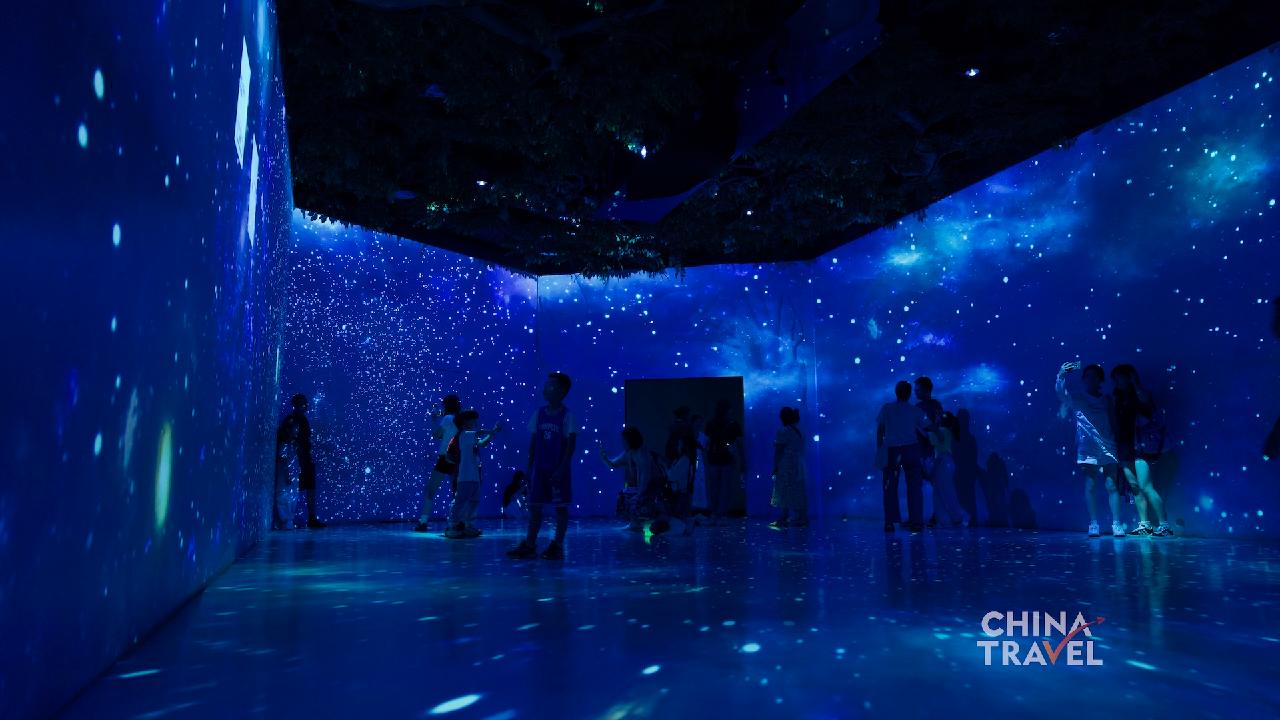
A star-filled blue environment envelops the gallery, making light and scale part of the exhibition narrative at the new Sanxingdui Museum in Guanghan, Sichuan Province. /CGTN
Wall-and-floor projections surround visitors with shifting landscapes, terrain and light, turning archaeological context into a shared spatial experience at the new Sanxingdui Museum in Guanghan, Sichuan Province. /CGTN
Wall-and-floor projections surround visitors with shifting landscapes, terrain and light, turning archaeological context into a shared spatial experience at the new Sanxingdui Museum in Guanghan, Sichuan Province. /CGTN
Wall-and-floor projections surround visitors with shifting landscapes, terrain and light, turning archaeological context into a shared spatial experience at the new Sanxingdui Museum in Guanghan, Sichuan Province. /CGTN
Wall-and-floor projections surround visitors with shifting landscapes, terrain and light, turning archaeological context into a shared spatial experience at the new Sanxingdui Museum in Guanghan, Sichuan Province. /CGTN
Animated reconstructions compare two proposals for what the Great Bronze Standing Figure may once have held at the new Sanxingdui Museum in Guanghan, Sichuan Province. /CGTN
Animated reconstructions compare two proposals for what the Great Bronze Standing Figure may once have held at the new Sanxingdui Museum in Guanghan, Sichuan Province. /CGTN
A digital exhibition can connect fragments that are difficult to assemble in a display case. At the new Sanxingdui Museum in Guanghan, Sichuan Province, enlarged details reveal surface patterns; animation tests how a missing object might fit into a bronze figure's hands; and panoramic landscapes place artifacts within broader stories of place and time.
The strongest digital interpretation does not pretend that every mystery has been solved. Instead, it separates evidence from reconstruction and lets visitors compare possibilities at a human scale. In these images, light moves across walls and floors while audiences gather, pause and discuss. Archaeological data thus becomes a shared visual experience – one that can clarify scale, sequence and context while encouraging viewers to return to the original objects with sharper questions.