New Senate Bill Seeks Birthright Citizenship Shake-Up - Newsweek
A new Senate bill would create a legal presumption that some pregnant applicants for U.S. visitor visas are traveling to the country to obtain American citizenship for their children, under the Republican effort to crack down on "birth tourism."
The Birth Tourism Elimination Act, introduced by Republican Senator Tim Scott of South Carolina, would amend federal immigration law to make foreign nationals seeking admission on B visitor visas inadmissible when their primary purpose is giving birth in the United States so their child obtains U.S. citizenship.
Birth tourism refers to the practice of foreign nationals traveling temporarily to the United States primarily to give birth there, with the intention of securing U.S. citizenship for their child before returning to their home country.
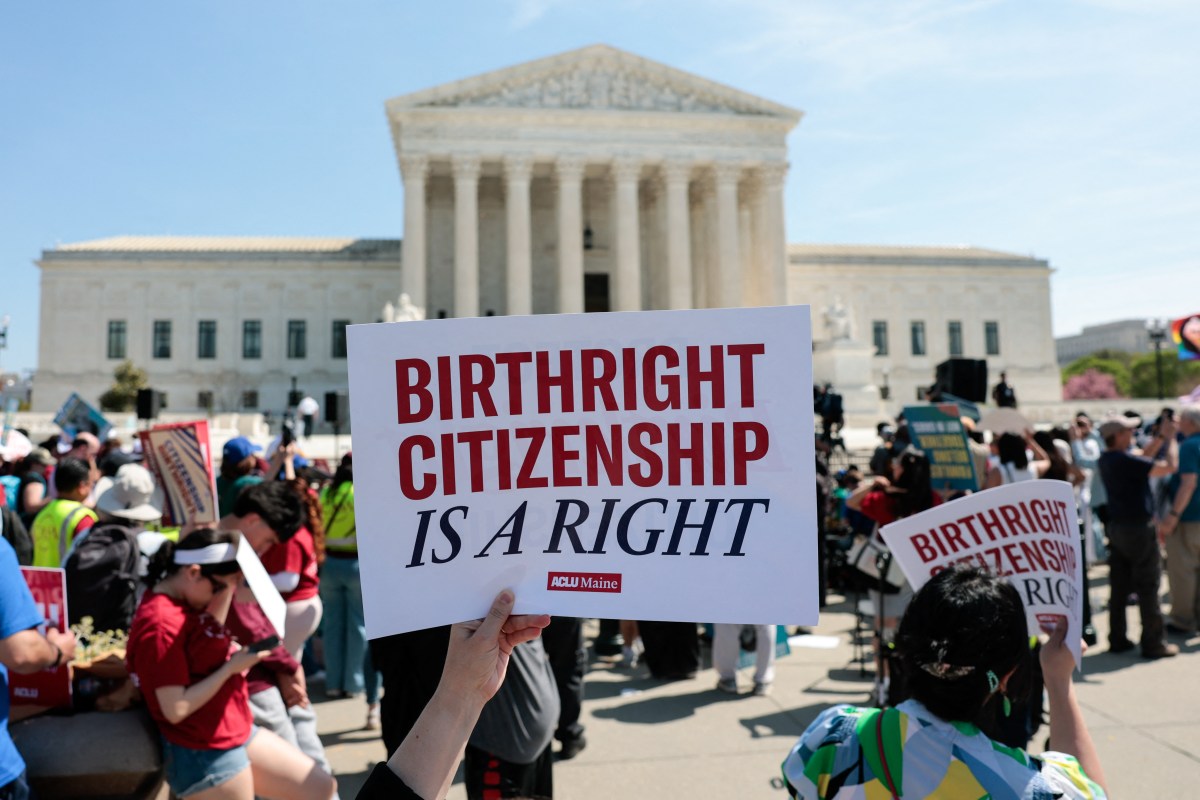
The measure comes amid a push within the GOP to restrict birth tourism and narrow birthright citizenship, which generally grants citizenship to people born on U.S. soil regardless of their parents' immigration status. The effort has continued after the Supreme Court on June 30 struck down Trump's attempt to restrict birthright citizenship.
House Republicans have proposed ending automatic citizenship for many future births in U.S. territories. DHS has separately moved to expand the categories of foreign government employees whose U.S.-born children would not receive citizenship, and Secretary of State Marco Rubio has announced new visa restrictions targeting people who operate or facilitate commercial birth-tourism networks.
One of the bill’s most significant provisions concerns how consular officers would assess visa applications from pregnant women.
Under the proposal, an applicant for a B nonimmigrant visa whom a consular officer has reason to believe would give birth during her stay in the United States would be presumed to be traveling primarily to obtain U.S. citizenship for the child. The applicant could rebut that presumption by satisfying the consular officer that she has a legitimate primary reason for giving birth in the United States other than obtaining citizenship.
The legislation would also establish requirements for applicants seeking B visas for medical treatment. They would have to satisfy a consular officer that there is a legitimate reason for the treatment, that a U.S. medical provider has agreed to provide it, that the expected duration and costs have been estimated, and that the applicant has the means from lawful sources and intends to pay the medical and related expenses.
"American citizenship is not for sale, and foreign nationals have no right to buy citizenship for their children," Senator Scott said in a press release.
Scott added that his legislation "makes it clear that our temporary travel programs cannot be exploited for the purpose of obtaining American citizenship."
Scott's proposal would not eliminate birthright citizenship or change the citizenship status of children born in the United States. His office says the legislation instead targets the immigration process before a foreign traveler enters the country, as well as businesses and individuals that facilitate birth tourism.
The bill extends beyond the initial visa application.
A consular officer or a U.S. Customs and Border Protection officer could deny admission when the officer has a "reasonable belief" that the traveler’s primary purpose is obtaining citizenship for a child by giving birth in the United States. Immigration officers who have reason to believe an arriving foreign national falls under the proposed birth-tourism inadmissibility provision would be required to refer that person for secondary inspection.
The proposal would also add the new birth-tourism ground of inadmissibility to the expedited-removal provisions of the Immigration and Nationality Act. It would prevent use of both the Visa Waiver Program and the separate Guam and Northern Mariana Islands waiver program when a person's primary purpose is giving birth to obtain U.S. citizenship for a child.
The legislation would additionally restrict humanitarian parole for foreign nationals seeking to enter or remain in the country primarily for that purpose, while providing an exception for someone returning on advance parole based on a pending adjustment-of-status application.
But the proposal contains exemptions. Its inadmissibility provision would not apply when someone is seeking legitimate medical treatment connected to childbirth and obtaining citizenship is not the primary reason for the trip. It also provides an exception when the unborn child is the biological child of a U.S. citizen, lawful permanent resident, or person granted permanent resident status as a refugee or asylee.
The expedited-removal provision also says it would not apply to a woman who gives birth in the United States when the birth is incidental to her lawful admission. Scott's office said the legislation does not impose the restriction across every visa category, meaning pregnancy or childbirth incidental to a legitimate stay for employment, education or other purposes would not automatically fall within its reach.
The bill would also target the commercial industry surrounding the practice.
It proposes amending federal criminal law to cover people who knowingly facilitate, sponsor, organize, advertise or profit from birth tourism, or aid and abet it.
Scott's office cited federal investigations into businesses catering to Chinese nationals as evidence for the legislation. His office said one company, You Win USA Vacation Services Corp., advertised that it had assisted more than 500 Chinese customers, used 20 apartments in California and charged between $40,000 and $80,000.
The bill would further require the Department of Homeland Security, in consultation with the State Department, to report to congressional committees on visa denials, parole denials, investigations, prosecutions, removals and other enforcement resulting from the proposed restrictions.
It comes after President Donald Trump signed an Executive Order on August 6 establishing a federal policy aimed at preventing what the administration describes as exploitation of nonimmigrant visa classifications through birth tourism.
The order directed the secretaries of state and homeland security to take action to implement that policy, potentially including visa and travel-authorization denials or revocations, denial of entry or removal, and measures targeting those facilitating the practice.
The order defines birth tourism as a foreign national entering the United States on a nonimmigrant visa for the purpose of giving birth on U.S. soil, or efforts to facilitate such entry. It also allows the secretaries of state or homeland security to provide exemptions on humanitarian or national-interest grounds.
The Migration Policy Institute, citing Centers for Disease Control and Prevention data, found that 9,576 babies were born in the United States and its territories in 2024 to mothers with foreign addresses—about 0.26 percent of the roughly 3.7 million births that year. MPI notes that the figure is only a proxy for birth tourism, while the most expansive estimate it cites puts the number of babies born through birth tourism at between 22,000 and 26,000 annually.
Scott's legislation would put elements of existing executive-branch policy into federal statute. The bill expressly seeks to codify a State Department rule adopted in 2020 that restricted the use of B visitor visas when the primary purpose of travel is giving birth in the United States to obtain citizenship for a child.
The legislation was referred to the Senate Judiciary Committee and had no cosponsors as of September 28. The House counterpart legislation was introduced in July by Republican Representative Richard McCormick of Georgia, with Republican Representatives Ken Calvert of California and Randy Fine of Florida as original cosponsors.
If approved by Congress and signed into law, the measure would represent one of the most far-reaching congressional efforts to restrict birth tourism in the United States.