New York declares measles disaster emergency
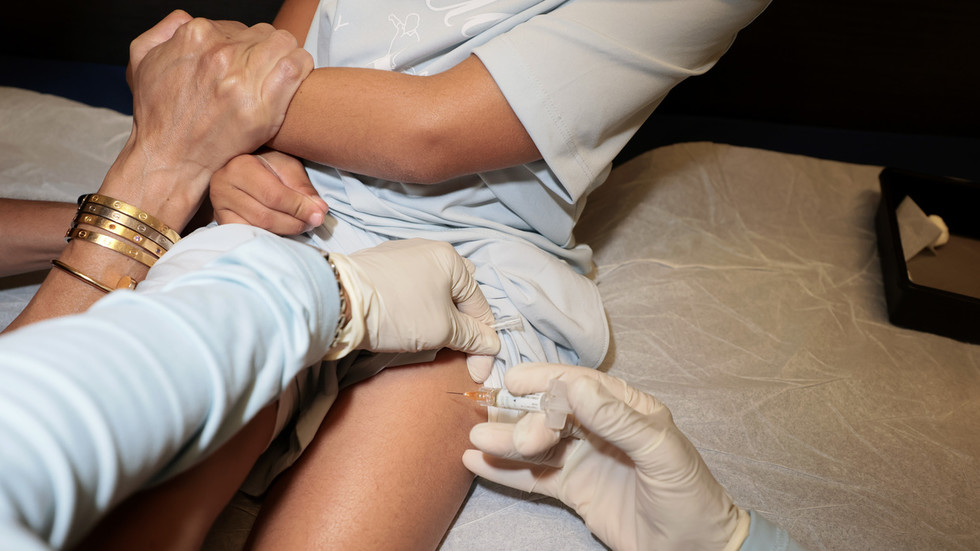
FILE PHOTO © Joe Raedle / Getty Images New York Governor Kathy Hochul has declared a statewide disaster emergency over a rapidly growing measles outbreak, expanding authorities to vaccinate and test residents as cases surge across the northeastern US.
The emergency, announced on Monday, is the first such declaration by a US state since measles cases began rising sharply nationwide in 2025. New York has recorded 108 confirmed cases this year through October 3, with the majority reported in rural communities among populations with low immunization rates.
“After reviewing the latest data on measles cases in New York State, I am declaring a State Disaster Emergency to strengthen our ongoing efforts to confront this disease,” Hochul said. “No one should get seriously ill or die from a vaccine-preventable disease.”
The executive order is scheduled to remain in force through November 4, the day after the midterm elections, and expands the number of healthcare workers permitted to administer measles, mumps and rubella (MMR) vaccines and conduct testing. Pharmacists will be allowed to vaccinate children as young as two, while registered nurses will be able to order tests for suspected cases.
READ MORE: First deaths in US measles crisis reported The declaration comes as neighboring Pennsylvania battles the first US measles outbreak in 35 years to surpass 1,000 cases, with nearly 200 hospitalizations and five measles-associated deaths.
US Health Secretary Robert F. Kennedy Jr., a longtime vaccine skeptic, previously questioned Pennsylvania’s reporting of its first measles-associated deaths and suggested they may have been “fabricated.” State health officials rejected the criticism.
Nationwide, the US is battling its worst measles resurgence since 1991. The Centers for Disease Control and Prevention (CDC) had recorded 3,887 confirmed cases as of October 1, compared with 2,289 during all of 2025.
READ MORE: US measles cases hit 35-year high Measles was officially declared eliminated in the country in 2000, meaning there was no continuous domestic transmission for at least 12 months, although imported cases and localized outbreaks continued to occur.
Measles is among the world’s most contagious diseases and spreads through airborne respiratory particles. The virus can remain infectious in a room for up to two hours after an infected person leaves.
A vaccination rate of around 95% is required to prevent sustained measles outbreaks, but vaccination rates have declined in parts of the US and elsewhere, with health experts attributing the trend to misinformation spread during the Covid-19 pandemic and protests against vaccine mandates.
This website uses cookies. Read RT Privacy policy to find out more.