Newly discovered tablet fragment expands Kadesh Peace Treaty record - Milliyet
Milliyet AppUygulamayı AçWebWeb'de Devam Et ENNewly discovered tablet fragment expands Kadesh Peace Treaty recordNewsNewly Discovered Tablet Fragment Expands Kadesh Peace Treaty RecordNewly discovered tablet fragment expands Kadesh Peace Treaty record21.09.2026 - 17:18 | Last Updated: 21.09.2026 - 17:18
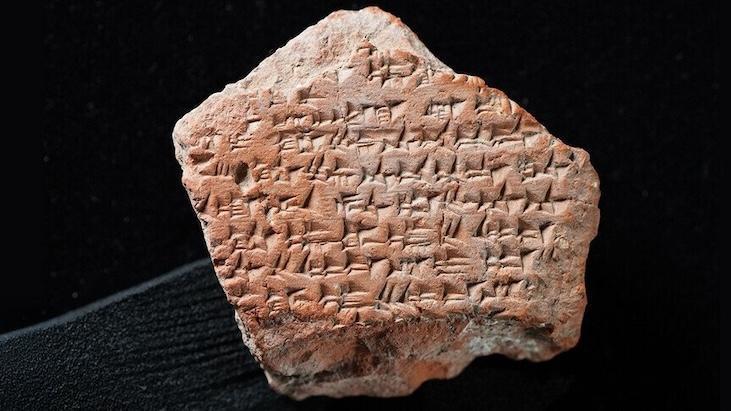
A fragment of a cuneiform tablet found in Hattusa, the ancient capital of the Hittite Empire in central Türkiye, has been identified as part of a copy of the Kadesh Peace Treaty, Culture and Tourism Minister Mehmet Nuri Ersoy said Monday.
The fragment was found during excavations at Buyukkale, an area of the ancient city, and contains lines from provisions dealing with people who fled one country and sought refuge in the other, according to the ministry.
“We have found traces of peace dating back thousands of years in the soil of Anatolia,” Ersoy said in a social media post. “Scientific examinations have determined that a fragment of a cuneiform tablet found during excavations at Buyukkale in Hattusa, Corum, belongs to one of the copies of the Kadesh Peace Treaty.”
“The new fragment contains lines from provisions of the treaty regulating the treatment of people who took refuge in one country after fleeing another,” he said. Ersoy said the readable sections of the newly identified fragment include references to people fleeing the lands of Egypt and Hatti, the ancient Hittite kingdom, as well as provisions concerning the destruction of homes.
He said the discovery, announced on Sept. 21, World Peace Day, demonstrates Anatolia’s longstanding role in the history of peace and diplomacy. “The statements concerning the destruction of people’s homes carry a powerful message from thousands of years ago to the present day,” Ersoy said.
In his post, Ersoy also referred to the situation in Palestine, saying the ancient heritage reminded people of their responsibility to protect human life and dignity. “We wish for a future in which all people, particularly our Palestinian brothers and sisters, can live in safety, peace and tranquility,” he said.
The tablet fragment was found near Building E at Buyukkale during archaeological excavations, according to the ministry. One side of the fragment has survived, and it underwent detailed scientific examination for about a year. Researchers determined that it belongs to one of the copies of the Kadesh Peace Treaty concluded between Hittite King Hattusili III and Egyptian King Ramesses II.
The treaty is widely associated with the end of the conflict between the Hittite and Egyptian kingdoms following the Battle of Kadesh, fought in the 13th century BC. It is considered one of the earliest known written peace agreements.
The newly identified fragment contains lines from provisions covered in Articles 12 to 20 of the treaty concerning the treatment of people who fled from one of the two countries and sought refuge in the other. The surviving text is fragmentary and incomplete, but its readable sections refer to people fleeing Egypt and Hatti and contain references to the protection of homes from destruction.
The Egyptian version of the Kadesh Peace Treaty was inscribed in hieroglyphs on temple walls in Egypt, while fragments of clay tablets containing its Akkadian version were discovered in Hattusa during the first excavations at the site between 1906 and 1912.
Hattusa, located near the modern-day town of Bogazkale in Corum province, was the capital of the Hittite Empire, which became a major power in Anatolia and the wider region during the second millennium BC. The archaeological site was added to UNESCO’s World Heritage List in 1986.
Previously discovered fragments of the treaty are held in the collections of the Istanbul Archaeological Museums, the Museum of Anatolian Civilizations in Ankara, the Vorderasiatisches Museum in Berlin and the State Hermitage Museum in St. Petersburg. The newly identified fragment is expected to contribute to efforts to reconstruct the clay tablet copies of the treaty found at Hattusa. Excavations at Buyukkale are ongoing, with researchers hoping to find additional missing fragments of the treaty.