Nikole Hannah-Jones May Have Just Written a Eulogy for Woke Idealism - Newsweek
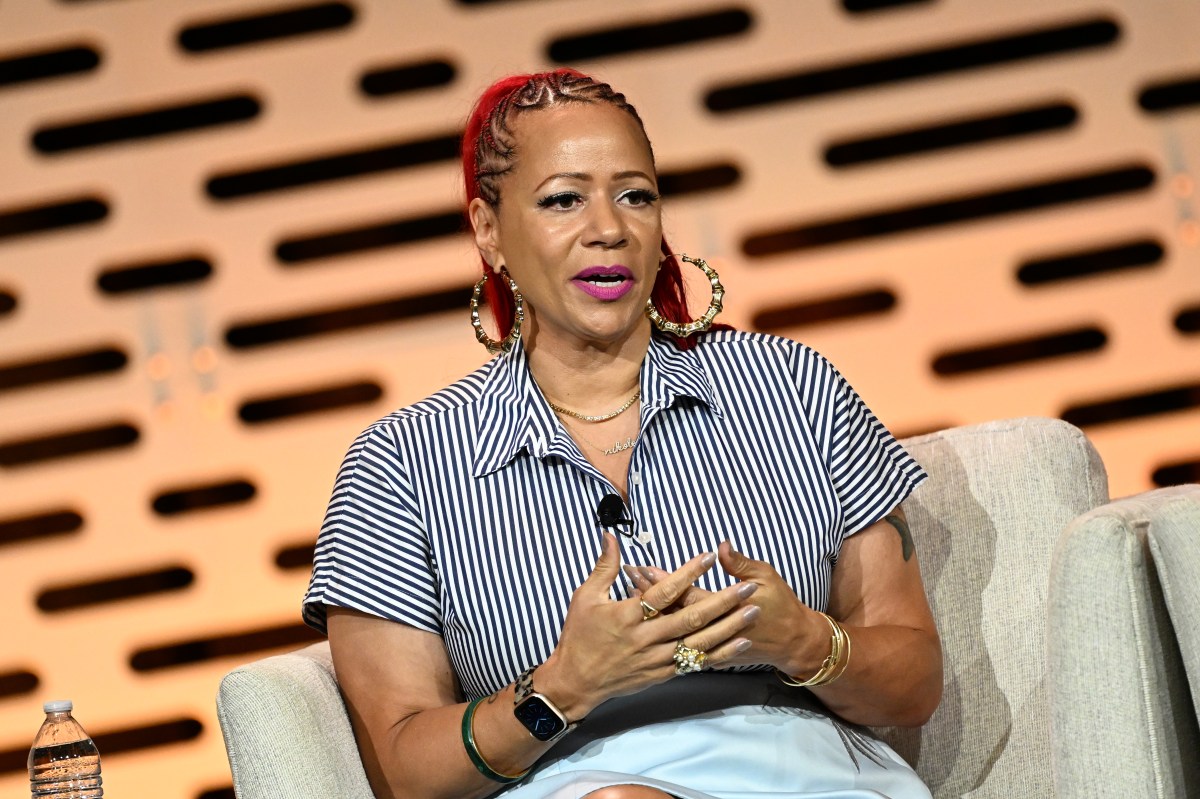
Ten years ago, Pulitzer Prize winner Nikole Hannah-Jones, best known for creating The 1619 Project, which examines the legacy of slavery in America, put her daughter on the cover of The New York Times Magazine to make a case for school integration that was also deeply personal: If you believe in integrated schools, what happens when the choice is your own child’s education?
“I worried — I worry still — about whether I made the right decision for our little girl. But I knew I made the just one,” Hannah-Jones wrote in her 2016 essay after Najya, her daughter, was accepted into a high-poverty Brooklyn school that she and her husband had chosen.
Najya ended up at Public School 307, whose attendance zone was drawn closely around the Farragut Houses, a large public housing development. At the time, 91 percent of its students were Black and Latino.
In a sequel published in the same magazine over the weekend, Hannah-Jones revisited the decision years later and acknowledged that she might have gotten it wrong.
Newsweek reached out to Hannah-Jones for comment on Monday.
The admission isn't just that the school failed. It's that Hannah-Jones knew there were problems, kept going anyway, and now says she cannot forgive herself for what that decision meant for her daughter.
“When it comes to the choices my husband and I have made about public education, these days I feel that I failed both my values and my child,” she writes.
She goes further than regret. Describing the moment she understood what nine years of emails and unanswered complaints had cost Najya, she writes: “I felt overcome with regret. Najya deserved better. They all did. But she was mine. This girl, my only child, looked to me to protect her, to give her what she needed to thrive. And I had not chosen her.”
Hannah-Jones had spent years reporting on the ways public schools fail children. She and her husband also had a choice about where to send their own daughter. She now writes that they made the wrong choice for Najya.
The consequences became clear over time. Najya was one of the brightest students in her class, Hannah-Jones writes, but she still could not pass the state algebra exam. Years later, after struggling with algebra gaps that a tutor traced back to elementary school, Najya told her mother: “I never really got the education I wanted.”
Then she asked a question that forced Hannah-Jones to confront the decision itself: “Did you know my school was bad like this when you decided to put me here?”
Hannah-Jones describes finding her daughter's math folder filled with ungraded assignments. “None of them were graded,” she writes, adding that most of the answers were wrong. A school literacy coach later told her that Najya's teacher had “most likely never performed the school's mandatory reading assessments for Najya or any of her classmates.”
The failures had accumulated over years. So had the complaints. Hannah-Jones writes that she eventually understood how much her daughter had been struggling and how long she had been missing the education she needed.
“I almost cannot type the words,” she writes, recalling an image of Najya as a young girl in cornrows and a school uniform. “Because when I do... the tears come.”
When she apologized to her daughter, she kept it simple.
“I acknowledge to you that I didn't do the best for you, and I am so sorry.”
She continues to defend the larger argument behind her views on public education. In the same essay, she writes that Black students remain the most segregated group in New York's schools and that the country has “actually moved backward” on integration since 2016.
Within hours, the essay was being read as more than a personal reckoning. It became part of a broader debate over “Woke 1.0,” a term coined by New York City Councilmember Chi Ossé's, and widely used on social media to describe the progressive politics that shaped the years from roughly 2017 through the George Floyd protests and the pandemic.
Henry Mack, Florida's education commissioner and former U.S. assistant secretary of labor under President Donald Trump, framed the essay as evidence that the sacrifice never had a payoff.
"Nikole Hannah-Jones got a MacArthur 'genius' grant and a magazine cover for putting her daughter in a failing school as a civic sacrament. Ten years later the kid can't do fractions, failed the algebra exam after collecting A's, and asked her mother why other children's disadvantage mattered more than her own education. That's not integration. That's a byline with a body count of one," he wrote on X.
Maud Maron, a Manhattan public defender and former New York City Council candidate who has spent nearly a decade fighting to preserve the Specialized High School Admissions Test, made the argument personal in a different direction.
Hannah-Jones had once interviewed her for the 2016 essay and, in Maron's telling, dismissed her defense of the exam as racist. "I knew then what she has just figured out," Maron wrote, "that her identitarian race-based grievance project would not fix anything. And in fact, it has hurt all public-school students."
Maron's sharpest criticism was about the kind of school Najya eventually chose. The high school she attended uses screened admissions, a model that has been part of New York's broader debate over school segregation and selective admissions. Maron argued that Hannah-Jones' daughter was able to benefit from a system Hannah-Jones had criticized in her own work and advocacy.
“Your daughter's chosen high school would not exist but for parents like me who fought so hard to keep screened schools,” Maron wrote. “Unlike Hannah-Jones I have nothing to walk back,” she added.
Not every reaction was hostile. Monica Marks, professor of Middle East politics at NYU Abu Dhabi who writes frequently for the Times, praised Hannah-Jones on X for the candor itself.
"Humanism that values people as individuals seems preferable to vicarious activism that views loved ones as vehicles. Good on Hannah-Jones for writing this candid op-ed. She must have known she'd take heat for it, but decided to confront herself in print anyway. Not easy to do."
The phrase “Woke 1.0” has drawn national attention in recent months as several progressive candidates have revisited past statements and positions, including calls to defund the police, identity politics, opposition to school admissions screens and gifted programs, and the language that came with those debates.
In August, New York Representative Alexandria Ocasio-Cortez was asked on ABC’s This Week about some of the past statements made by progressive candidates running this year. “I have a local city councilman that has this saying, ‘Woke 1 was crazy,’” she said, adding that what matters is what a candidate says now.
Ocasio-Cortez went on to suggest that the pandemic period had pushed Democrats to consider a wide range of ideas, and that some of the rhetoric from that period was not language she would use today. She did not say the underlying ideas had been wrong.
“I actually think that the discussions that were had at that time were quite fruitful,” Ocasio-Cortez said. “I think that when we talk about crime today, it’s fundamentally different from the way we talked about crime and bringing crime down.”
The pattern has now spread across the Democratic field. Abdul El-Sayed, the progressive Senate candidate in Michigan, deleted scores of posts supporting defunding the police and has since said he rejects the idea.
New York City Mayor Zohran Mamdani apologized during his campaign for 2020 posts describing the New York Police Department as racist and a threat to public safety, then kept Jessica Tisch as police commissioner, a decision that drew criticism from some of his allies on the left.
Darializa Avila Chevalier, who won the Democratic primary in New York's 13th Congressional District, also faced scrutiny over thousands of old social media posts. During the campaign, she said she regretted some of what she had written, including a 2021 attack on then-Vice President Kamala Harris. “What I said was just wrong. That was not fair to her,” she said.
Asked about Ossé's comment that “Woke 1 was crazy,” Avila Chevalier agreed: “Woke 1 was indeed crazy.” She said progressives can lose sight of their broader goals when they spend too much time trying to show who is “more progressive” or “more woke,” arguing that this kind of rhetoric can create divisions within the movement.
In Arizona, congressional candidate JoAnna Mendoza has spent the campaign explaining a 2020 answer about shifting some police funding to social programs. The questions have extended beyond policing to immigration enforcement, school discipline, transgender participation in sports and the diversity programs that expanded after 2020.
There have also been casualties. Francesca Hong lost the Democratic primary for governor of Wisconsin after facing sustained scrutiny over old posts and comments. In 2020, she wrote, “Cancel Thanksgiving. Should have done this in 1621,” and called it a “colonizer holiday.” During the campaign, she told Newsweek she had changed her views. She also faced questions about past calls to defund and abolish the police.
“"The governor cannot defund the police, and I won't defund the police," she said.
With less than 1 1/2 months before the midterm election, dozens of progressive candidates are on the ballot, and Democrats are still debating how much of the politics associated with the past decade should remain part of the party's message.
Some Democrats are urging candidates to focus more heavily on economic issues. House Democrats have already put much of their focus on affordability. Hakeem Jeffries, House minority leader, has made the cost of living, healthcare costs, groceries and other household expenses central to the party's 2026 message.
Jim Kessler, executive vice president for policy at Third Way, told Newsweek that the electability argument is still the one to focus on.
"The winning Democrat will be a pugnacious centrist," Kessler said, describing a candidate who pairs institutional reform with kitchen-table economics rather than the identity-driven framing he said defined the party's approach in 2020.
That debate is also showing up around transgender athletes in sports, one of the most damaging attack lines that Democrats faced during the 2024 election cycle.
James Talarico in Texas, Marcy Kaptur in Ohio, Lindsay James in Iowa and Josh Turek in Iowa have all addressed the issue directly, releasing ads or making statements opposing the participation of transgender athletes in women's sports. The shift comes as polling shows that this position is shared by a majority of voters. In a 2025 Gallup poll, 69 percent of Americans said transgender athletes should only be allowed to compete on sports teams that match their sex at birth, while 24 percent said they should be allowed to compete on teams matching their gender identity.
Among Democrats, 45 percent supported allowing transgender athletes to compete according to their gender identity, down from 55 percent in 2021.
For questions on this story, contact Newsweek editors Jason Lemon and Edward T. Cummins.