Nine women dead as OUTA warns SA cannot keep waiting for crisis - IOL
The Development Bank of Southern Africa’s (DBSA) exposure to high-risk municipal loans has surged from R6.2 billion to R16.1 billion in a year.
Business and civil society need to stop operating in separate lanes and work more closely with government before South Africa’s problems become crises, says Organisation Undoing Tax Abuse (OUTA) CEO Wayne Duvenage.
Duvenage’s call comes after nine women’s bodies were discovered across Ekurhuleni in just over two months, while the Development Bank of Southern Africa’s (DBSA) exposure to high-risk municipal loans has surged from R6.2 billion to R16.1 billion in a year.
The women were found between July 15 and September 17, with six bodies discovered in just 11 days during September. Five were found in Kempton Park, two in Olifantsfontein, one in Kwa-Thema and one in Dawn Park.
Several of the bodies were found in open areas or alongside roads, while some of the women were naked or partially clothed. Police have not established that the deaths are linked and a multidisciplinary team has been tasked with investigating the cases.
Duvenage says the deaths illustrate a broader problem in South Africa, where action too often follows catastrophe rather than preventing problems from reaching crisis point.
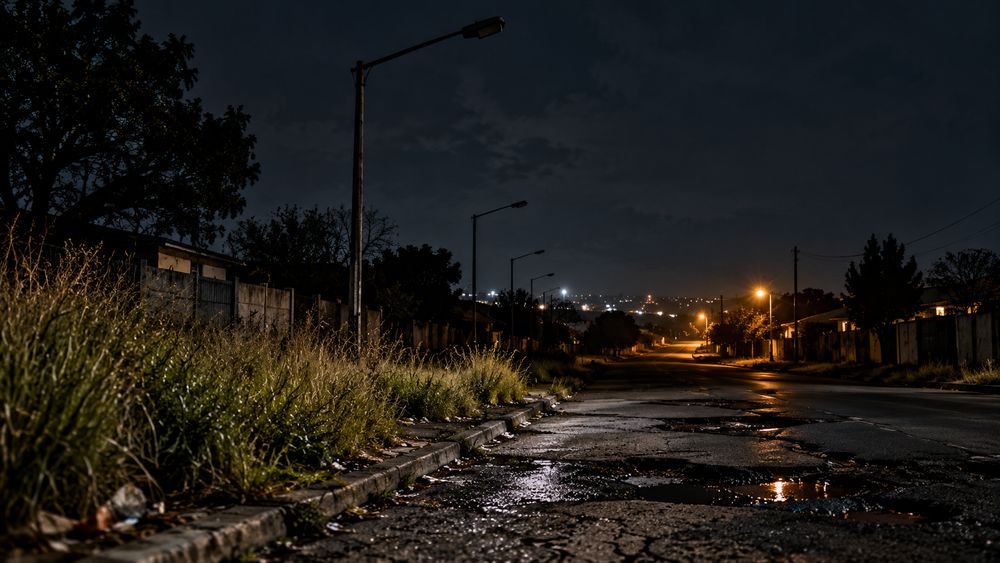
“Residents have long complained about overgrown grass, broken streetlights, neglected public spaces and other basic municipal failures. Now, after women have died and the country is watching, these conditions are suddenly receiving attention,” the OUTA CEO said.
Business and civil society have different strengths that could be brought to bear alongside government, says Duvenage. Business has resources and influence, while civil society has developed litigation, investigative and whistle-blower networks, he adds.
Yet the two sectors often operate in separate lanes rather than working together and applying pressure in the same direction, Duvenage notes in his latest newsletter.
Women gather at the scene where the body of the ninth woman was discovered in Dawn Park, Boksburg, Ekurhuleni.
The call comes as municipalities themselves face mounting financial pressure.
DBSA’s audited financial statements show its high-risk municipal development-loan exposure jumped 161% from R6.177 billion in 2025 to R16.127 billion at the end of March this year.
The entire R16.1 billion was classified as Stage 2, which DBSA defines as loans that have experienced a significant increase in credit risk.
The provision DBSA made against those high-risk municipal loans more than doubled from R549.8 million to R1.2 billion, while their net carrying value increased from R5.6 billion to R14.9 billion.
DBSA itself warned in a recent statement that “municipal credit risk remains elevated, as municipalities continue to face significant financial distress, with issues such as financial mismanagement, poor audit outcomes, infrastructure vandalism, poor service delivery, and budgetary constraints remaining prevalent”.
The financial strain stretches far beyond DBSA’s own loan book. National Treasury figures show municipalities owed creditors R160.8 billion at the end of December 2025. Of this, R135.9 billion, or 84.5%, had been outstanding for more than 90 days.
Bulk electricity accounted for R87.9 billion of the amount owed to creditors, followed by trade creditors at R35.5 billion and bulk water at R27.3 billion.
Treasury said the increase in outstanding creditors could indicate that municipalities were experiencing liquidity and cash-flow problems and were consequently failing to settle their debts within the required 30 days.
Treasury said municipalities’ financial sustainability depended on their ability to collect outstanding debt from consumers. Municipal consumer debts reached R467.2 billion at the end of December, of which R406.8 billion had been outstanding for more than 90 days.
Households accounted for R335.3 billion of the total, followed by businesses at R94.7 billion and organs of state at R27.6 billion.
“Municipalities must rigorously implement credit control and debt collection policies to collect outstanding debt, regardless of the period for which it has been outstanding,” Treasury said.
The bodies of nine women were found between July 15 and September 17, with six bodies discovered in just 11 days during September. Five were found in Kempton Park, two in Olifantsfontein, one in Kwa-Thema and one in Dawn Park.
Against this backdrop, Duvenage argues that leaving government, business and civil society to address the country’s problems independently wastes the different strengths each can bring.
For business, deteriorating municipalities are not simply a government problem, said Duvenage. Companies depend on functioning roads, water, electricity and other municipal infrastructure, while the communities in which their employees and customers live depend on the same services, he added.
Civil society, meanwhile, has developed mechanisms ranging from litigation and investigations to whistle-blower support and public accountability campaigns, said Duvenage.
His argument is that these resources should increasingly be combined rather than deployed separately, with business and civil society working with government where possible while continuing to hold it accountable.
Pointing to the recovery of the bodies, Duvenage believes intervention cannot wait until problems have already reached crisis point. Six of the nine bodies were discovered between September 7 and September 17, although the dates on which bodies were recovered do not establish when the women were killed.
The known recovery sites also show a concentration around the northern part of Ekurhuleni, including Kempton Park and Olifantsfontein. However, police have cautioned that investigations have not established a connection between the deaths.
The cases have prompted a co-ordinated investigation involving detectives, forensic experts and other specialists to determine what happened to the women and whether any of the deaths are linked.
For Duvenage, the broader issue is not that business or civil society should take over the functions of the state, but that the resources available outside government should be used earlier and more effectively alongside it.
DBSA’s figures show the financial pressure facing municipalities. At the same time, the development bank continues to fund infrastructure and said it unlocked R3.5 billion in infrastructure for under-resourced municipalities during the year.
Its total development loan and equity disbursements across its operations increased to R20.7 billion from R17.5 billion.
Duvenage argues that government, business and civil society need to bring their respective resources together before South Africa’s problems become substantially more difficult and expensive to fix.