
No milk for 5,500 Gujarat children amid Amul payments row - The Indian Express
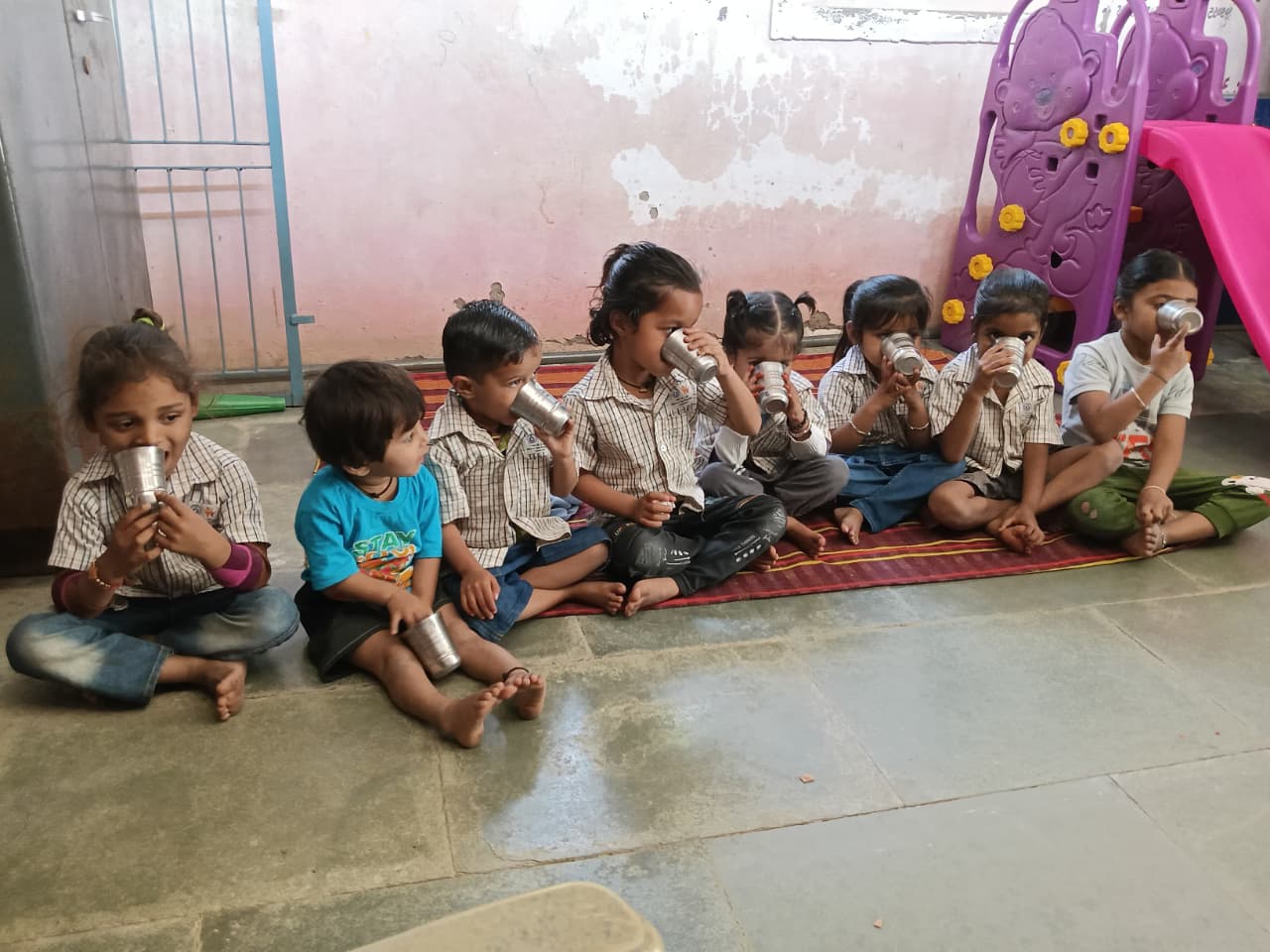
For a week now, 5,500 children at 400 anganwadis of the Vadodara Municipal Corporation (VMC) have gone without their daily glass of milk.
The Gujarat Cooperative Milk Marketing Federation, which owns the Amul brand, allegedly stopped supplying the milk pouches to the anganwadis across Vadodara city on September 17 following a dispute over payments.
Hiral Thakore, the District Programme Officer of the Integrated Child Development Services (ICDS), told The Indian Express the disruption is a result of the ‘exhausted credit balance’ with Amul due to the rising prices of milk. She blamed the Amul coordinators for delaying the submission of bills, which left the ICDS ‘no time’ to process quick payments.
ICDS – which was renamed as Anganwadi Services in 2017, and later revised and subsumed into Mission Saksham Anganwadi and Poshan 2.0 – includes, among other things, nutritional support for children below the age of six years.
According to the Government of India, it is one of the world’s largest programs for nutrition and early childhood care and development, and the ‘foremost symbol of the country’s commitment to the well being of its children’.
Under the milk distribution program, anganwadi children of ages six months to six years receive 100 ml of milk five days a week. Thakore said 5,500 milk pouches are needed every day for the 400 anganwadis under the VMC. An Amul official said the cooperative supplies milk to individual civic bodies under the modalities of Doodh Sanjeevani Yojana, the Gujarat government’s milk distribution program.
Thakore said the milk supply arrangement began in 2012 and a three-month credit amount had been deposited with Amul. This credit, however, ran out as the price of milk increased, going from Rs 9 to Rs 11.25 per pouch in 2025.
“The credit was exhausted around July,” Thakore said.
According to Thakore, while payments were still being processed as per schedule, the department was receiving Amul’s bills late, which was affecting the payment cycle.
“The issue arose because Amul does not hand over bills to us in time. The last payment that was processed on August 21 was for the month of June, as the bill was received late.”
Thakore said that despite repeated reminders, the bill for July was received only on September 3, and was subsequently sent for processing. “We have sent it for processing but departmental work takes time. Meanwhile, Amul has discontinued the supply.”
The Amul coordinator for the ICDS program for Vadodara city was not available for a comment on Thakore’s allegations.
Thakore said the department had asked Amul to submit each month’s bill by the 10th to prevent such disruptions. “I have told them I need the bill for each month by the 10th of that month. But even as we speak today (September 23), they have not yet given us the bill for August,” she said.
The VMC’s accounts department said it had no information about the alleged delay in the raising of bills, and that bills were cleared ‘whenever they are received’.
“We do not have any such information. The monthly bills are paid routinely. The last payment was made on August 21. Payments have been made in the months of June and July as well. We don’t know if there is a lag in the bill submissions, but whenever bills are received, they are cleared,” VMC Chief Accountant Santosh Tiwari said.
According to Tiwari, bills normally take five to six days to receive approval from the audit section of the civic body, and pending payments were prioritised once the required approvals were obtained.
“If an urgency is communicated we can expedite the audit process too,” Tiwari said.
He said that neither the department concerned nor the supplier had communicated any urgency to the corporation with regard to the payments for the milk.
Aditi Raja is an Assistant Editor with The Indian Express, stationed in Vadodara, Gujarat, with over 20 years in the field. She has been reporting from the region of Central Gujarat and Narmada district for this newspaper since 2013, which establishes her as a highly Authoritative and Trustworthy source on regional politics, administration, and critical socio-economic and environmental issues. Expertise: Core Authority & Specialization: Her reporting is characterized by a comprehensive grasp of the complex factors shaping Central Gujarat, which comprises a vast tribal population, including: Politics and Administration: In-depth analysis of dynamics within factions of political parties and how it affects the affairs in the region, visits of national leaders making prominent statements, and government policy decisions impacting the population on ground. Crucial Regional Projects: She consistently reports on the socio-economic and political impact of infrastructure projects in the region, especially the Statue of Unity, the Sardar Sarovar Project on the Narmada River, the Mumbai-Ahmedabad High Speed Rail bullet train project as well as the National Highway infrastructure. Social Justice and Human Rights: Her reporting offers deep coverage of sensitive human-interest topics, including gender, crime, and tribal issues. Her reports cover legal proceedings from various district courts as well as the Gujarat High Court (e.g., the Bilkis Bano case remission, POCSO court orders, Public Interest Litigations), the plight of tribal communities, and broader social conflicts (e.g., Kheda flogging case). Local Impact & Disaster Reporting: Excels in documenting the immediate impact of events on communities, such as the political and civic fallout of the Vadodara floods, the subsequent public anger, and the long-delayed river redevelopment projects, Harni Boat Tragedy, Air India crash, bringing out a blend of stories from the investigations as well as human emotions. Special Interest Beat: She tracks incidents concerning Non-Resident Gujaratis (NRIs) including crime and legal battles abroad, issues of illegal immigration and deportations, as well as social events connecting the local Gujarati experience to the global diaspora. ... Read More

