'No-one should be blocked from voting': Migration committee and civic groups pledge peaceful participation ahead of local elections - IOL
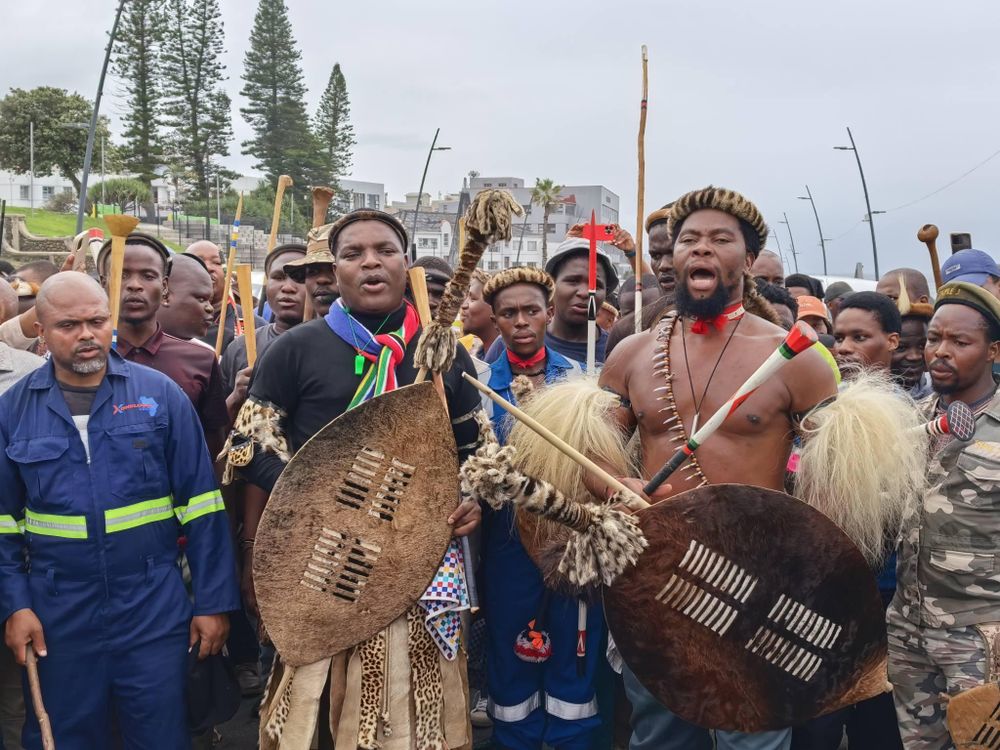
Former radio host Ngizwe Mchunu and other civic leaders have engaged government on irregular migration, crime and gaps in law enforcement, committing to work together against violence and the disruption of legitimate community protests.
The Technical Inter-Ministerial Committee on Migration (IMC) and civic formations, including Bhinca Nation led by former radio host Ngizwe Mchunu, have committed to protecting South Africans' right to vote and working together to prevent criminal elements from hijacking legitimate community protests for unlawful and violent purposes.
The IMC met with Hlangana Mzansi, and Gauteng IziNduna, representing various communities originating from KwaZulu-Natal, to discuss irregular migration, crime, gun smuggling and gaps in law enforcement ahead of the local government elections, ahead of the main election on Wednesday.
The engagement also focused on addressing crime and violence in South Africa, with both sides emphasising the importance of peaceful participation in the elections.
Government and the civic formations discussed gaps in law enforcement, the impact of a Constitutional Court judgment on asylum seekers and broader security challenges.
Deputy government spokesperson William Baloyi said the local government elections, which began with special voting on Monday, November 2, were high on the agenda.
“Both parties reflected on the importance of the local government elections and committed that South Africans should be afforded an opportunity to exercise their democratic right to vote in the next elections.”
“Mr. Ngizwe Mchunu, the Commissioner of Police, (General Fannie) Masemola and the Director General of Home Affairs, who chairs the IMC, emphasised that people must be afforded their Constitutional right to vote and that no one must stop people from exercising their right to vote.”
“Mr. Mchunu says that everyone must be afforded the right to vote and no one has the right to block or deny them their right to do so.”
Baloyi said the Technical IMC welcomed the opportunity for open dialogue and acknowledged the concerns raised by the delegation.
“The Committee reaffirmed that the government's Five-Point Plan is being actively implemented to strengthen law enforcement, enhance border security, combat organised crime and restore public confidence in the rule of law.”
“The IMC further welcomed the commitment by the civic movements and other community formations to work in partnership with the government to address shared challenges, especially in relation to migration-related issues.”
According to Baloyi, the engagement resulted in several commitments, including giving focused attention to the issues raised and strengthening co-ordination across law enforcement and security agencies.
“(The) government reaffirmed the implementation of the Five-Point Plan aimed at addressing crime, illegal firearms, irregular migration and related security challenges.”
He said both parties also agreed to establish ongoing engagement and co-operation to support safer and more stable communities.
“The parties committed to working together against criminal elements that seek to exploit or hijack legitimate community protests for unlawful and violent purposes.”
The parties further agreed to promote respect for the rule of law, social cohesion and peaceful civic participation.
“The Technical IMC welcomed the group's strong call for all South Africans to participate in the upcoming Local Government Elections and to reject violence, intimidation and actions that undermine democratic processes.”
Baloyi said the engagement concluded with a shared commitment to constructive partnerships, peaceful community mobilisation and practical action to improve the safety and well-being of everyone living in South Africa.
The engagement comes as National Joint Operational and Intelligence Structure (NATJOINTS) chairperson Lieutenant-General Tebello Mosikili warned that no marches or protests would be allowed on Wednesday, November 4, the day of the 2026 local government elections.
Mosikili said anyone who took part in a march or protest on election day would be committing a crime and would face a response from law enforcement officers deployed across the country.
“Protest, I do not want to even encourage, as I have indicated that it is prohibited in terms of electoral processes that on the day of election no one should protest. If you want to protest, protest, marches end at midnight on Tuesday,” she said.
She reiterated that demonstrations would not be permitted on election day.
“You march, you commit a crime and it would be responded to accordingly by the deployed law enforcement that is on the ground,” Mosikili said.
She was speaking during a media briefing at the SAPS Academy in Tshwane on Sunday, ahead of the elections.
Meanwhile, members of March and March and others participating in the movement's anti-illegal immigration protests have been barred from demonstrating during the election period.
When protests resume, they may only take place between 10am and 3pm and along designated routes.
The Durban High Court further ruled on Friday that protesters may not carry weapons, obscure their faces or engage in violent conduct.
The order followed an application by acting Police Minister Firoz Cachalia and KwaZulu-Natal Police Commissioner Lieutenant-General Nhlanhla Mkhwanazi for an interdict restricting the movement from marching in the Durban CBD and around the Home Affairs Refugee Reception Centre on Che Guevara Road.
Meanwhile, 29.2 million registered voters are expected to participate in the 2026 local government elections on Wednesday.
Special voting takes place on Monday, November 2, and Tuesday, November 3, ahead of election day.
A total of 2,655,067 voters have been approved for special voting. This includes people who cannot reach voting stations because of physical infirmity or disability, as well as registered voters who will be unable to vote in their wards on election day.