No parachute, broken bones, 50 hours in hiding: US pilot's Iran survival story
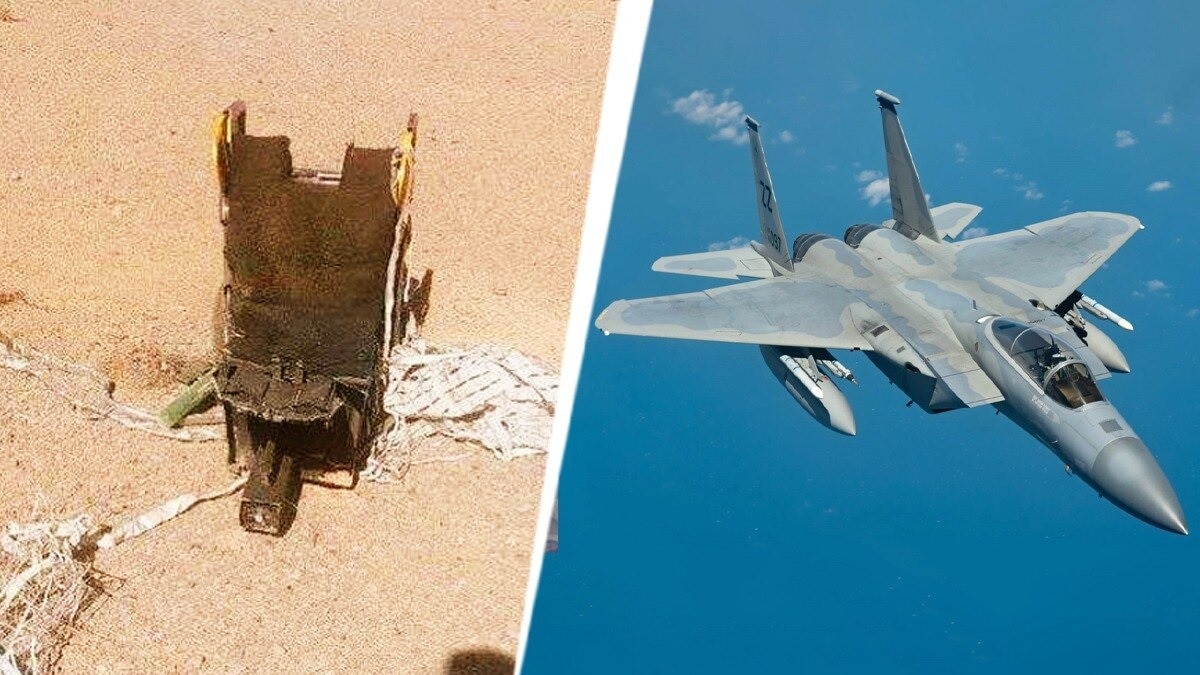
A US Air Force officer whose fighter jet was shot down over Iran in April survived a fall of up to 161 kmph with a damaged parachute, climbed a mountain despite multiple fractures and spent nearly 50 hours evading Iranian forces before being rescued.
The officer, identified only by his mission call sign “Bravo” due to security concerns, recounted his ordeal in an interview with CBS’ 60 Minutes that aired on Sunday.
Bravo was the weapons systems officer aboard an F-15E fighter jet, DUDE 44, which was conducting a strike against industrial facilities linked to Iran’s drone and missile programmes on April 2 when it was hit by a shoulder-fired missile.
“I think the best way I've been able to describe that moment was getting hit by a freight train,” Bravo said.
The crew ejected within seconds. Alpha, the pilot, landed safely, while Bravo came down about five miles away in a rugged mountainous area.
Bravo's parachute had been damaged in the attack. When he looked up and saw it had failed to deploy properly, he called it “the most terrifying thing I've ever seen”.
He described the descent as a free fall and said military professionals estimated he hit the ground at between 70 and 100 mph, or up to about 161 kmph. The impact broke his back, arm and shoulder. He also suffered a sprained ankle and cuts to his head and face.
“A modern-day miracle,” Bravo said when asked how he survived.
Despite his injuries, Bravo moved away from the crash site and climbed towards higher ground. He eventually reached a ridgeline about 7,000 feet high, believing it would provide better concealment.
“Never let a lack of motivation put you on Iranian TV,” he said when asked what gave him the strength to keep climbing.
Iranian forces launched a search for the downed Americans, with armed groups also seen hunting for them in videos posted online. US military officials said Iranian forces came within a few hundred metres of Bravo.
Meanwhile, US forces located Alpha and launched a risky rescue operation. Two helicopters were among 21 aircraft deployed, and the rescuers came under fire. Alpha was brought out safely, but Bravo remained missing.
That night, Bravo managed to establish communication with US forces. He sent messages saying, “I’m hurt, I’m moving,” followed by “God is good”, confirming that he was alive.
He then spent another day in the mountains with almost no food or water while US forces planned a second rescue.
The CIA helped pinpoint his location using deception and classified technology, while US bombers and drones struck Iranian forces nearby to clear the way.
Nearly two days after the shootdown, about 92 special operators went into Iran to retrieve Bravo. Two elite Air Force pararescue operators eventually reached him on the ridgeline.
“The moment a PJ showed up to me on that ridgeline was one of the greatest moments of my life,” Bravo said. When the rescuers reached him, he told them, “Let’s go.”
The operation was still not over. The rescue aircraft became stuck on a makeshift desert airstrip, leaving more than 90 US personnel stranded inside Iran. They were eventually evacuated, and the US military destroyed the stranded aircraft to prevent sensitive technology from falling into Iranian hands.
About 50 hours after the shootdown, Bravo was finally safe. “This is not a story about what I went through,” he said, crediting the operation to the teamwork, training, faith and leadership of the US military.
Alpha, who has returned to flying, declined a 60 Minutes interview due to security concerns but expressed gratitude to those involved in rescuing both crew members.- EndsPublished By: Prateek ChakrabortyPublished On: Sep 14, 2026 14:34 IST