Noah’s Ark Hunters Share Update, Declare ‘We’re Going In’ - Newsweek
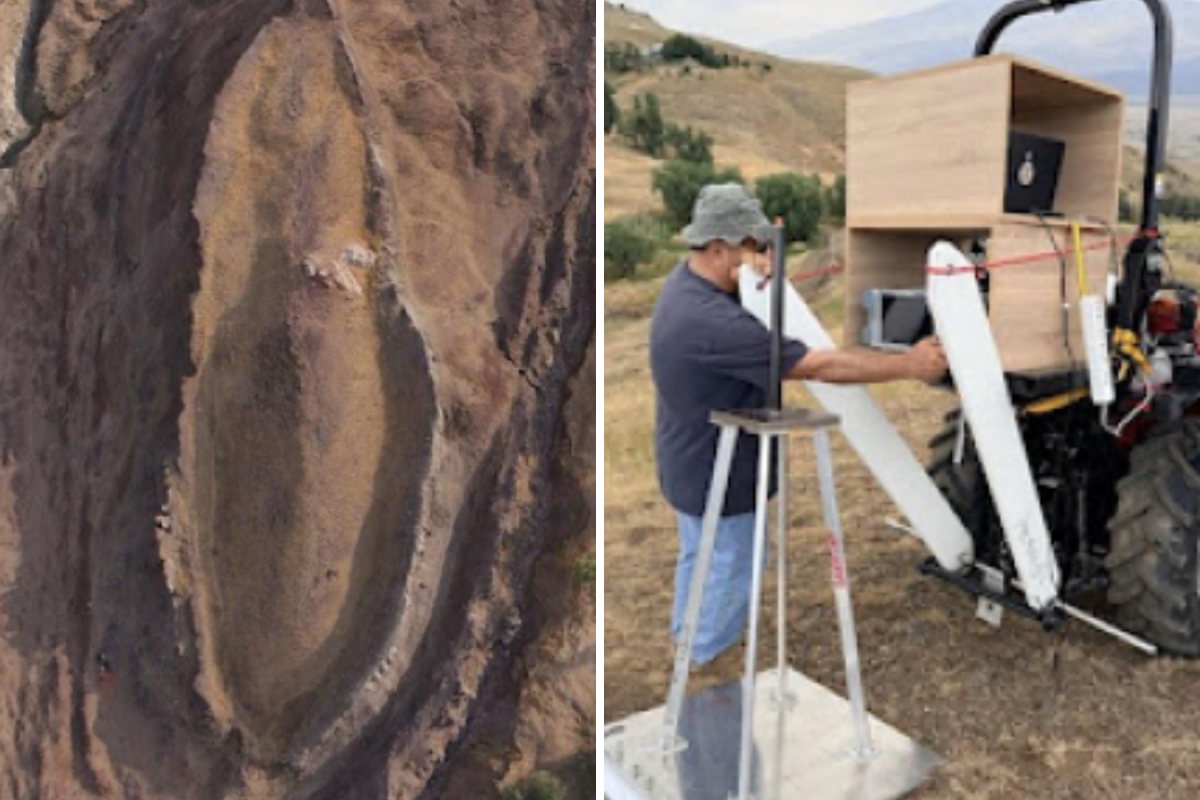
A team searching for the remains of Noah’s Ark has begun drilling into a 515-foot boat-shaped formation in Turkey that they believe could contain the biblical ship’s remains.
The international group of archaeologists, geologists and soil scientists announced on Wednesday that they had started collecting core samples from the Durupınar Formation, which has attracted people hoping to find Noah’s Ark since its outline was identified in 1959.
Preliminary radar data do not show “a simple homogeneous solid-rock signature,” said Andrew Jones, founder of Noah’s Ark Scans. His U.S.-based group is working with Bakhtar Research and Engineering LLC, whose scientist, Dr. Khosrow Bakhtar, led the radar survey. The wider investigation is directed by archaeologist Cenker Atila of Sivas Cumhuriyet University.
“We’re going in,” Noah’s Ark Scans said in a post on X, alongside a photo of what appears to be a cable-connected underground robot. The team says it plans to use Gopher, an “underground robot built to go where a person cannot” equipped with a high-resolution camera.
The Durupınar Formation lies south of Mount Ararat in eastern Turkey, a region referenced in the biblical account of the Ark. Genesis (8:4) says that, as floodwaters receded, “the ark came to rest on the mountains of Ararat.”
Its ship-like outline has made it a focus for some searchers of the vessel, including Jones, who said: “We believe the Durupınar Formation is the remains of Noah’s Ark, and that is exactly why we want to put it through the strongest scientific testing we can.”
This idea has long been a topic of debate. In a 1996 study, geologist Lorence Collins and explorer David Fasold concluded that Durupınar was “a completely natural rock formation,” calling the theory that it contained the ark’s remains “bogus.”
The new investigation aims to test these competing views.
“For decades, skeptics have had one simple answer for the boat-shaped Durupınar Formation: it is just a solid lump of natural rock,” Noah’s Ark Scans said on Wednesday.
“The mission was direct: put the ‘solid rock’ explanation to the test. Is the formation a single homogeneous mass of natural stone? Does it contain internal structures? Where does the true bedrock lie beneath it—and how does that bedrock continue across the surrounding valley?”
The team is hoping that the samples it has collected from beneath the surface will help provide evidence for whether the structure is natural or built by humans.
Jones said on Wednesday that the team had recovered samples from nearly 60 feet.
“We have so far recovered layers of rich organic material that we believe could be the decayed top-tier remains of the Ark,” he said.
“No bedrock or solid limestone has so far been identified in the holes drilled inside the formation. These current findings challenge claims that this is simply a natural shape made of limestone or bedrock.”
It is important to note that the description is from the team’s preliminary observations, and the samples still need laboratory analysis. A more detailed report is expected in the coming weeks.
“This is a major breakthrough in our ability to investigate what lies beneath this remarkable site,” Jones said. “We are now collecting physical samples for laboratory analysis, with more fieldwork planned next year. This first season by our international team has opened an entirely new chapter in the Noah’s Ark investigation.”
Contact Newsweek editors on this story: Matthew Cannon and Dave Siminoff.