Nor’easter Triggers Flooding, Power Outages and Flight Delays - Newsweek
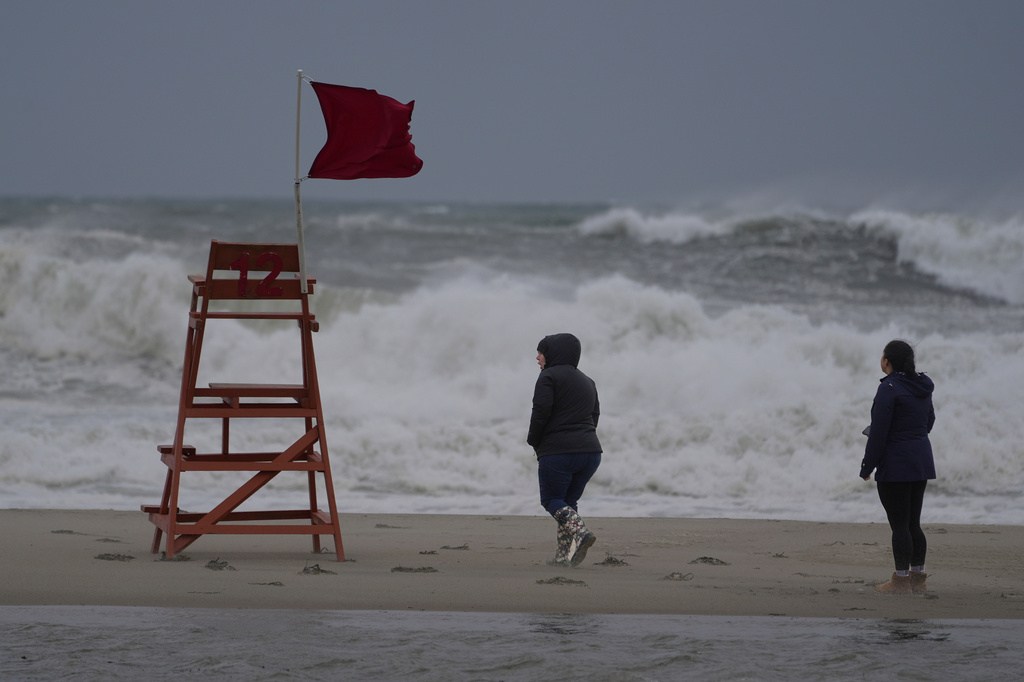
A powerful nor'easter brought flooding, widespread power outages and major travel disruptions across the Eastern Seaboard on Saturday as heavy rain and strong winds battered coastal communities.
Millions of residents across the region remain under coastal flood warnings, with forecasters warning that additional rain, high tides and damaging winds could continue into Monday.
The storm has forced evacuations, submerged roads and knocked out electricity to tens of thousands of people.
Forecasters say the slow-moving system is expected to linger near the New Jersey coast before gradually moving northeast, prolonging the threat of flooding, erosion and travel delays.
The National Weather Service (NWS) explains that a nor'easter is a storm along the East Coast of North America where winds over coastal regions usually come from the northeast. These storms can form at any time of year but are most common and powerful between September and April.
Such systems “nearly always” bring heavy rain or snow, as well as gale-force winds, rough seas and occasional coastal flooding, according to the agency.
The last notable nor’easter to hit the East Coast was this past February, when a storm brought record-breaking snowfall to the Northeast, including as much as nearly 38 inches in Rhode Island.
The most immediate concern Saturday was coastal flooding driven by intense onshore winds and unusually high tides. Water inundated roads along the Jersey Shore and flowed into vulnerable waterfront communities around New York City, trapping vehicles and flooding neighborhoods just a few feet above sea level.
In Edgewater, New Jersey, emergency crews evacuated residents from a waterside hotel after floodwaters from the Hudson River entered the building, The New York Times reported. Crews removed roughly 20 people as they continued rescue operations throughout the morning, per the newspaper.
Officials also reported flooded streets in Point Pleasant, Belmar and other Jersey Shore communities.
Flooding also spread into parts of Queens, New York. In Hamilton Beach, a low-lying neighborhood near John F. Kennedy International Airport, water pushed into residential streets and left some areas under several feet of water during high tide. Emergency managers warned that additional flooding was possible as subsequent high-tide cycles arrive through Sunday.
Officials in New Jersey advised some residents to leave vulnerable neighborhoods. The borough of Manasquan urged voluntary evacuations in low-lying sections, while authorities warned that emergency access could become increasingly difficult if waters continue to rise.
In North Wildwood, flooding forced the closure of the George Redding Bridge, limiting access between the barrier island community and the mainland.
Ellie Hodge from Norfolk, Virginia, told the Associated Press on Saturday that the coastal city has seen isolated flooding all week because of the nor’easter.
“We've seen cars get stuck on the road, going up the sidewalks,” Hodge said. “It's been pretty bad this time around.”
And in Ocean City, Maryland, the AP reported that heavy surf caused beach erosion, washed out fencing by the dunes and was leading to flooding.
Strong winds have become a significant hazard far beyond the coastline. Gusts exceeding 50 miles per hour were reported in multiple locations Saturday, while Nantucket, Massachusetts, recorded a 62-mph gust.
Meteorologists warned that saturated ground and powerful winds increase the risk of falling trees and downed power lines.
Power outages continued mounting across the Northeast as the storm intensified. According to PowerOutage.us, more than 91,000 customers were without electricity Saturday afternoon, with outages spread across New York, New Jersey, Pennsylvania, and Connecticut.
Utilities warned that ongoing high winds could slow restoration efforts, making it difficult for crews to safely repair damaged equipment and downed lines.
Local officials have repeatedly urged residents to stay clear of downed wires and report damaged infrastructure as powerful wind gusts continue to topple trees and disrupt service.
New York Governor Kathy Hochul warned that outages could persist as winds exceeding 60 mph continue affecting Long Island and other coastal communities.
“The rain is underway and while it’s only half an inch or so thus far, mark my words: Much more is coming,” she said early Saturday.
Nor’easters are not unusual as New England moves into fall, but “this might be a little earlier than average for a big storm,” Bob Oravec, lead forecaster with the NWS in College Park, Maryland, told the AP.
The storm has caused significant disruptions to air travel, particularly in New England.
Boston Logan International Airport endured the most severe impacts, with more than 250 cancellations representing roughly a quarter of the airport's scheduled traffic.
Smaller Massachusetts airports faced even greater challenges. Nantucket Memorial Airport and Martha's Vineyard Airport saw cancellation rates exceed 70 percent as weather conditions worsened.
Federal aviation officials warned that flight restrictions and delays could expand as the storm progresses.
The New York metropolitan area's major airports avoided widespread cancellations early Saturday but still recorded hundreds of delays.
Air traffic controllers cautioned that additional ground stops could become necessary if winds strengthen later in the day. Earlier in the storm, LaGuardia Airport experienced extensive delays as airlines worked around changing conditions.
Travel disruptions extended beyond aviation. Amtrak canceled several routes because of weather-related issues and downed wires, while rail service between portions of Connecticut and Massachusetts was suspended.
Travel agencies arranged alternate bus service for some travelers as they tried to maintain limited connectivity across the region.
Forecasts call for an additional two to six inches of rainfall across a large stretch of the Northeast, with some of the highest totals expected in eastern Long Island, coastal Massachusetts and Cape Cod. Rainfall rates could briefly approach an inch per hour, increasing the risk of localized flooding.
The National Weather Service has issued coastal flood warnings through Sunday evening for portions of northeastern New Jersey, southeastern New York and the Massachusetts coastline, including Cape Cod and Nantucket.
Forecasters warn that each high-tide cycle will bring renewed opportunities for coastal inundation.
Long Island remains one of the areas of greatest concern. Forecasts call for waves of 7 to 10 feet along portions of the island's southern shoreline, raising concerns about beach erosion and additional flooding.
New York City emergency officials also warned that the heaviest rain bands were expected Saturday night. Areas including Jamaica Bay, the Rockaways, coastal Bronx and northern Queens could experience moderate flooding as tides peak.
Officials urged residents to remain off beaches and away from the water.
Newsweek’s reporters and editors used Martyn, our AI assistant, to produce this story. Learn more about Martyn here.
Contact Newsweek editors for this story: Steve Mollman and Anthony Murray.