
North York coyote attack linked to months of illegal feeding, wildlife group warns - Toronto Star
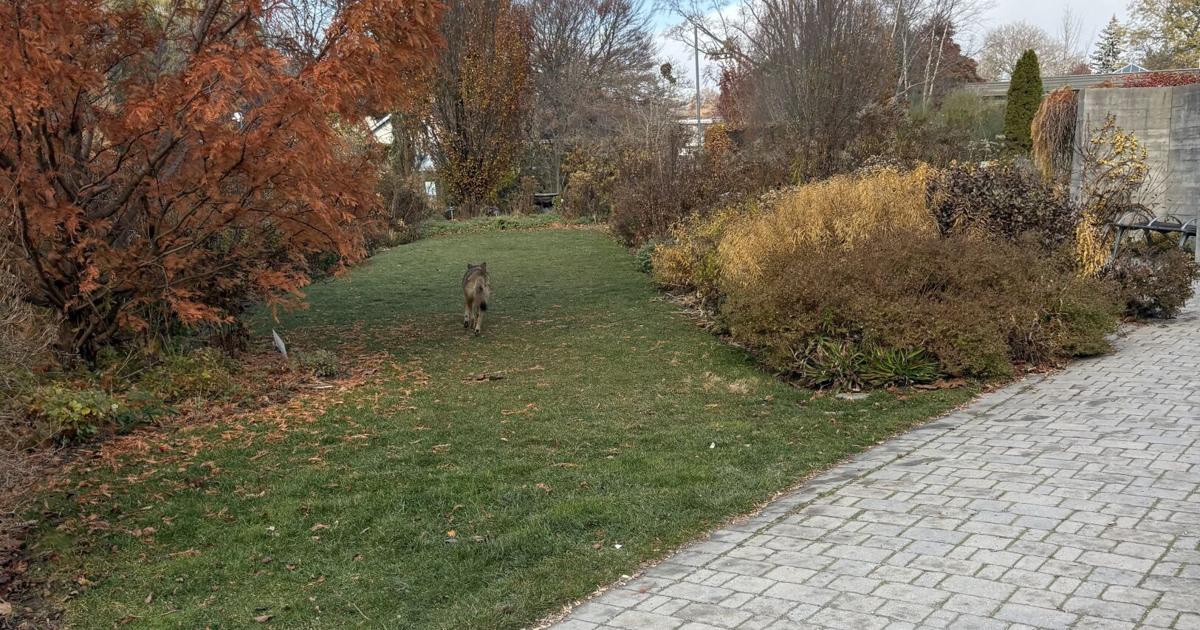
A non-profit group that tracks urban coyote behaviour said the coyote involved in the attack at a North York park has been seriously human- and food-conditioned, which has caused fundamental changes in its behaviour.
A blonde-coloured coyote was spotted at around 11:20 am outside Toronto Botanical Garden in North York on Nov. 21, 2026.
The coyote that attacked a child at a North York park has been seriously human- and food-conditioned, a non-profit group that tracks urban coyote behaviour said.
Lesley Sampson, executive director of Coyote Watch Canada, told the Star that they’ve collected accounts of people feeding and interacting with the coyote for some time, which could have contributed to a significant behaviour change in the wild animal.
On Thursday, the Toronto police issued a warning that a child, under 10, was attacked by a coyote at Edwards Gardens in the area of Lawrence Avenue East and the Bridle Path. The child had sustained minor injuries. The police did not locate the coyote at that time.
“It was a traumatic experience for everybody,” Sampson said. “Our hearts and thoughts go out to this little boy, his family, the staff there.”
The director said the organization had recently become aware of the abnormal behaviour of this particular coyote before the attack occurred. They have reviewed information that shows the coyote would approach people and sometimes demonstrate demand behaviours like a pet dog, such as play bows.
“It goes beyond food conditioning because this coyote actually wanted to play with people,” Sampson said.
While it’s hard to say how long exactly the coyote has been interacting with humans, Sampson said, it would have gone on for quite some time for it to behave like this.
The organization has received information from the public who have witnessed photographers interacting with the coyote, she noted.
“When people feed wildlife, and it doesn’t matter whether it’s a coyote, birds, deer, raccoons, what that does is it diminishes their natural instinct to stay away from us. And when they’re given a reward of food, their proximity tolerance to us increases,” Sampson said.
A Star reporter had an encounter with a blond-coloured coyote on Saturday morning, shortly after arriving at Edwards Gardens for interviews.
The coyote appeared to stroll casually past holiday shoppers on the sidewalk at the parking lot outside the Toronto Botanical Garden where a holiday market was underway. There was no interaction between the animal and the humans.
Coyote Watch reviewed the picture but cannot confirm whether it was the same coyote that attacked the child.
“Based on the coyote in question, who has a high fidelity to this site, it likely was,” it said in an email.
There is a lot more the public can do together to help prevent such an incident from happening again, Sampson said.
“That’s through education, that’s through direct compliance with the feeding bylaws that are in place. And reporting: folks need to report when they see an individual interacting inappropriately with wildlife; they need to record it.”
Signs warning about coyote sightings have been posted across the parking lot and outside the garden. Holiday shoppers were seen pointing at the signs and talking to their children about what they meant on Saturday.
A few residents also shared their thoughts about the coyote attack and noted the importance of education.
Erin Roberts, a parent and a resident, said she has seen the same blond-coloured coyote in the Bridle Path area “all the time.”
While she’s not typically concerned about her kids’ safety around it, Roberts said “it’s a bit scary” to hear that the attack happened during the daytime.
For North York resident Aris Kalafatis, coyote sightings are part of Toronto’s landscape.
“Those ravines are like a natural habitat for animals, and they’re like the equivalent of the 401 for an animal. So they can travel and pop up, and then the next thing they know, they’re in a neighbourhood.”
Sheila Wang is an investigative reporter for the Star. Reach her via email: sheilawang@thestar.ca.


