Northern Metropolis: A New Northern Horizon for Hong Kong
By continuing to browse our site you agree to our use of cookies, revised Privacy Policy and Terms of Use. You can change your cookie settings through your browser.
On September 16, 2026, Hong Kong Special Administrative Region witnessed something rather special — a milestone event in its modern history: the unveiling of its first five-year plan for economic and social development (2026-2030). Scheduled for fulfillment by the end of the first year of the next decade, this far-sighted programme places especially strong emphasis on the development of the Northern Metropolis — a new cityscape that is anticipated to play a pivotal role in Hong Kong’s spatial and economic landscape in the years to come.
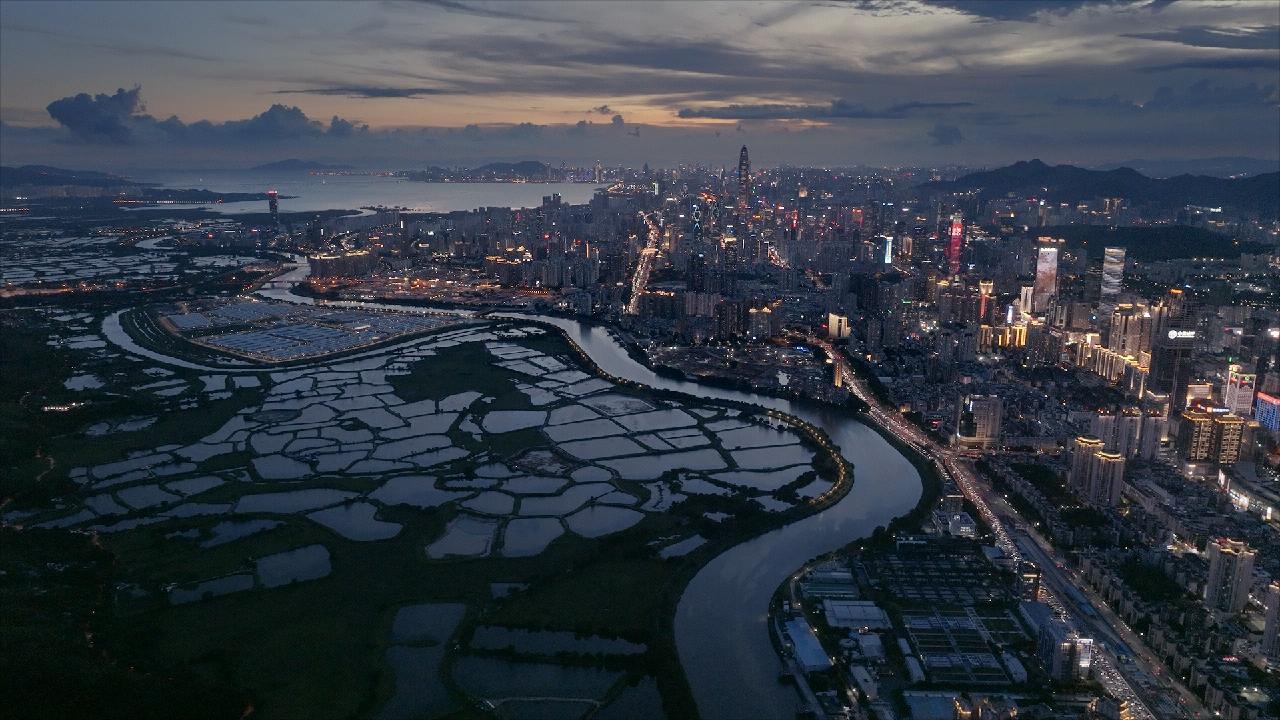
Many viewers may have already encountered the Northern Metropolis from a rather unique vantage point. In 2022, this urban district made a cameo appearance in the CMG documentary Aerial China. For many, that bird’s eye glimpse was sufficient to prompt a question: what exactly was taking shape in northern Hong Kong? Four years on, and the answer is here.
Put simply, the establishment of the Northern Metropolis is intended to address a fundamental issue constraining Hong Kong’s development: limited availability of land. Put another way, growth can only take place if it is possible to accommodate people and industries — in other words, if there is something to grow into.
In this context, the scale of the Northern Metropolis is especially significant. Covering about 30,000 hectares, or roughly one-third of Hong Kong’s total land area, this represents one of the largest ever augmentations to the “inner-space” available for Hong Kong development. For that reason alone, the importance of this new zone is almost impossible to overstate.
But land alone does not create a new economic centre. Infrastructure is what makes development possible. And once again, in this respect, the Northern Metropolis has a distinctive advantage: its location. Situated in Hong Kong’s northern New Territories and directly adjacent to Shenzhen, it sits at the intersection of Hong Kong, and the wider Guangdong-Hong Kong-Macao Greater Bay Area. The development of the Northern Metropolis therefore goes hand in hand with major investments in transport and cross-boundary connectivity, including the Northern Link and other projects forming part of Hong Kong’s “Eight Vertical and Eight Horizontal Corridors” transport network.
But how to make the best of these advantages? The reality is this “winning combination” can only truly be realized with planning and foresight — which is precisely where the newly unveiled five-year plan comes in.
However, the plan does more than simply address issues of infrastructure; it also addresses the task of rebalancing the Hong Kong economy with a view to securing its long-term viability. For the reality is that though Hong Kong’s economy has long been built around several strong pillars, particularly financial services, trade and logistics, and professional services, its industrial structure has relatively limited room for diversification — a point made crystal clear in a speech by Hong Kong Financial Secretary Paul Chan Mo-po at Peking University’s Guanghua School of Management in April.
So, it is in this context that the Northern Metropolis and the new five-year plan are best understood: a comprehensive vision aimed at broadening the economic base of the Hong Kong SAR. Thus, under this five-year plan, it is envisioned not simply as a residential expansion, but as an integrated platform for university education, innovation and technology, industry, and living and working. By bringing universities, research, technology, talent and industries closer together, sectors that have hitherto had less space to develop in Hong Kong will be empowered to flourish.
One thing that should never be underestimated is the scope, scale and ambition of the plan. Over the next five years, the Northern Metropolis is expected to provide not only more than 70,000 housing units but also around one million square meters of commercial floor space — enough to accommodate around 2.5 million people and provide about 650,000 jobs.
As always, the quality of people’s everyday lives lies at the heart of the five-year plan. Creating new industries is a means to an end: the ultimate objective is to create space to live and flourish. By integrating housing, employment, education, transport and community facilities, the Northern Metropolis could help address both the city’s long-standing shortage of space and the need for more diverse employment opportunities.
Seen in this light, the Northern Metropolis is so much more than a development project within Hong Kong’s first five-year plan. In reality, it is nothing less than a physical and spatial platform in which a number of the plan’s ambitions converge: expanding development space, improving connectivity, diversifying the economy, cultivating talent and strengthening links with the Chinese mainland.
And one thing above all is for sure: Hong Kong will continue to draw on its established strengths as an international financial and commercial centre. The essential point is that rather than jettisoning its past strengths, the five-year plan puts Hong Kong in pole position to leverage its unique proximity to Shenzhen and the wider Greater Bay Area to chart a course to future possibilities. In other words, the Northern Metropolis is ideally located in another sense: sitting at the intersection between the successful Hong Kong of the past and the even more successful Hong Kong to come!
With all this in mind, it is perhaps instructive to reflect on that brief clip in Aerial China back in 2022. Back then, little did we know that we were being offered a brief glimpse, a sneak preview, of a much larger story. And now, finally, the curtain is being lifted, and the stage is set for an unfolding drama whose theme will be land, infrastructure, industries, housing, talent and regional connectivity. Who can say precisely what the future holds? To be sure, the five-year plan points the way, but stay tuned to reality to see the Northern Metropolis playing a starring role in the city’s next brilliant chapter.

![[OPINION] China education and its tradeoffs — from someone who actually studied there - Rappler](https://www.rappler.com/tachyon/2026/09/china-studying-sep-11-2026.jpg)