
Nvidia CEO Jensen Huang puts Trump on speakerphone while downplaying AI risks
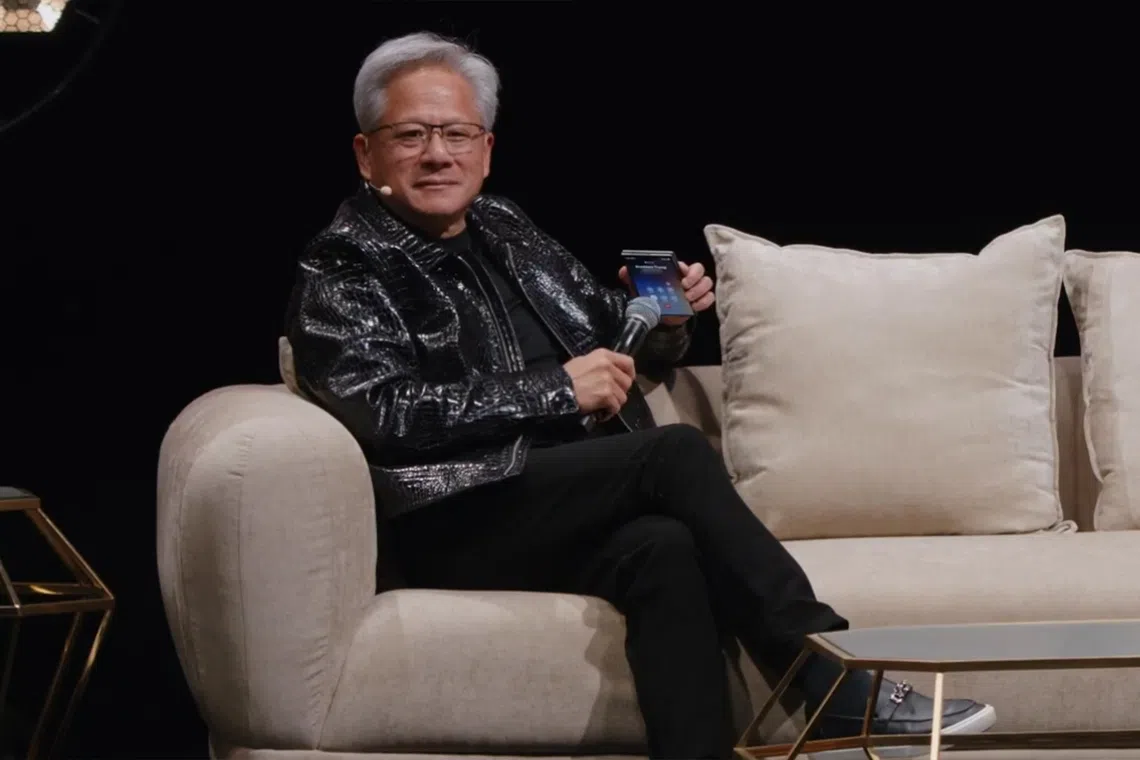
Nvidia CEO Jensen Huang took a live phone call from US President Donald Trump on stage at the All-In Summit in Los Angeles on Sept 14.
LOS ANGELES – Nvidia chief executive officer Jensen Huang took a live phone call from Donald Trump during a panel discussion on Sept 14, allowing the US President to dismiss artificial intelligence dangers as a “hoax”.
During the call, which Huang received on stage at the All-In Summit in Los Angeles, Trump criticised the push to slow the pace of AI development as politically motivated or a Chinese scheme. Huang agreed with the President, saying Trump had seen through the complexities of the issue.
The AI pushback is “just playing right into the hands of a lot of people that don’t want to see it happen”, Trump said. “And that could be political people. It could also be China.”
Even while downplaying AI risks, Huang praised an Anthropic researcher who resigned over the fears. The employee, Jacob Coxon, was courageous to voice his concerns, the CEO said. Whistleblowers should be taken seriously inside organizations, he added.
However, the panic has created a false choice between fast innovation and AI safety, Huang said.
The potential danger of AI to humanity has become a topic of intense discussion in recent days. After Coxon resigned, saying Anthropic and OpenAI were “gambling with our lives”, calls have grown to curb the pace of development.
On Sept 12, Anthropic CEO Dario Amodei published a 3,800-word essay – later endorsed by OpenAI CEO Sam Altman and SpaceX CEO Elon Musk – proposing a slowdown.
US tech stocks slumped on Sept 14 over concern about a potential deceleration in spending. Shares of Nvidia, the world’s most valuable company, fell 3.4 per cent.
Nvidia, whose chips help run AI models, has been the top beneficiary of a massive AI infrastructure build-out. Trump, meanwhile, has emerged as a fierce advocate for data center construction, even in the face of growing opposition.
Trump criticised US states for refusing to give permits for the building of new data centres. Such facilities make people and states wealthy, he said.
“It’s the oil of the next 20, 25 years,” he said. “It’s bigger than the internet.” BLOOMBERG


