Nvidia drama triggers difficult search for Jensen Huang’s successor - The Straits Times
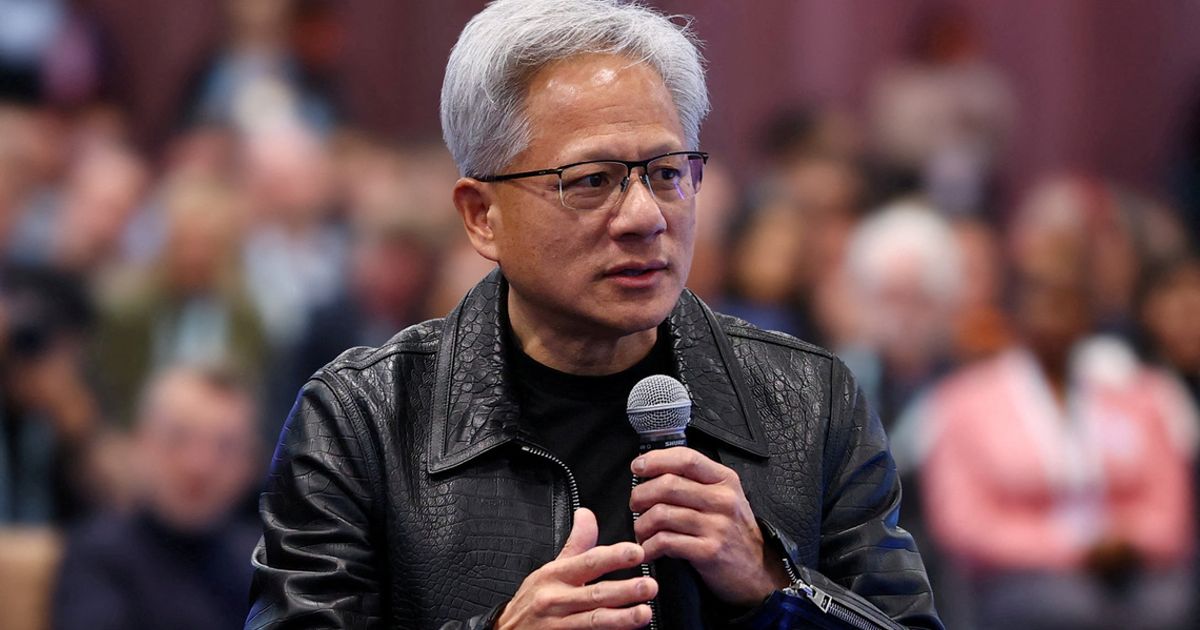
Jensen Huang has turned Nvidia into an industry kingmaker that oversees a sprawling web of customers, suppliers, partners and investments.
NEW YORK – Nvidia is searching for a replacement for larger-than-life chief executive officer Jensen Huang, a daunting challenge at the world’s most valuable chipmaker.
The company has tapped an outside firm to identify potential candidates following reports of multiple extramarital affairs by Huang. Finding a replacement would not be easy, however.
Over more than three decades, Huang has combined deep technical expertise with operational skill into an unusually hands-on role in shaping Nvidia’s strategy.
Beyond developing the AI accelerators that now dominate the artificial intelligence landscape, Huang has turned the company into an industry kingmaker that oversees a sprawling web of customers, suppliers, partners and investments.
Here’s a rundown of executives likely to end up in a headhunter’s sights.
Chief financial officer Colette Kress is Nvidia’s best-known executive besides Huang, at least among investors. Boards often turn to finance chiefs for near-term stabilisation, though they are generally seen as a stop-gap rather than a long-term choice, especially at tech companies.
Vice-president Ian Buck runs Nvidia’s products for data centres such as its AI chips. He is a familiar face to Nvidia customers and is also the inventor of CUDA, the software framework which helps make its chips useful for AI. Still, he lacks the operational experience that investors often look for at the head of a large publicly traded company.
Arm Holdings CEO Rene Haas oversees a leading chip design business with a close partnership with Nvidia. A former Nvidia executive, Haas now manages a complicated ecosystem of customers and partners with unique insight into the AI chipmaker as well as the broader tech landscape. In 2020, Nvidia even tried to acquire Arm – a SoftBank Group company – in a deal that failed under antitrust scrutiny.
Advanced Micro Devices CEO Lisa Su leads the closest competitor to Nvidia in terms of the technology it offers and the customers it serves. On her watch, AMD surpassed chip-making pioneer Intel Corp in technological leadership, and its stock has surged nearly 170-fold. Still, AMD is a fraction of Nvidia’s size and its AI chips have a long way to go before matching Nvidia’s adoption.
Apple chief hardware officer Johny Srouji has led one of the most successful in-house silicon programmes in the industry, overseeing the custom chips that power the iPhone, Mac and other Apple devices. His track record gives him deep credibility on chip design, product integration and long-term technology roadmaps. But much of his experience has been built inside Apple’s tightly controlled ecosystem, and he has not been tested in the kind of high-profile salesmanship which Huang is famous for.
Amazon Web Services chief Matt Garman is another executive who, like Huang, blends technical and operational expertise. He leads a sprawling business that rents out computing power from a vast network of data centres, including Amazon’s in-house chips. One knock against him is that Amazon was seen to have initially lagged peers like Microsoft or Google in building AI infrastructure.
Micron Technology CEO Sanjay Mehrotra knows what it is like to steer a chip company through both boom and bust cycles. He has presided over a more than 2,700% increase in the company’s shares, boosted by surging memory prices owing to AI-fuelled demand. But his background is rooted largely in memory and manufacturing, rather than in graphics processing unit architecture and software ecosystem.
Google’s Amin Vahdat oversees the company’s tensor processing unit programme, another rival for Nvidia’s dominance in AI chips. His technical credentials are formidable, but like several engineering-heavy candidates on the list, he has less experience running a sprawling public company with Nvidia’s scale, commercial complexity and investor scrutiny.
Three of Huang’s family members work at Nvidia – his children Spencer and Madison and son-in-law Nico Caprez. As vice-president of global AI infrastructure growth, Caprez holds the most prominent role of the three and is known to be heavily involved in discussions with neoclouds and other data centre deployments.
Huang has said that he does not wish the burden of running Nvidia upon his kids and that they “have to go earn it”. BLOOMBERG