Nzimande warns R2.5bn US research cuts expose South Africa’s funding vulnerability - IOL
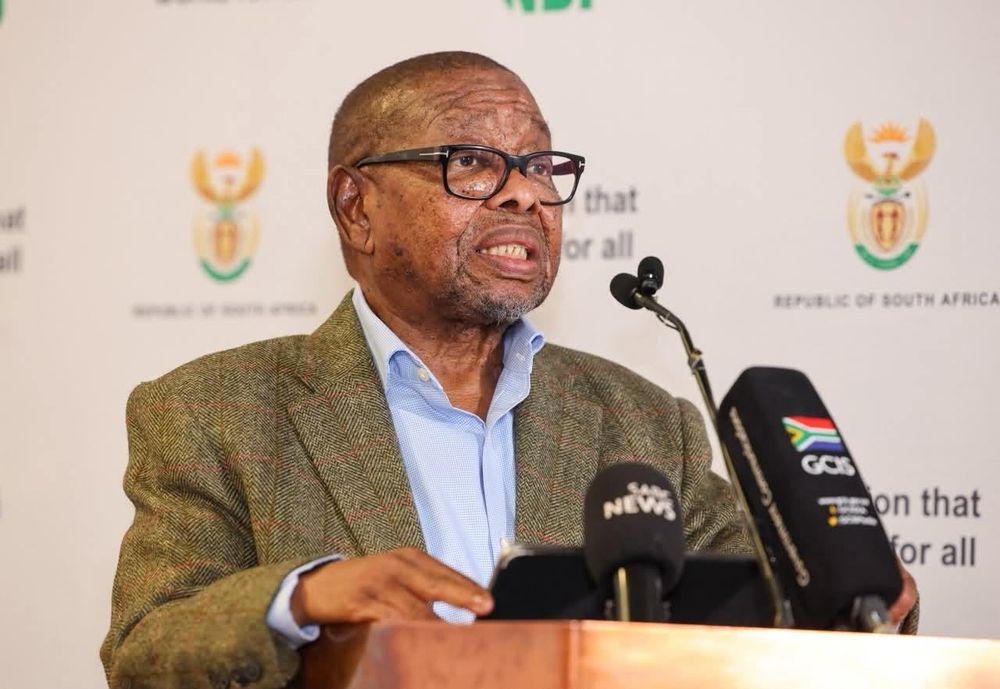
Science and Technology Minister Blade Nzimande said US research funding cuts have cost South Africa’s science system about R2.5bn, putting research posts and student degrees at risk.
The withdrawal of United States research funding has cost South Africa’s science and research system about R2.5 billion, placing research posts and student degrees at risk and exposing the country’s dependence on foreign funding, Science, Technology and Innovation Minister Blade Nzimande said yesterday.
Nzimande was expected to release the report of the Ministerial Working Group on Science, Technology and Innovation Funding for public comment in Pretoria, saying the cuts had highlighted weaknesses in the way critical research programmes were financed.
The working group was established after the US government withdrew funding from South African health research and clinical trial programmes, including work focused on HIV and tuberculosis.
“The total amount of impact, money-wise is R2.5 billion. That’s what our research and science system suffered with that withdrawal,” Nzimande said.
He said affected institutions included the University of Cape Town, Wits University, the University of Pretoria, the South African Medical Research Council and CAPRISA.
According to Nzimande, the South African Medical Research Council estimated that R1.6 billion in cuts linked to the US National Institutes of Health (NIH) placed 1 930 research posts and 108 student degrees at risk.
One affected programme was an HIV vaccine trial which lost a newly awarded five-year grant worth $45 million.
Nzimande said the NIH had indicated that some funding could be reinstated after determining that it did not fall within the definition of foreign aid.
The report recommends more predictable domestic funding for strategic research, protection of critical health, genomics, biotechnology and public health platforms, and increased public and private spending on research and development.
South Africa currently spends about 0.62% of gross domestic product on research and development, short of the national target of 1.5%.
Nzimande said about 17.3% of the country’s research and development funding was dependent on foreign donors, with health research more exposed than some other fields.
“The main recommendation we are saying is that, as a country, we must make sure that our core priorities are not dependent on foreign funding. We can’t avoid donor funding as a developing country, but we must make sure that our core priorities are not dependent on that,” he said.
The report also calls for South Africa to diversify its international funding relationships rather than relying heavily on partners in the US and Europe.
Nzimande said cooperation with countries such as China was increasing, while partnerships with the US, United Kingdom and European Union would continue, where mutually beneficial.
He said scientific sovereignty meant setting South Africa’s research priorities, sustaining strategic capabilities and protecting intellectual assets, while continuing international collaboration.
The report also recommends stronger conditions in international research agreements covering data, intellectual property, technology transfer, local manufacturing and skills development.
Department director-general Mlungisi Cele said reaching the target of spending 1.5% of GDP on research and development would require a review of existing research incentives and greater private-sector investment.
He said private-sector spending on research and development was below 50% of total investment and lagged behind international levels, while engagement with National Treasury continued.
Nzimande said government was already pursuing greater domestic scientific capacity, including vaccine development.
He said South Africa was moving beyond the “fill and finish” stage of vaccine production and developing its own active pharmaceutical ingredients, including work on an oral cholera vaccine.
Nzimande said stronger domestic scientific capacity was also needed to prepare for future health emergencies, saying scientists had warned another major pandemic could emerge within the next eight to 10 years, with climate change contributing to the risk.
The report is open for public comment until 31 December. Submissions will be considered in drawing up an implementation framework.
The report contains 11 recommendations, with Cabinet approving its core recommendations and its release for public comment.
The Presidency will also appoint a Science, Technology and Innovation Sovereign Risk Advisory Council, to be incubated by the National Advisory Council on Innovation, as government moves to implement the accepted recommendations.
Nzimande said the funding shock should be used to strengthen South Africa’s science system rather than retreat from international cooperation.
“The withdrawal of funding has exposed a vulnerability, but it has also created an opportunity,” he said.